Quick facts
- Original wild population
- One stream: Bear Creek, El Paso County
- Recovery waters
- Zimmerman Lake, Herman Gulch, Dry Gulch and other South Platte basin waters
- Natural reproduction
- Confirmed in Herman Gulch, 2022
- State fish
- Since 1994
- Federal status
- Threatened (endangered 1967; downlisted 1978)
- State status
- Threatened
Overview
Colorado’s state fish nearly disappeared without anyone noticing. The greenback cutthroat trout is native to the South Platte River basin on Colorado’s northern Front Range — streams that flow through some of the most populated and recreated land in the state, where hatchery trout stocking began in the late 1800s and has continued at scale ever since. By the time anyone looked carefully, most of what people thought were greenback cutthroat were something else.
The 2012 taxonomic revision that reshuffled the identity of Colorado’s native cutthroats is one of the more humbling chapters in the state’s conservation history. For decades, fish managers believed multiple populations of greenback cutthroat existed across the South Platte and Arkansas drainages. Genetic analysis revealed that most of those “greenback” populations were actually Colorado River–lineage cutthroat or hybrids. Only one population, a four-mile stretch of Bear Creek near Pikes Peak west of Colorado Springs, was confirmed as genetically pure greenback cutthroat. Those fish were likely carried there from the South Platte basin in the 1880s. That single stream held the entire pure genetic legacy of Colorado’s state fish.
Recovery from that near-extinction has been real. Since 2014, fish descended from Bear Creek have been stocked into a growing number of South Platte basin waters, including Zimmerman Lake, Herman Gulch, and Dry Gulch. In 2022 the Herman Gulch fish were confirmed reproducing naturally. The population trend is increasing. The story is not finished.
Natural History
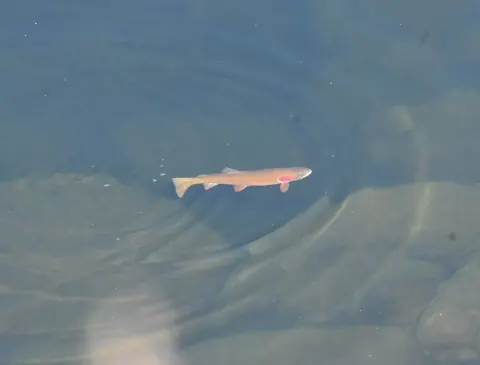
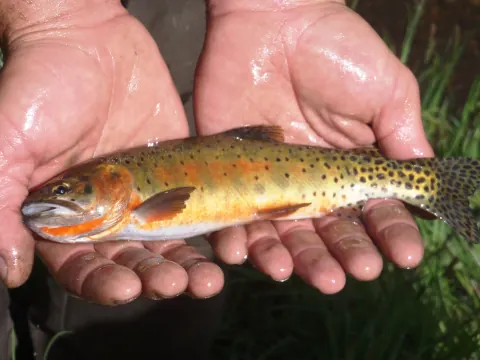
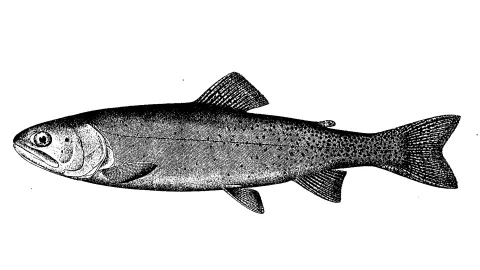
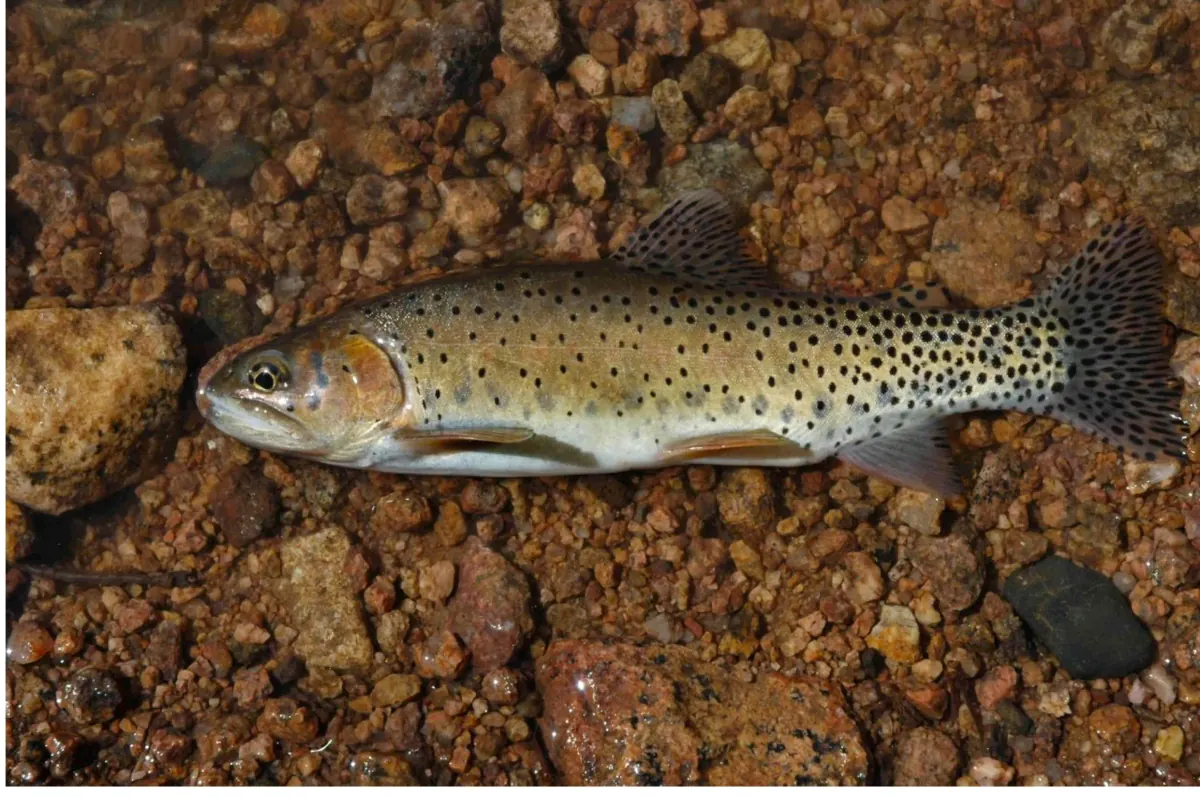
The greenback cutthroat trout (Oncorhynchus clarkii stomias) is recognized by its large, irregularly shaped black spots concentrated toward the tail, a greenish hue along the back, and the vivid red or orange slash marks beneath the jaw that give all cutthroat trout their name.
The subspecies is adapted to cold, well-oxygenated mountain streams and lakes — the streams that drain the high Front Range peaks. These are not big rivers; they are small headwater systems, often in narrow drainages above most human settlement, where the fish evolved in relative isolation over thousands of years following the last glaciation.
Greenback cutthroat are opportunistic feeders, taking terrestrial and aquatic invertebrates, small fish, and in lakes, zooplankton. Spawning occurs in spring as water temperatures rise. They are relatively short-lived, and populations can recover quickly from disturbance if suitable habitat and pure genetic stock are available.
Habitat in Colorado
Bear Creek, in the Arkansas drainage near Colorado Springs, is the conservation anchor for this subspecies. CPW, USFWS, and partners are expanding greenback populations from Bear Creek stock; the methods are under Recovery & Conservation.
The South Platte basin — the subspecies’ native range — holds the recovery waters where nonnative trout have been removed and greenback populations established (listed in Quick facts).
No critical habitat has been designated for the greenback cutthroat trout.
Threats
Hybridization with introduced rainbow, brown, and other nonnative trout is the primary threat that drove the greenback to near-extinction in the first place. Once hybridization begins in a stream segment, it proceeds to genetic absorption quickly — within a few generations, the genetic integrity of the native population is lost. The only reliable defense is physical separation using fish barriers, either natural falls or artificial barriers below pure populations.
Nonnative trout competition and predation reduces greenback recruitment even without hybridization. Rainbow, brook, and brown trout, all introduced to Colorado waters, are well-established competitors that can displace native cutthroat from occupied reaches.
Whirling disease, caused by the parasite Myxobolus cerebralis, is present in many Colorado streams and selectively affects salmonids, potentially including greenback cutthroat in occupied and recovery stream segments.
Climate change threatens to reduce the extent of cold-water habitat at the upper end of the greenbacks’ elevational range and increase the frequency of drought events that reduce flow and raise water temperatures in occupied streams.
Recovery & Conservation
The greenback cutthroat trout was listed as endangered in 1967 and downlisted to threatened in 1978. Recovery has relied on an integrated approach: confirming genetically pure source populations, raising pure fish at the Leadville National Fish Hatchery and CPW’s Mt. Shavano hatchery, removing nonnative trout from target waters, installing barriers, and stocking pure greenbacks.
The 2012 taxonomic revision, while deflating, redirected recovery resources toward the correct target. Recovery streams that had been stocked with fish believed to be greenbacks but now known to be other subspecies were identified and corrected. The program is now working from an accurate genetic baseline.
Progress is real. The number of waters holding greenbacks has grown from one in 2012 to several today, though only a few are confirmed self-sustaining. Colorado designated the greenback its state fish in 1994, and it remains state threatened.
What You Can Do
- Report trout observations from South Platte basin headwater streams to iNaturalist and CPW. Unusual trout, or trout in streams not typically stocked, are worth reporting.
- Follow all fishing regulations for greenback cutthroat waters, including catch-and-release requirements and barbless hook requirements where applicable. Check CPW fishing regulations for the specific stream you are fishing.
- Avoid transferring equipment between watersheds without thoroughly drying and cleaning fishing gear to prevent the spread of whirling disease and aquatic invasive species.
- Stay out of posted greenback recovery streams during the spring spawning season.
Frequently asked questions
- How do you identify a greenback cutthroat trout?
- CPW points to dark, round spots on the sides and tail and two blood-red stripes on each side of the throat. Telling a pure greenback from other cutthroat lineages takes genetic testing, as the 2012 revision showed (Overview).
- When do greenback cutthroat trout spawn?
- Usually from late May to mid-July at higher elevations, according to CPW. Males first spawn at age two and females a year later; a 10-inch female lays about 800 eggs. What You Can Do asks people to stay out of posted recovery streams in spring.
- Are stocked greenback cutthroat trout reproducing on their own?
- In Herman Gulch, yes. CPW began stocking greenback fry there in 2016, and in 2022 its crews found young-of-year fry, a one-year-old fish born in the stream in 2021, and greenbacks up to 12 inches long, according to Colorado Outdoors; the wider recovery is under Recovery & Conservation.