Quick facts
- Federal status
- Endangered rangewide (listed June 10, 2014)
- Colorado sites
- Florida River (La Plata Co.) and Sambrito Creek (Archuleta Co.)
- Colorado critical habitat
- About 1,093 of 13,973 acres (2016)
- Plant height it needs
- Dense streamside plants at least 24 inches tall
- Active season
- About 3–4 months; hibernates 8–9 months
- Range
- Southern Colorado, New Mexico and eastern Arizona, about 4,500–9,500 ft
Overview
The New Mexico meadow jumping mouse (Zapus hudsonius luteus) is federally endangered: USFWS listed it as endangered throughout its range on June 10, 2014. It is a different subspecies, with a separate listing, from the better-known Preble’s meadow jumping mouse of the Front Range, which is federally threatened.
Colorado holds the northern edge of its range. CPW places it along the state’s southwestern border, and the subspecies is otherwise found in New Mexico and eastern Arizona. In Colorado it is known from two small, isolated populations: along the Florida River in La Plata County and in the Sambrito Wetlands of Navajo State Park in Archuleta County. CPW does not list it as state endangered or threatened; it is a Tier 1 Species of Greatest Conservation Need. New Mexico lists it as state endangered.
How it differs from Preble’s
Both mice share the meadow jumping mouse body plan described on the Preble’s profile: long hind feet, a tail longer than the body and a life spent in tall streamside plants. The differences are what matter for conservation:
- Listing: endangered rangewide. Preble’s has been threatened since 1998 and is also state threatened in Colorado.
- Range: southern Colorado, New Mexico and Arizona, from about 4,500 to 9,500 feet. Preble’s lives only along the Front Range of Colorado and southeastern Wyoming.
- Critical habitat: spread across three states, with only a small share in Colorado (see Quick facts). All of Preble’s critical habitat is in Colorado.
- Breeding: likely one litter a year (see FAQ below), where Preble’s usually has two.
- Threats: grazing and water use around rural streams rather than urban growth. The recovery plan notes that free-roaming cats, a known threat to Preble’s, are not known to be a problem for this subspecies.
Habitat in Colorado
USFWS calls it a habitat specialist. It needs dense herbaceous plants along streams, mostly sedges and forbs at least 24 inches tall, growing on soils kept wet by flowing water through the summer, with drier ground nearby for nests and hibernation burrows. The recovery plan adds that sites averaging about 35 inches are more likely to be occupied. Stands of willows or alders can work if sedges and forbs grow underneath; uniform thickets of shrubs, or pure stands of sedges or cattails with no other plants under them, do not.
USFWS designated critical habitat in March 2016 (see Quick facts for the totals). Three of its eight units reach Colorado:
- Florida River, La Plata County. About 626 acres along 8.4 miles of river, almost all of it private land, starting at the Florida Ditch headgate of the Florida Water Conservancy District. Two mice caught there since 2007 were confirmed as this subspecies by genetic tests.
- Sambrito Creek, Archuleta County. About 185 acres along 2.9 miles of Sambrito Creek near Arboles, most of it state land in Navajo State Park. Surveys have caught mice there repeatedly since 2012, in the Sambrito Wetlands Area west of the creek.
- Sugarite Canyon, Las Animas County. This unit crosses the New Mexico line. Its Colorado part, about 282 acres of state land around Lake Dorothey State Wildlife Area, is designated as unoccupied habitat; the occupied sites at listing were in New Mexico’s Sugarite Canyon State Park.
Natural History
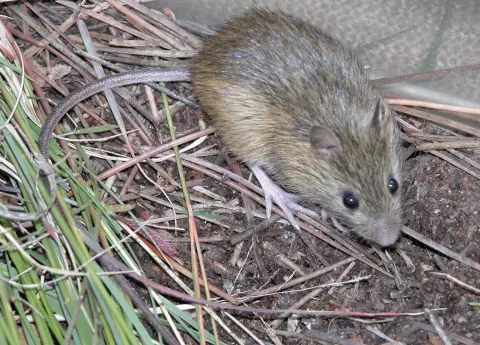
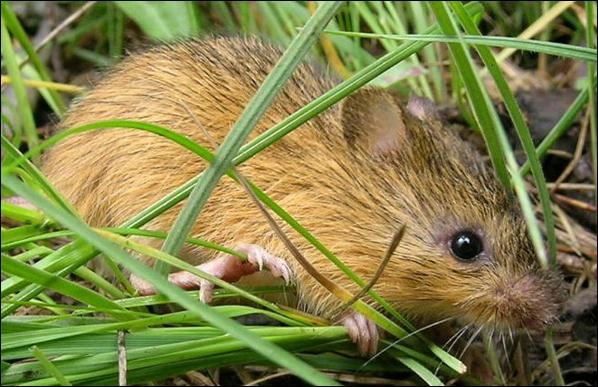
Adults are 7 to 9 inches long, about 5 inches of it tail, with a dark brown back, yellowish-brown sides and a white belly. The mouse is mostly nocturnal. It is active only while the grasses and forbs it depends on are growing, from late May or June to late September or early October, and spends the other 8 to 9 months hibernating underground, longer than most mammals, USFWS says. It breeds from June through August and eats mainly grass and forb seeds, building the fat it needs to survive hibernation.
That short season leaves little room for error: if the tall plants are grazed off, dried out or burned during the summer, the mice cannot breed or fatten that year. Studies done for CPW at the Sambrito Wetlands looked at when the mice come out of hibernation and where they hibernate, and the Southern Ute Indian Tribe surveyed its reservation for the mouse in 2017 and 2018.
Threats
The recovery plan names loss of habitat as the greatest threat. Across the range, the main causes are grazing by livestock, elk and feral horses that removes streamside plants, water use that reduces or redirects stream flow, drought, and severe wildfire. In Colorado, each site has its own version:
- Water use on the Florida River. USFWS notes that much of the river’s surface water is diverted into irrigation canals and ditches, and lists floods, water management, development and coalbed methane as the threats to this unit. Mowing along irrigation ditches is one way water management removes habitat.
- Trespass cattle at Sambrito. Navajo State Park is closed to grazing, but USFWS reported repeated unauthorized livestock use through missing or broken fences. The creek is bordered on three sides by private land with fields, homes and oil and gas wells, and USFWS warned that more development could shrink and dry the wetland.
- Fire at Sugarite. The 2011 Track Fire burned nearly the entire Sugarite Canyon watershed and hit the population in the New Mexico state park.
- Coalbed methane. USFWS found producing wells within a few hundred feet of the Florida River channel and within 2,000 feet of Sambrito Creek. Colorado’s oil and gas rules, including Senate Bill 19-181, add some protection for streamside habitat, according to the recovery plan.
Floods after fire, the loss of beaver ponds, highway work and recreation also degrade habitat. See Water diversion and Wildfire & fire suppression.
Recovery & Conservation
Critical habitat was designated on March 16, 2016, and USFWS finalized a recovery plan in January 2023. The plan was drafted with state wildlife agencies including CPW, the Southern Ute Indian Tribe, the U.S. Forest Service and Northern Arizona University. It groups the mouse’s watersheds into six geographic units and calls for resilient, connected populations in each, mainly by changing grazing and water management in streamside habitat so the tall, dense plants can grow back.
What You Can Do
- Leave tall streamside plants standing on land you own or manage along the Florida River, Sambrito Creek or other southern Colorado streams, especially from June through September.
- Keep livestock out of fenced streamside areas and report broken fences or trespass cattle at Navajo State Park to park staff.
- Stay on trails around the Sambrito Wetlands and other wet meadows in summer, when the mice are active and breeding.
- Report a jumping mouse (a small mouse with a very long tail that leaps when flushed) through the site’s Report a Sighting page.
Frequently asked questions
- Is the New Mexico meadow jumping mouse the same as Preble's?
- No. Both are subspecies of the meadow jumping mouse, but they live in separate parts of Colorado and are listed separately: this one is endangered, Preble's threatened. See How it differs from Preble's.
- How many New Mexico meadow jumping mouse populations are left?
- USGS counts 77 populations in eight management areas that follow the critical habitat units across Colorado, New Mexico and Arizona. Two of those areas, the Florida River and Sambrito Creek, are entirely in Colorado.
- How many babies does a New Mexico meadow jumping mouse have?
- Likely a single litter of 2 to 7 young a year, according to USGS. Preble's often has two litters, so a lost litter costs this mouse a whole year.