Quick facts
- Last confirmed
- September 23, 1979, South San Juan Wilderness
- Historic range
- Western three-fifths of the state; fairly common until about 1900 (CPW)
- Nearest population
- About 385 miles away (USFWS)
- Size
- Males 400–600 lb; females 250–350 lb (lower 48)
- Reintroduction
- None planned (CPW, 2019)
- Status
- Federally threatened in the lower 48 (since 1975); state endangered
Overview
There are no grizzly bears in Colorado today. Colorado Parks and Wildlife says grizzlies once “occurred throughout Colorado” and were “fairly common in the western three-fifths of the state at least until the turn of the 19th to 20th century.” After 1900, their numbers declined rapidly. By the mid-1950s grizzlies were considered gone from Colorado.
Then, on September 23, 1979, a grizzly mauled an outfitter in the South San Juan Wilderness, and he killed it. No grizzly has been confirmed in Colorado since.
The grizzly is still federally threatened in the lower 48, and Colorado lists it as State Endangered. NatureServe ranks it G4 globally and SX, extirpated, in Colorado.
Description
Grizzly or black bear?
| Field mark | Grizzly | Black bear |
|---|---|---|
| Shoulder hump | Muscular hump over the shoulders | Little or no hump |
| Face profile | Dish-shaped | Straight |
| Ears | Short and rounded | Taller and pointed |
| Hips and shoulders | Hips sit lower than the shoulders | Hips sit higher than the shoulders |
| Claws | 2 to 4 inches, lighter, straighter | 1 to 2.5 inches, darker, more curved |
| Color | Not reliable | Not reliable: Colorado black bears can be cinnamon brown, per CPW |
The grizzly is a big bear. In the lower 48, adult males average 400 to 600 pounds and females 250 to 350 pounds.
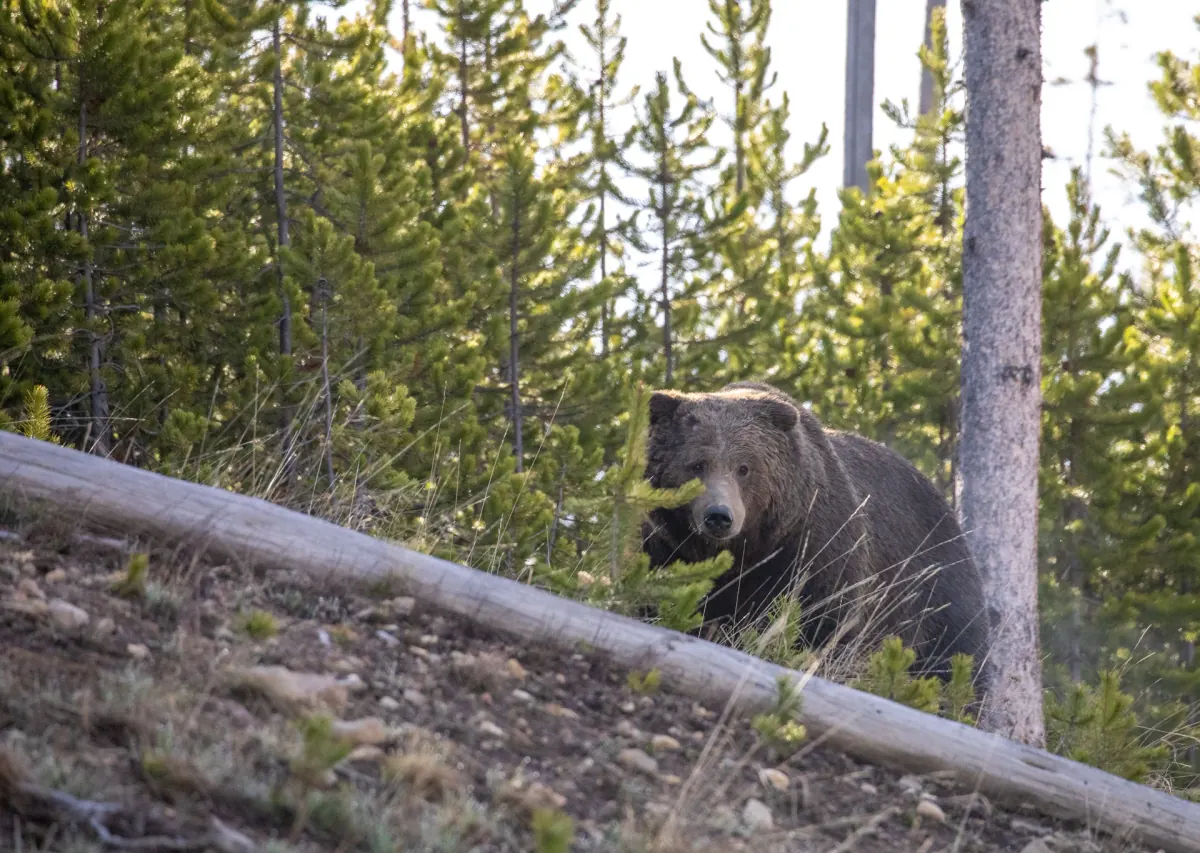
A grizzly has a muscular hump over its shoulders, a dish-shaped face, short rounded ears, and hips that sit lower than its shoulders. Its claws are 2 to 4 inches long, lighter in color and straighter than a black bear’s, which are 1 to 2.5 inches long, darker and more curved. A black bear has little or no shoulder hump, taller pointed ears and a straight facial profile.
Grizzlies are omnivores that eat more than 260 kinds of food. Most enter their dens by mid-November and come out between February and May. They breed from May to July, with delayed implantation. Cubs are born in the den in late January or February, one to three per litter, and stay with their mother about two and a half years. A wild grizzly can live about 25 years.
History in Colorado
One of Colorado’s best-known grizzlies was “Old Mose,” killed in 1904.
A federal trapper killed a grizzly north of Pagosa Springs in 1952. According to CPW, no grizzly was killed in the state from 1952 until 1979.
On September 23, 1979, the last day of archery elk season, outfitter Ed Wiseman surprised a grizzly in its day bed near the headwaters of the Navajo River in the South San Juan Wilderness, a few miles from the New Mexico line. The bear mauled him. He killed it with a hand-held arrow and spent about a month in the hospital.
The bear was an old female, about 350 to 400 pounds, with worn teeth and claws. She may have raised cubs years earlier. Her remains are at the Denver Museum of Nature & Science.
Afterward, state wildlife biologists searched the South San Juans with live traps for two summers and caught no grizzlies.
Why It Disappeared
The grizzly’s decline in Colorado followed settlement and livestock ranching. Bounties, hunters and federal trappers killed bears.
Could Grizzlies Return to Colorado?
Not on their own, and not under any current plan.
A January 15, 2025 U.S. Fish and Wildlife Service proposed rule would manage lower-48 grizzlies as one population in Washington, Idaho, Montana and Wyoming. Colorado is outside it. The rule says there have been no confirmed grizzly sightings in the San Juans since the 1979 death. It also says natural recolonization is impractical, because the San Juans are about 385 miles from the nearest grizzly population.
A supplemental proposal followed on July 17, 2026. A federal judge in Idaho extended USFWS’s deadline for final rules to December 18, 2026, KUNC reported. As of September 2026, no final rule has been issued, and grizzlies remain federally threatened in the lower 48, as they have been since 1975.
In 2023, the Greater Yellowstone population numbered about 1,030 bears and the Northern Continental Divide population about 1,163. The Cabinet-Yaak population held about 70, and the Selkirk population at least 51 on the U.S. side.
There is no official plan to reintroduce grizzlies to Colorado; CPW said in 2019 that none are planned. For related reading, see the gray wolf profile and Reintroduced Species in Colorado.
What You Can Do
- Report a possible grizzly to CPW. CPW says, “Grizzlies no longer live in Colorado.” It keeps a grizzly sighting form with an identification guide, and it keeps reporters’ locations confidential.
- Learn to tell a grizzly from a black bear. The field marks are under Description and in the FAQ below.
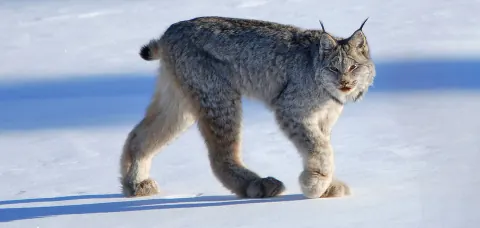
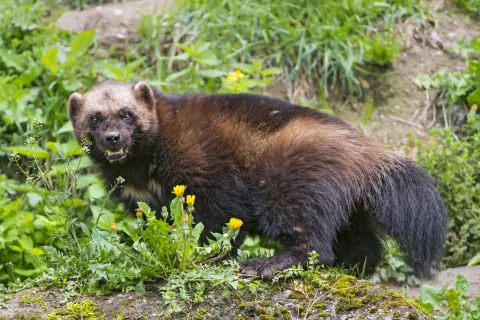
- Explore related species. Read the gray wolf, North American wolverine and Canada lynx profiles.
Frequently asked questions
- Could grizzlies come back to Colorado?
- Not on their own and not under any plan; see Could Grizzlies Return to Colorado? for the federal proposals and the distances involved. Author David Petersen told Colorado Public Radio in 2019 that the San Juans still look suitable: "The physical habitat is here, but the cultural, social, political habitat is not."
- How do you tell a grizzly from a black bear?
- Not by color: CPW notes Colorado's black bears can be cinnamon brown. Look for a shoulder hump and hips that sit lower than the shoulders (a black bear's sit higher), plus the claw differences under Description, and report a possible grizzly on CPW's sighting form (What You Can Do).
- Are there brown bears in Colorado?
- Grizzlies are brown bears. None has been confirmed in Colorado since 1979. Brown-colored bears seen in Colorado today are black bears, which CPW notes can be cinnamon brown.
- Who was Old Mose?
- Colorado's most famous grizzly, shot near Alma in April 1904 by hunter James W. Anthony. Newspapers blamed him for killing several men and hundreds of livestock over 40 years, but a 1987 analysis of his teeth showed he was only 10 to 12 years old, according to the Denver Public Library (History in Colorado).
- When were grizzlies declared extinct in Colorado?
- In 1953, Colorado Public Radio reported, a year after a federal trapper killed one north of Pagosa Springs. Then in 1979 an outfitter killed one in the South San Juans, and none has been confirmed since (History in Colorado).