Report a Sighting

What you saw matters. Here's how to get an observation into the hands of the biologists who track Colorado's rarest species.

Why Sightings Matter

No agency has the staff to survey every acre of Colorado every year. Colorado Parks & Wildlife biologists monitor listed species through targeted field surveys that are expensive, seasonal, and necessarily narrow — which leaves large gaps in what is actually known about where animals are and how many remain.

Public observations fill those gaps. A verified sighting confirms a species is still present somewhere it was last recorded decades ago, documents range expansion into new drainages or elevations, and helps track population trends across years. It can also redirect survey effort: a credible report in an unexpected place is often what prompts a biologist to go look.

This is real scientific data, not a suggestion box. Research Grade observations feed into open databases that state and federal agencies query when writing recovery plans, designating critical habitat, and reviewing listing status.

Reporting Through iNaturalist

For nearly every sighting, iNaturalist is the right place to start. It is free, run by the California Academy of Sciences and National Geographic, and its verified records flow directly into the scientific databases researchers already use.

  1. Create a free iNaturalist account

    Signing up takes about a minute at inaturalist.org. An account lets your observations be tracked, corrected, and cited — anonymous reports cannot be verified or followed up on.

  2. Photograph the animal

    A photo is what turns a sighting into evidence. Get whatever you safely can — the whole animal, distinguishing markings, or even tracks, scat, or a burrow. Keep your distance; never approach, bait, or pursue wildlife to get a better frame.

  3. Submit with date and location

    Upload the photo, add the date, and let iNaturalist read the location from your camera or drop a pin. For sensitive species, set the observation geoprivacy to "obscured" — iNaturalist then shows only a general area publicly while researchers with access still receive the underlying data.

  4. Experts review the identification

    Other naturalists and taxonomists confirm or refine your ID. Once enough agree, the observation reaches Research Grade and flows into the Global Biodiversity Information Facility (GBIF), where agency biologists and researchers actually query it.

Start an observation

Free account, no cost to use, open data.

Open iNaturalist (opens in a new tab)

Every species profile on this site links straight to a pre-filled iNaturalist observation form — look for Report a sighting in the sidebar.

Reporting Directly to Colorado Parks & Wildlife

Some sightings should not wait for community review. Contact CPW directly — by phone to your regional office, or through their online wildlife observation reporting system — in any of these situations:

  • An injured, sick, or orphaned animal
  • A dead animal of a listed species, including roadkill
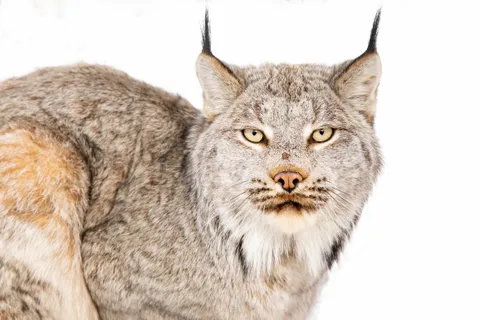
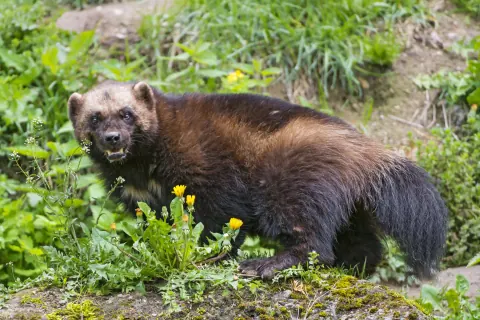
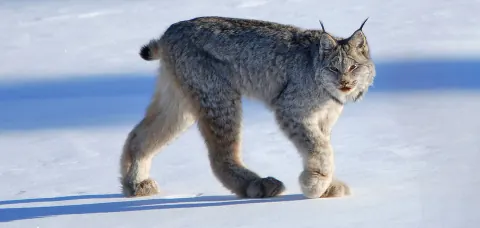
  • A very rare species well outside its known range — wolverine, lynx, or wolf
  • Any wildlife conflict involving livestock, pets, or human safety
  • Suspected poaching or illegal take (Operation Game Thief)

Wolverine, lynx, and wolf reports get particular attention. Colorado's wolverine population is functionally absent pending reintroduction, so a credible wolverine sighting is genuinely significant and CPW wants to hear about it immediately — with a photograph if you have one.

Never handle an injured or dead animal yourself. Note the general location, keep your distance, and let CPW dispatch someone trained and permitted to respond.

Colorado Parks & Wildlife

Regional office contacts and wildlife observation reporting.

cpw.state.co.us (opens in a new tab)

A Note on Location Data

Precise coordinates for rare animals can attract collectors, photographers, and harassment faster than they attract researchers. Report the exact location to the agencies and platforms that protect it — obscured geoprivacy on iNaturalist, or directly to CPW — and keep it out of public posts.

This site publishes no precise GPS coordinates for any species, anywhere. If you'd like to tell us about a sighting, the contact form is open — county or general area only, please. It is not a substitute for reporting to iNaturalist or CPW, both of which put your observation in front of people who can act on it.