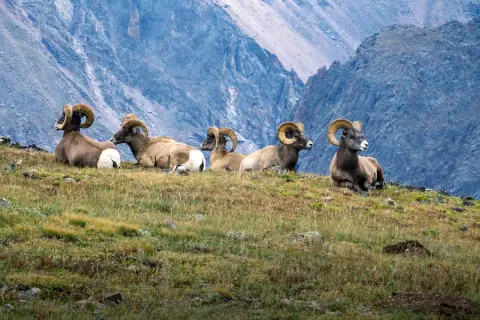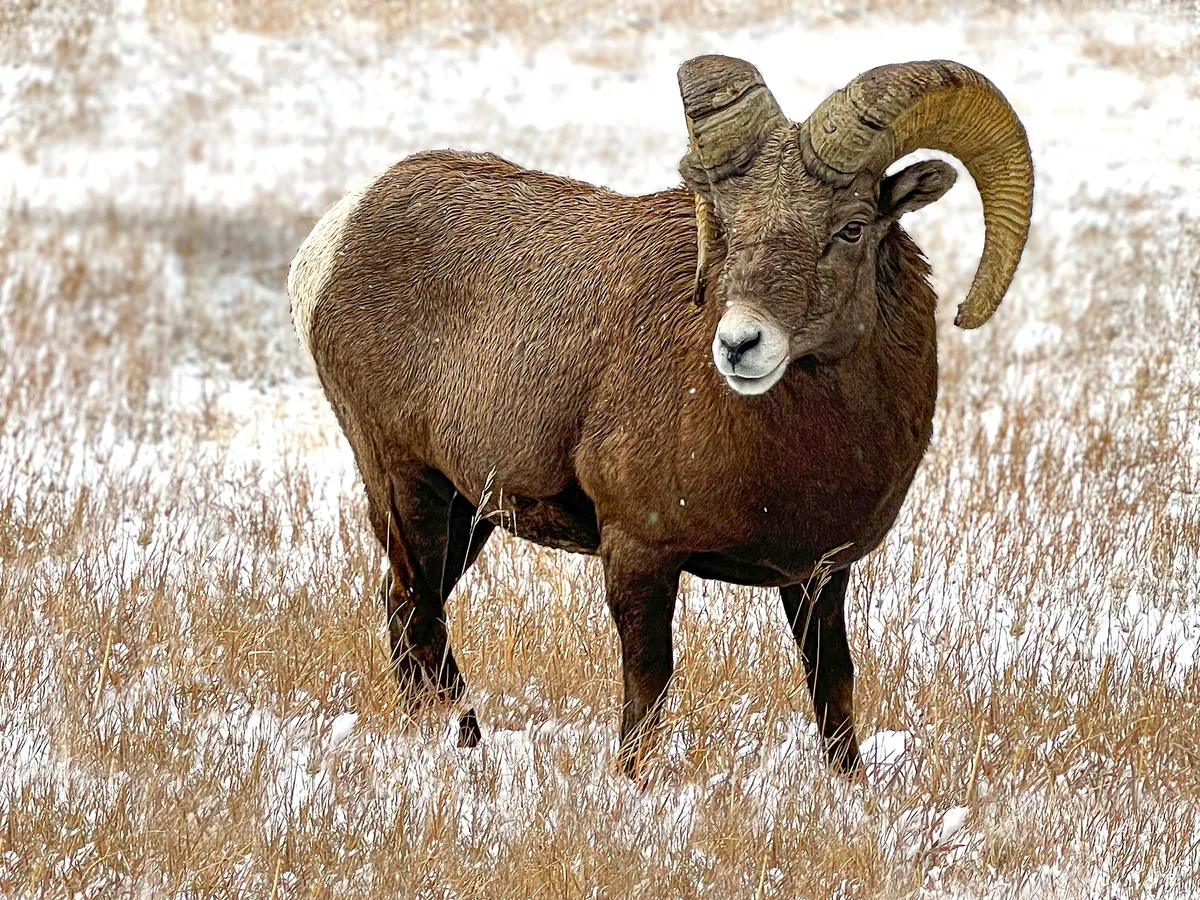
It’s the peak of bighorn sheep breeding season in Colorado, and the herd above Interstate 70 at Georgetown is easy to watch. Colorado Parks and Wildlife (CPW) says breeding runs through November and December, when rams clash horns to test dominance. Georgetown’s free Bighorn Sheep Festival is on the second Saturday of November, which is Nov. 14 this year.
The show hides a quieter story. CPW’s latest final estimate counts about 7,060 bighorns statewide, and the Georgetown herd has shrunk. Here’s where to watch, how the herds compare and what’s behind the decline.
At a glance
- Rut
- Breeding runs November and December and peaks in early December (CPW)
- Georgetown festival
- Free, second Saturday of November (Nov. 14 this year), 10 a.m.–3 p.m., per the festival's site
- Colorado's bighorns
- About 7,060 Rocky Mountain bighorns after the 2024 seasons, down from 7,485 in 2022 (CPW)
- Georgetown herd
- 225 in 2024, down from 300 in 2022 (CPW)
- Biggest health threat
- Respiratory disease, according to CPW's state wildlife veterinarian (Nov. 2025)
Why are the rams fighting right now?
November and December are the breeding season, or rut. CPW says breeding peaks in early December. Rams that stay apart from the ewes most of the year now battle each other, cracking horns, to test dominance.
A ram’s horns can make up to 10 percent of its body weight, according to CPW. Rams reach “full curl” at about seven or eight years old.
In the festival’s announcement, CPW’s Mary McCormac said that during the breeding season, “bighorn sheep display some of their most interesting behaviors.”
Where can you watch them?
The Georgetown herd lives between Georgetown and Silver Plume, less than an hour west of Denver on I-70. CPW’s first sheep transplants, in the 1940s, included bighorns planted there. It describes the herd as one of the largest in the state and the area as one of the most popular sheep viewing sites in the nation.
- The festival: the Georgetown Bighorn Sheep Festival is free and runs 10 a.m. to 3 p.m. on the second Saturday of November, per the festival’s site. Trained CPW volunteers help visitors find the sheep at the viewing station. We couldn’t find a separate 2026 schedule, so check with the festival before you go.
- The wildlife area: the Georgetown State Wildlife Area covers 670 acres at about 8,800 feet. Visitors 16 and older need a hunting or fishing license or an SWA pass.
- The winter closure: CPW closes public access from December 1 through June 14, except on the Union Pass Trail. Dogs are allowed only on that trail, on a leash.
How many bighorn sheep does Colorado have?
CPW’s final estimate after the 2024 hunting seasons is 7,060 Rocky Mountain bighorns. That’s down from 7,485 after the 2022 seasons, with a dip to 6,982 in 2023.
CPW’s big game manager, Andy Holland, told the Parks and Wildlife Commission in January 2024 that 2023 was the agency’s “worst year for herd health in over a decade,” according to Denver7. He said the statewide count of about 7,500 in 2021 and 2022 seemed to be a ceiling.
Which herds are growing and which are shrinking?
CPW’s table splits the statewide total into 85 sheep units. The chart below shows how each one changed between 2022 and 2024. Georgetown is highlighted.
Colorado's bighorn herds, 2022 to 2024
Each row is one CPW sheep unit. Hollow dot: 2022. Small gray dot: 2023. Solid dot: 2024. Pick a view, or open "Look up any herd" to search all 85 units.
- 2022 7,485 statewide estimate
- 2023 6,982 −503 from 2022
- 2024 7,060 +78 from 2023 · −425 (−5.7%) from 2022
The eight biggest herds in 2024
- Purgatorie CanyonS61375 −100 (−21.1%)475 → 400 → 375
- Sangre de CristoS09300 +30 (+11.1%)270 → 280 → 300
- Mount EvansS03270 +83 (+44.4%)187 → 190 → 270
- Spanish Peaks (Culebra)S51240 −160 (−40%)400 → 300 → 240
- GeorgetownS32225 −75 (−25%)300 → 250 → 225
- Cow Creek/WetterhornS21210 no change210 → 210 → 210
- Buffalo PeaksS12200 no change200 → 200 → 200
- RMNP - Never Summer RangeS83200 no change200 → 200 → 200
Largest increases, 2022 to 2024
- Mount EvansS03270 +83 (+44.4%)187 → 190 → 270
- Never Summer RangeS19100 +50 (+100%)50 → 30 → 100
- KenoshaS2355 +35 (+175%)20 → 50 → 55
- Sangre de CristoS09300 +30 (+11.1%)270 → 280 → 300
- Derby CreekS5960 +25 (+71.4%)35 → 35 → 60
- TarryallS2785 +25 (+41.7%)60 → 100 → 85
- Cucharas canyonS8650 +20 (+66.7%)30 → 40 → 50
- Bristol HeadS53140 +10 (+7.7%)130 → 140 → 140
Largest declines, 2022 to 2024
- Spanish Peaks (Culebra)S51240 −160 (−40%)400 → 300 → 240
- Purgatorie CanyonS61375 −100 (−21.1%)475 → 400 → 375
- GeorgetownS32225 −75 (−25%)300 → 250 → 225
- Sheep MountainS15140 −40 (−22.2%)180 → 140 → 140
- Cimarrona PeakS16100 −35 (−25.9%)135 → 100 → 100
- Poudre RiverS0135 −35 (−50%)70 → 70 → 35
- San Luis PeakS22110 −35 (−24.1%)145 → 110 → 110
- Big Thompson CanyonS5755 −30 (−35.3%)85 → 85 → 55
Look up any herd (85 units)
| Herd (unit) | 2022 | 2023 | 2024 | Change |
|---|---|---|---|---|
| Alamosa Canyon S29 | 20 | 20 | 20 | 0 |
| Apishipa S38 | 45 | 35 | 50 | +5 |
| Arkansas River S07 | 80 | 80 | 80 | 0 |
| Basalt S44 | 60 | 50 | 40 | −20 |
| Battlement Mesa S24 | 90 | 90 | 80 | −10 |
| Beaver Creek S05 | 25 | 25 | 25 | 0 |
| Bellows Creek S36 | 110 | 110 | 110 | 0 |
| Big Thompson Canyon S57 | 85 | 85 | 55 | −30 |
| Black Canyon S80 | 80 | 80 | 80 | 0 |
| Blanco River S31 | 105 | 105 | 105 | 0 |
| Bristol Head S53 | 130 | 140 | 140 | +10 |
| Brown's Canyon S47 | 80 | 80 | 80 | 0 |
| Buffalo Peaks S12 | 200 | 200 | 200 | 0 |
| Carrizo Canyon S48 | 75 | 75 | 75 | 0 |
| Cimarrona Peak S16 | 135 | 100 | 100 | −35 |
| Clinetop Mesa S14 | 10 | 10 | 10 | 0 |
| Cochetopa S69 | 130 | 130 | 130 | 0 |
| Cold Springs S82 | 0 | 0 | 0 | 0 |
| Collegiate North S11 | 125 | 125 | 125 | 0 |
| Collegiate South S17 | 125 | 125 | 125 | 0 |
| Conejos River S30 | 100 | 100 | 100 | 0 |
| Cow Creek/Wetterhorn S21 | 210 | 210 | 210 | 0 |
| Cross Mountain S45 | 0 | 0 | 0 | 0 |
| Cucharas canyon S86 | 30 | 40 | 50 | +20 |
| Derby Creek S59 | 35 | 35 | 60 | +25 |
| Dillon Mesa (West Elk) S54 | 175 | 175 | 175 | 0 |
| DNM - Green River-Ladore Can. S85 | 40 | 40 | 45 | +5 |
| DNM - Harper's Corner-Jones Hole S85 | 40 | 40 | 45 | +5 |
| DNM - Yampa River S85 | 40 | 40 | 20 | −20 |
| Dome Rock S46 | 10 | 10 | 15 | +5 |
| Flattops (S. Fork White R) S67 | 20 | 10 | 10 | −10 |
| Fossil Ridge S70 | 30 | 30 | 30 | 0 |
| Georgetown S32 | 300 | 250 | 225 | −75 |
| Glenwood Canyon S74 | 45 | 50 | 50 | +5 |
| Gore Canyon S77 | 72 | 50 | 50 | −22 |
| Gore-Eagle's Nest S02 | 85 | 50 | 65 | −20 |
| Grant S04 | 44 | 30 | 25 | −19 |
| Grape Creek/Copper Rg S49 | 175 | 175 | 175 | 0 |
| Greenhorns S35 | 30 | 35 | 35 | +5 |
| Greenland S72 | 25 | 18 | 25 | 0 |
| Hayman S43 | 20 | 20 | 20 | 0 |
| Holy Cross S76 | 5 | 8 | 10 | +5 |
| Huerfano S08 | 120 | 120 | 120 | 0 |
| Kenosha S23 | 20 | 50 | 55 | +35 |
| Lake Fork/Pole Mtn S33 | 180 | 180 | 180 | 0 |
| Lone Pine S40 | 12 | 12 | 15 | +3 |
| Lower Lake Fork, Gunnison Ri. S81 | 5 | 5 | 10 | +5 |
| Lower Poudre River S58 | 45 | 35 | 40 | −5 |
| Main Canyon S75 | 70 | 70 | 70 | 0 |
| Marshall Pass S20 | 60 | 60 | 60 | 0 |
| Mesa Verde S84 | 5 | 0 | 0 | −5 |
| Mount Evans S03 | 187 | 190 | 270 | +83 |
| Mount Silverheels S39 | 25 | 12 | 20 | −5 |
| Mt Zirkel S73 | 150 | 150 | 150 | 0 |
| Mt. Elbert S66 | 125 | 125 | 125 | 0 |
| Mt. Maestas S50 | 125 | 100 | 125 | 0 |
| Natural Arch Carnero Cr S55 | 20 | 20 | 20 | 0 |
| Never Summer Range S19 | 50 | 30 | 100 | +50 |
| Northern Sangre de Cristo S68 | 40 | 40 | 40 | 0 |
| Peru Creek S41 | 80 | 60 | 85 | +5 |
| Pike's Peak S06 | 140 | 115 | 125 | −15 |
| Poudre River S01 | 70 | 70 | 35 | −35 |
| Pueblo West S79 | 25 | 25 | 25 | 0 |
| Purgatorie Canyon S61 | 475 | 400 | 375 | −100 |
| Rampart Range S34 | 155 | 155 | 150 | −5 |
| Rawah S18 | 30 | 40 | 20 | −10 |
| RMNP - Continental Divide S83 | 100 | 100 | 100 | 0 |
| RMNP - East Side, Fall Ri./Mummy Range S83 | 75 | 75 | 75 | 0 |
| RMNP - Never Summer Range S83 | 200 | 200 | 200 | 0 |
| Rock Creek S52 | 5 | 2 | 5 | 0 |
| San Luis Peak S22 | 145 | 110 | 110 | −35 |
| Sangre de Cristo S09 | 270 | 280 | 300 | +30 |
| Sheep Mountain S15 | 180 | 140 | 140 | −40 |
| Shelf Road S60 | 60 | 50 | 50 | −10 |
| Snowmass East S13 | 100 | 100 | 80 | −20 |
| Snowmass West S25 | 40 | 40 | 50 | +10 |
| Spanish Peaks (Culebra) S51 | 400 | 300 | 240 | −160 |
| St. Vrain S37 | 60 | 50 | 40 | −20 |
| Tarryall S27 | 60 | 100 | 85 | +25 |
| Taylor River S26 | 65 | 65 | 65 | 0 |
| Ten Mile S78 | 0 | 0 | 0 | 0 |
| Trickle Mtn. S10 | 60 | 60 | 60 | 0 |
| Vallecito S28 | 80 | 50 | 50 | −30 |
| Waterton Canyon S42 | 75 | 60 | 70 | −5 |
| West Needles S71 | 55 | 55 | 55 | 0 |
| Statewide total | 7,485 | 6,982 | 7,060 | −425 |
No herd matches that search.
Source: Colorado Parks and Wildlife, final 2024 post-hunt population estimates (posted 12/18/2024). We found no later final table on CPW's site as of Oct. 29, 2026. Unit names are CPW's, and change is 2024 minus 2022.
The statewide total barely moved, but the herds did. Mount Evans grew by 83 sheep, the biggest gain in the table, and the Sangre de Cristo unit grew by 30.
Spanish Peaks (Culebra) lost 160 sheep and Purgatorie Canyon lost 100, the two biggest declines. Georgetown’s 75-sheep drop is the third biggest. The table doesn’t say why any unit changed.
What’s happening to the Georgetown herd?
CPW’s table puts the herd at 300 in 2022, 250 in 2023 and 225 in 2024. Denver7 reported CPW’s earlier estimate as 350 in 2021.
Holland said the herd has had “little to no lamb survival due to respiratory pathogens causing lamb mortality since 2021.” CPW says a single lamb is the norm and that lambs are born from April through July. A herd that keeps losing its lambs has few young sheep coming up.
What is making bighorn sheep sick?
Colorado Outdoors, CPW’s magazine, calls respiratory pathogens the primary threat to bighorns in Colorado. One way they spread, it says, is through commingling with domestic livestock.
The infection can cause “acute all-age die-offs,” or more often “chronic low-lamb survival, as the adults can often survive it but the lambs cannot,” according to the magazine.
CPW’s state wildlife veterinarian, Peach Van Wick, told the Parks and Wildlife Commission in November 2025 that respiratory disease is “likely the biggest health threat to wild sheep but not the only threat.” CPW lists federal grazing allotments and small-flock producers as the primary management issues for its herds.
How did Colorado get its bighorn sheep back?
CPW says bighorns were close to extinction at the turn of the 20th century, hit by diseases brought in with European livestock and by unregulated hunting. Colorado has since completed more than 100 transplants, most in the 1970s and 1980s.
Hunters help pay for the work. CPW says its bighorn auction and raffle licenses funded $1.3 million in bighorn sheep projects in 2025, including $570,000 for habitat enhancement, with $992,000 more from other sources.
What happens next?
- Nov. 14, 2026: the Georgetown Bighorn Sheep Festival, if it follows its usual second-Saturday schedule.
- Early December: the peak of the rut, according to CPW.
- Dec. 1: the Georgetown State Wildlife Area closes to the public through June 14, except for the Union Pass Trail.
- April to July 2027: lambs are born, according to CPW.
- When CPW posts it: a newer post-hunt population table. The latest we found is dated Dec. 18, 2024. We’ll update this page and its chart when a newer one is posted.
To learn more about the species, see the Rocky Mountain bighorn sheep profile. To find out how CPW’s work is funded and what you can do, see Conservation.