For decades, the stretch of I-25 between Castle Rock and Monument worked like a wall for wildlife. During spring and fall migrations, drivers hit about one animal a day. In September 2026, Colorado Politics reported that a Colorado Department of Transportation study found the system built to fix that problem cut wildlife crashes by 91% in its final year. CDOT itself has said the full system is expected to reduce wildlife-vehicle crashes by about 90%.
That number has been widely credited to the new Greenland wildlife overpass, the giant grass-covered bridge that opened over the interstate last December. The real story is a little different, and more interesting. The 91% drop came first from underpasses and fencing. The overpass is the final piece, built for the animals that refused to go under the highway, and its scientific report card is still a year away.
At a glance
- Where
- I-25 near the Greenland exit, between Larkspur and Monument, Douglas County
- Overpass size
- 200 feet wide and 209 feet long, about 41,800 square feet (nearly an acre)
- Cost
- About $15 million, mostly from a federal Wildlife Crossings Pilot Program grant
- Opened
- December 2025, built in under a year
- Full system
- 1 overpass, 5 underpasses and 14 miles of 8-foot fencing on each side of I-25
- Result so far
- Wildlife crashes down 91% in the last year studied, before the overpass opened, according to a CDOT study reported by Colorado Politics. CDOT's own projection for the full system is about 90%
Why this stretch of I-25 mattered
The 18 miles of I-25 between Castle Rock and Monument, often called “the Gap,” remains one of the few undeveloped pieces of the Front Range. It runs between open grassland to the east and the foothills of the Pike National Forest to the west, and elk, mule deer, pronghorn, black bears and mountain lions move across it every year.
Before CDOT built any crossings, wildlife crashes ranked third among all crash types on this section, and CDOT says many go unreported. They averaged 32 a year. During one five-year study before construction, vehicles killed 10 mountain lions and 18 black bears here, according to CDOT environmental manager Chuck Attardo. Deer and elk collisions were so frequent that the researchers couldn’t pin down an exact count.
Where the 91% comes from
When CDOT started widening this stretch of I-25 in 2018, it built wildlife protection into the project from the start. The South Gap project added five wildlife underpasses and 14 miles of 8-foot fencing on each side of the interstate. The fencing funnels animals toward the crossings, and escape ramps let animals that get onto the road jump back out.
According to Colorado Politics, a CDOT study reviewed crash records and camera footage from 2022 through 2024, after most of those pieces were in place. Wildlife crashes fell by about 85% a year on average, and by 91% in the final year studied. Overall crashes on the stretch dropped 20%, partly because of the road improvements themselves.
That means the 91% figure measures the underpasses and fencing. It doesn’t measure the overpass, which wasn’t finished until December 2025.
The overpass: built for elk and pronghorn
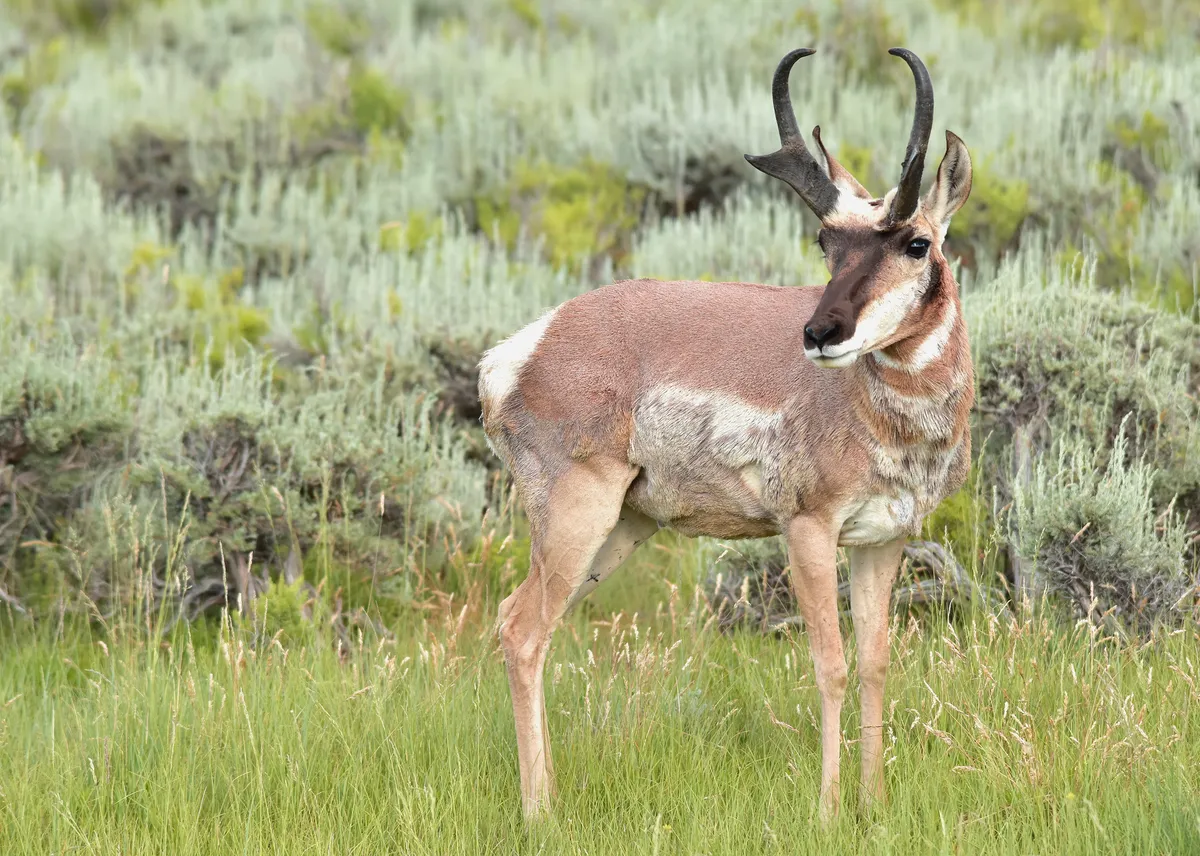
Underpasses work well for deer, bears, coyotes and smaller animals. Elk and pronghorn are different. They want wide-open space where they can see predators coming, and many won’t walk into a tunnel. Pronghorn, North America’s fastest land animals, are especially wary.
The Greenland wildlife overpass was designed for them. It spans six lanes of traffic near the Greenland exit and fills a 3.7-mile gap between the other crossings. It’s 200 feet wide and 209 feet long, nearly an acre, and it’s covered in soil and grass seeded to look like the surrounding grassland. Fencing on the bridge and at both ends steers animals onto it. The structure cost about $15 million, most of it from the Federal Highway Administration’s Wildlife Crossings Pilot Program, and it was built in under a year.
It’s working so far. Four CDOT cameras on the overpass have recorded elk herds, pronghorn, black bears, mule deer and coyotes. “We’re seeing pronghorn for the first time in decades cross over to the west side of I-25 because of the bridge,” Attardo told CBS Colorado. This year’s drought slowed the grass, so CDOT plans to bring in new topsoil and reseed next year.
Small animals need crossings too
The overpass isn’t only for big game. Biologists piled brush and logs in a line across the bridge so small animals can cross under cover, out of sight of coyotes, foxes and hawks. The underpasses also have small-animal passages built into them.
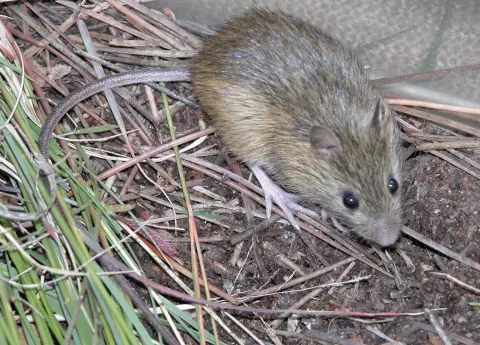
One of the animals that matters most here is tiny. The Preble’s meadow jumping mouse, listed as threatened under the Endangered Species Act, lives along this part of the I-25 corridor. “Preble’s also needs to get to the other side of I-25 too,” Colorado Parks and Wildlife biologist Brandon Marette told CBS Colorado. Northern leopard frogs and other reptiles, amphibians and rodents use these crossings as well. For animals with small, scattered populations, a highway that splits their habitat makes it harder to find mates and new territory. Read more on our roads and vehicles and habitat loss threat pages.
Why it could be built here
An overpass only helps if wild land is waiting on both sides. That’s what makes the Gap unusual. Over the past 30 years, Douglas County has conserved about 66,000 acres by buying open space and placing conservation easements on private ranchland. Around the Gap, roughly 55 square miles of habitat are now protected. Two land trusts, the Douglas Land Conservancy and the Colorado Cattlemen’s Agricultural Land Trust, protect ranchland on both sides of the bridge through conservation easements, so the habitat it links will stay open.
The real test: elk genetics
The bigger goal is reconnecting herds the interstate has kept apart since it was built in the 1950s. Ecologist Julia Kintsch, the lead researcher on the overpass study, says her team is collecting genetic samples from elk on both sides of I-25 to set a baseline. In five to 10 years, they’ll compare the herds again to see whether animals are mixing and genetic diversity is rising. Elk and pronghorn already showing up on camera is “a really promising sign,” Kintsch told Colorado Politics.
The first results from the overpass study are expected in spring 2027. What researchers learn about how animals use such a large structure could shape crossing projects across the country.
Is it really the biggest?
CDOT calls Greenland the largest wildlife overpass in North America. By the bridge itself, it is: it’s longer and wider than the main bridge of California’s Wallis Annenberg Wildlife Crossing on U.S. 101. But the Annenberg project includes a second bridge and acres of habitat restoration, so it covers more ground overall, and it’s expected to open this winter. Both are small next to the Netherlands’ Natuurbrug Zanderij Crailoo, which is about 2,600 feet long.
What’s next for Colorado
Colorado has been building crossings for years. The State Highway 9 project between Green Mountain Reservoir and Kremmling, finished in 2016, cut wildlife crashes by about 90% and recorded more than 112,000 mule deer crossings, according to CDOT. CDOT has also built an overpass on U.S. 160 west of Pagosa Springs and is planning crossings on I-70 at East Vail Pass. Other priorities include I-25 at Raton Pass, U.S. 40 near Empire and Craig, U.S. 160 near Mesa Verde and U.S. 287 near Fort Collins.
Funding is the hard part. Federal crossing grants have become less certain, and until this year Colorado had no steady state money for crossings. The Wildlife Collision Prevention Act, signed in May 2026, changes that. Starting January 1, 2027, drivers can pay an optional $5 when they register a vehicle, with an opt-out. The money goes to a fund that helps CDOT and Colorado Parks and Wildlife build crossings. Attardo estimates it could raise about $3 million a year, enough to help match large federal grants.
Crossings also save drivers money. Crashes with large wildlife cost Colorado drivers about $80 million a year in property damage, plus $66.3 million in medical bills, according to CDOT and the Colorado Wildlife and Transportation Alliance. “They pay for themselves in about 15 years because of all those accidents that they prevent,” Attardo said.