Quick facts
- Where in Colorado
- Nearly statewide; scarce or absent in most of the southeast (CPW)
- Colorado rank
- S3, vulnerable (NatureServe)
- State status
- State Special Concern; SWAP Tier 1 (CPW, 2025)
- Federal status
- Not listed; 2011 finding: listing not warranted
- Size
- Head and body up to about 4.3 inches
- Breeding
- From March in the lowlands; mainly May–June in the mountains
Overview
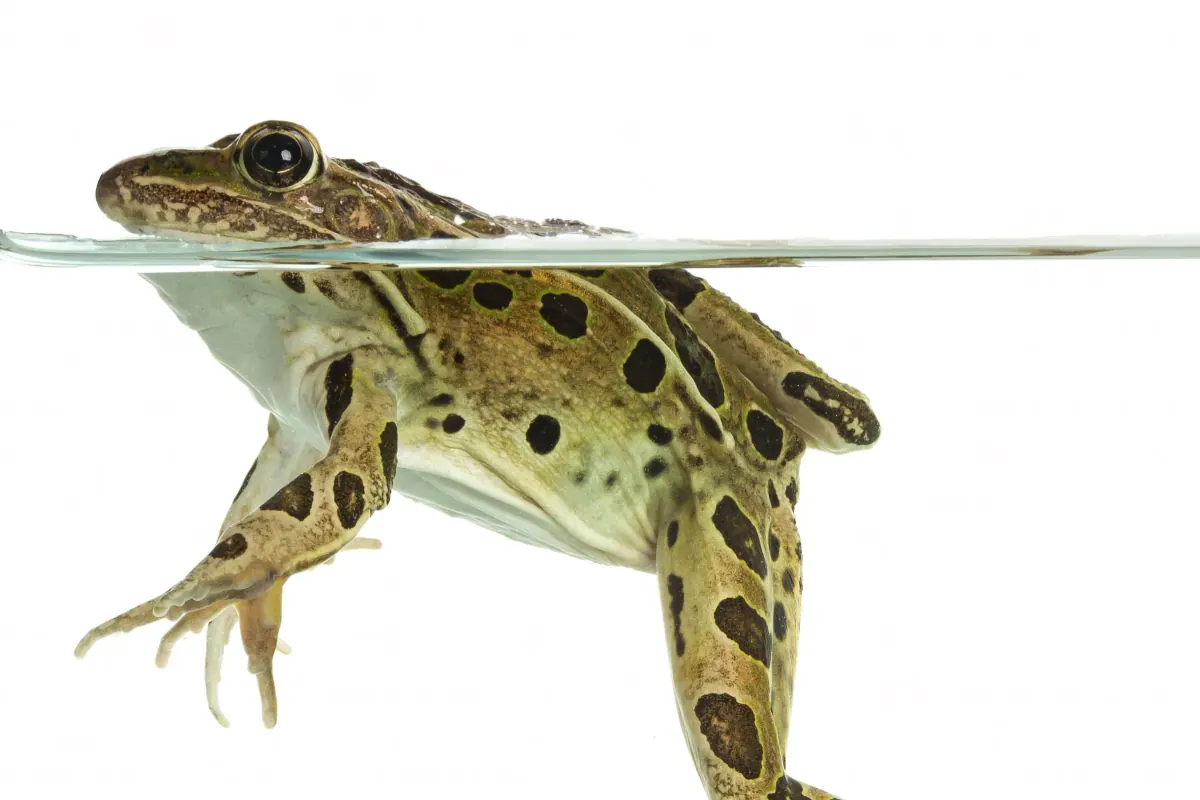
The northern leopard frog is a smooth-skinned green, yellow-green or brown frog with large, dark spots, each ringed by a pale halo. A ridge runs down each side of the back, and the hind toes are extensively webbed. Adults reach about 11 centimeters (4.3 inches) from snout to vent, CPW says.
It was once common across Colorado. USFWS, reviewing the species in 2011, wrote that the frog “was historically quite common throughout Colorado,” but that over the previous 30 to 40 years populations had declined and even disappeared from parts of eastern and north-central Colorado, including Rocky Mountain and Mesa Verde national parks.
CPW lists the northern leopard frog as a State Special Concern species and, in its 2025 State Wildlife Action Plan, a Tier 1 Species of Greatest Conservation Need, the tier for species that need conservation action most urgently. NatureServe ranks it S3, vulnerable, in Colorado, though G5, secure, across its wide North American range.
Habitat in Colorado
CPW describes the frog as nearly statewide in mountains and lowlands, but scarce or absent in most of southeastern Colorado and in the Republican River drainage in the northeast. It is locally common, but now rare or extirpated in many areas, particularly in the mountains.
It lives in wet meadows and along the banks and shallows of marshes, ponds, lakes, reservoirs, streams and irrigation ditches. In wet, mild weather it may roam far from water.
Natural History
Leopard frogs breed in shallow, quiet water: the edges of permanent ponds and lakes, beaver ponds, and seasonally flooded areas next to permanent pools or streams. The season starts in March in the lowlands and comes mainly in May and June in the mountains.
Females lay large, somewhat flattened egg masses 5 to 15 centimeters across, holding up to several thousand eggs, usually attached to plants in shallow water. Tadpoles turn into small frogs as early as late June in the lowlands and mainly from July to September in the mountains, CPW says.
Primary Threats
Chytrid fungus
Chytrid fungus (Batrachochytrium dendrobatidis, or Bd) has likely had a large impact on northern leopard frogs in the western United States, USFWS wrote in 2011. A leopard frog specimen collected in Colorado and preserved in 1974 tested positive for Bd, tracing the fungus in Colorado back to the 1970s, when frogs were dying in large numbers here. USFWS called Bd a possible contributing factor to those deaths. See chytrid fungus.
Bullfrogs and nonnative fish
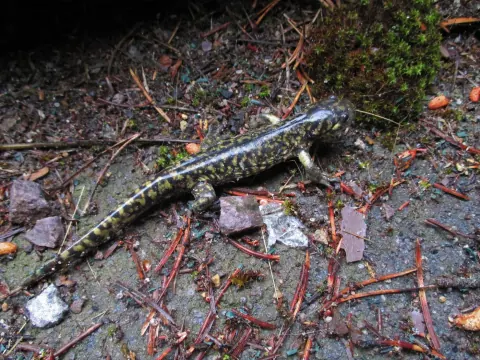
Across the West, the loss of wetland habitat has been compounded by the spread of the American bullfrog and nonnative fish, which eat and compete with leopard frogs at every life stage. Bullfrogs and tiger salamanders also host ranavirus; USFWS noted that losing 80 to 90 percent of a population’s tadpoles to it can cut the number reaching adulthood by 80 percent. See nonnative fish.
Losing wetlands
NatureServe names habitat loss among the main threats across the range. In the westernmost states, USFWS found the loss of aquatic habitat to be a driver of decline. See habitat loss.
Recovery & Conservation
On June 5, 2006, the Center for Native Ecosystems and other groups and individuals petitioned USFWS to list the northern leopard frog in the western United States, including Colorado, as a threatened distinct population segment. On October 5, 2011, USFWS found listing not warranted. The frog is still widespread and relatively common in the eastern United States and eastern Canada, the agency wrote, so disease and predation did not threaten the species as a whole, even though they had driven losses in the West.
In Colorado it is a State Special Concern species and a Tier 1 Species of Greatest Conservation Need. Under CPW’s 2026 herpetofauna rules, the frog is not on the list of native species that may be collected from the wild, and releasing any reptile or amphibian is unlawful except as CPW allows.
In August 2026, CPW asked the Parks and Wildlife Commission to consider banning the use of any amphibian, alive or dead, as fishing bait, to reduce the spread of amphibian diseases and invasive bullfrogs. That proposal had not been adopted as of October 2026.
What You Can Do
- Look and listen. Watch frogs from the bank, or briefly hold one to identify or photograph it and put it back unharmed where you found it within 20 minutes.
- Clean, drain and dry boots, waders and nets before moving between ponds, so you don’t spread chytrid fungus.
- Never move frogs, tadpoles or water from one wetland to another, and never release a pet amphibian.
- Report sightings, especially from mountain wetlands; see Report a Sighting.
- Explore related species. Read the wood frog and boreal toad profiles.
Frequently asked questions
- What does a northern leopard frog sound like?
- CPW describes a prolonged snore lasting 2 to 3 seconds, followed by two or three series of stuttering croaks or chuckles. Sometimes the frog gives the chuckles without the snore, or the snore alone.
- Can I catch a leopard frog in Colorado?
- Only briefly, to identify or photograph it: Colorado's 2026 rules let people hold most wild amphibians for up to 20 minutes and then release them unharmed where they were found. The northern leopard frog is not on the list of species that may be collected; see What You Can Do.
- Why did leopard frogs vanish from Rocky Mountain National Park?
- USFWS's 2011 review lists Rocky Mountain and Mesa Verde national parks among the Colorado places where the frog was locally extirpated. Chytrid fungus, present in Colorado since at least the 1970s, is a possible contributing factor; see Primary Threats.
- Was the northern leopard frog ever considered for federal listing?
- Yes. Conservation groups petitioned in 2006 to list western populations as threatened, and USFWS found listing not warranted in 2011. The Recovery & Conservation section has the details.