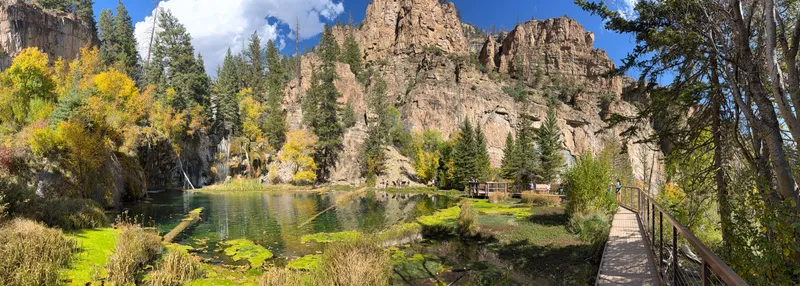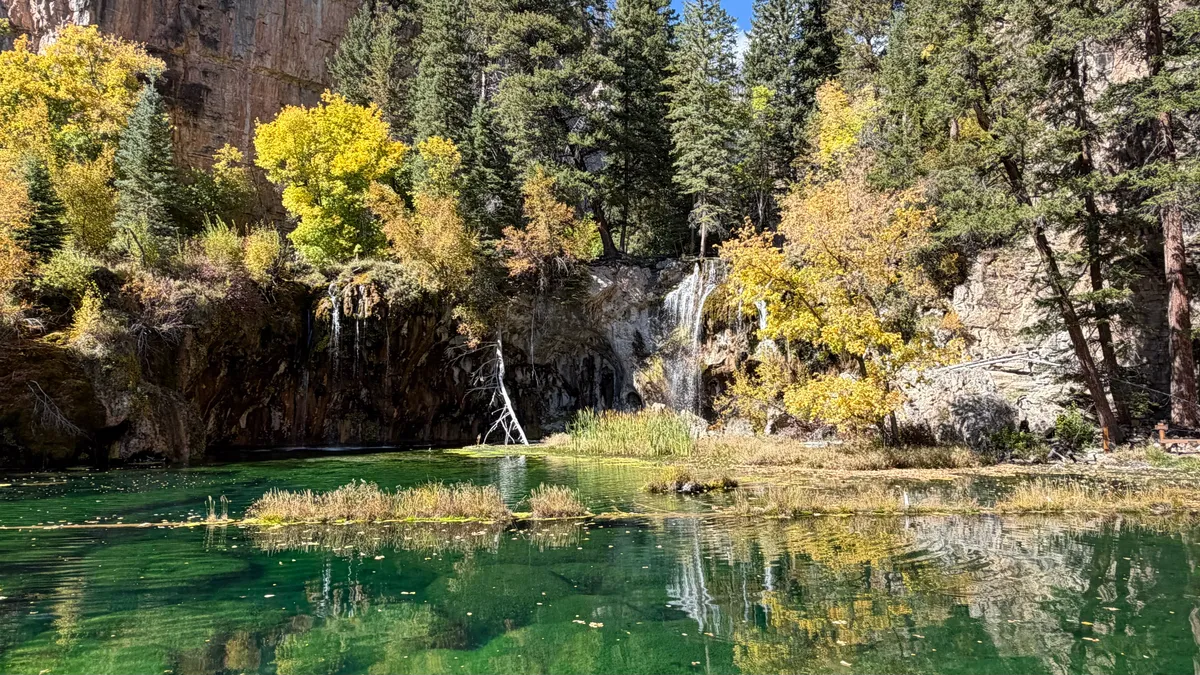
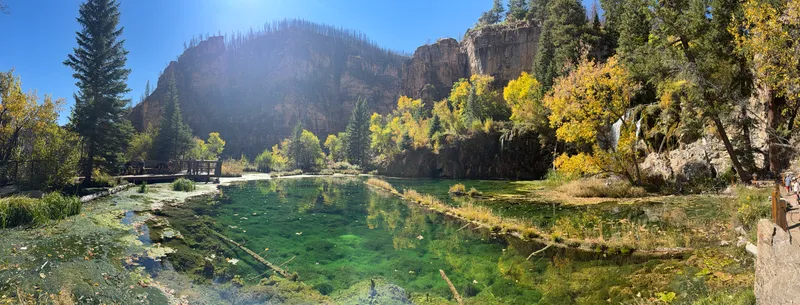
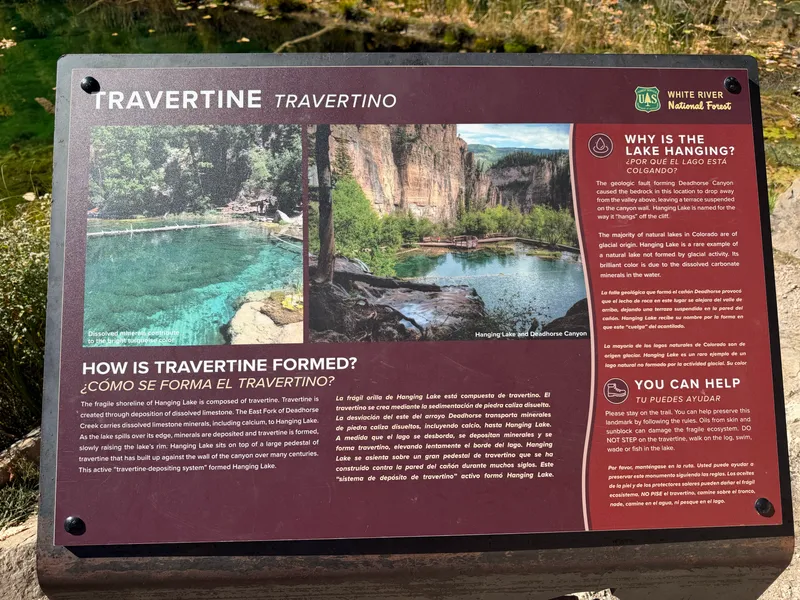
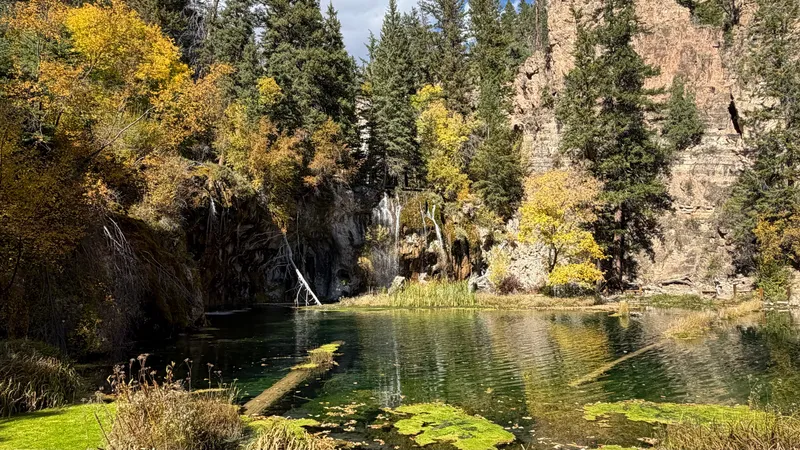
Hanging Lake shouldn’t exist. Most natural lakes in Colorado were carved by glaciers. This one wasn’t. Movement along a geologic fault left a shelf of bedrock stranded partway up the canyon wall, and over many centuries mineral-rich water built a stone rim on top of it. The result is a turquoise pool, about an acre and a half, that seems to hang off the wall of Glenwood Canyon.
For years, that beauty was also its biggest problem. By 2017 about 150,000 people a year were hiking to the lake, and about 186,000 came in 2018. On summer days more than 1,000 hikers crowded a trail built for far fewer. Today the lake is capped at 615 visitors a day, and in June 2026 a $4.9 million rebuilt trail opened to the public. I hiked it on October 4, 2026. Here is what changed, why it mattered, and what lives at Hanging Lake that makes it worth the trouble.
At a glance
- Where
- Glenwood Canyon, White River National Forest, east of Glenwood Springs off I-70 (Exit 125, eastbound only)
- Trail
- 1.2 miles one way, steep, with roughly 1,000 to 1,200 feet of climbing
- Permit
- Required year-round. $12 per person in summer 2026, $10 in winter, with a 3-hour window
- Daily limit
- 615 people
- Protected status
- National Natural Landmark since 2011
- Rules
- No swimming, wading or touching the water. No fishing, dogs or drones. Stay off the travertine and the log.
A lake built from stone and spring water
Hanging Lake is a travertine lake. Water from the East Fork of Deadhorse Creek flows through the Leadville Limestone and picks up dissolved calcium carbonate along the way. When that water spills over the lake’s edge, the minerals settle out and harden into travertine. Each layer raises the rim a little higher. Over centuries, those layers have stacked into a stone shelf thick enough to hold the entire lake against the cliff.
The same dissolved carbonates give the water its color. And they explain why the shoreline is so fragile. Travertine is soft, it grows slowly, and the Forest Service’s signs at the lake warn that oils from skin and sunscreen can damage it. One footprint on the rim can break off growth that took years to form.
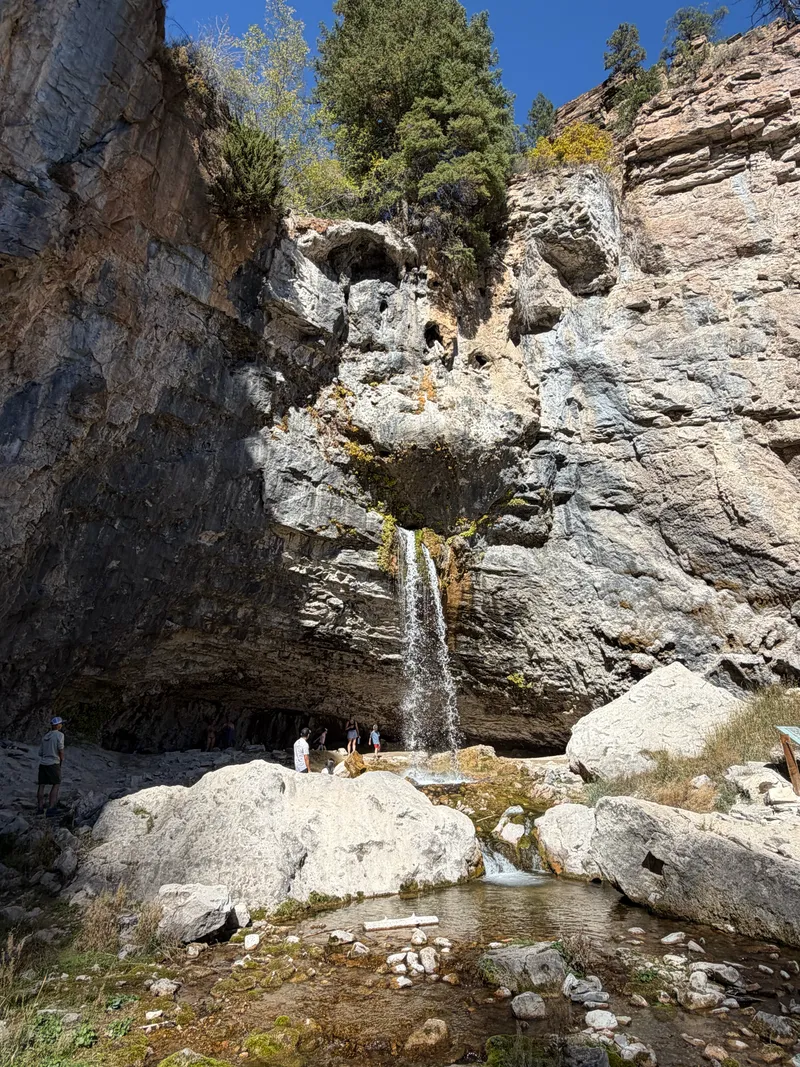
Above the lake, the water arrives in an unusual way. At Spouting Rock, water doesn’t pour over the top of the cliff. It shoots out of a hole in the cliff face. Groundwater seeping through cracks absorbed carbon dioxide, formed weak carbonic acid, and slowly dissolved a passage through the limestone. That spring feeds the stream that tumbles over Bridal Veil Falls into Hanging Lake, then on to Deadhorse Creek and the Colorado River.
Loved nearly to death
By the late 2010s the lake was showing the wear. Forest Service officials said trail sections that started about 18 inches wide could spread to as much as 20 feet. Visitors waded and swam in the lake, walked out on the famous log, left trash and human waste along the trail, brought dogs despite the rules, and in 2017 vandalized the area with graffiti. The parking lot filled by 8 a.m. on weekends, and cars spilled onto the I-70 exit ramp.
“There were just so many things that were bad and getting worse and worse,” Lisa Langer, director of tourism promotion for Visit Glenwood Springs, told 5280. “And, obviously, the Forest Service didn’t have enough staff to be able to tell people to behave up there.”
The White River National Forest released a management plan in August 2017. Its core idea was simple: limit the number of people to what the lake and trail could take. The cap was set at 615 per day, and the permit system started on May 1, 2019, run in partnership with the City of Glenwood Springs. Permits are still required today. Under the 2026 system, you book a 3-hour window online for $12 per person and drive to the trailhead. According to the official permit page, fees pay for the reservation service, trail supervisors, restroom cleaning, conservation and interpretation, and trail maintenance. Checkout also offers an optional $1 donation to the Roaring Fork Stewardship Fund for the White River National Forest.
Fire, floods and a trail rebuilt to last
Then came two disasters in a row. The human-caused Grizzly Creek Fire started on August 10, 2020, and burned 32,631 acres in Glenwood Canyon. The flames mostly spared the lake, but scorched slopes along the trail. In July 2021, heavy rain on the burn scar sent debris flows down the canyon. They closed I-70 and tore out large parts of the Hanging Lake Trail, including its bridges.
A temporary trail let hikers back in by June 2022. Permanent reconstruction began in spring 2024 and finished with a ribbon cutting on June 18, 2026. The National Forest Foundation managed the $4.9 million project. Funding came from the U.S. Forest Service, Colorado Lottery proceeds through Great Outdoors Colorado, a Colorado Parks and Wildlife grant, the City of Glenwood Springs, and private donors. More than 6,000 visitors whose reservations were canceled chose to donate their fees instead of taking a refund.
What changed on the ground:
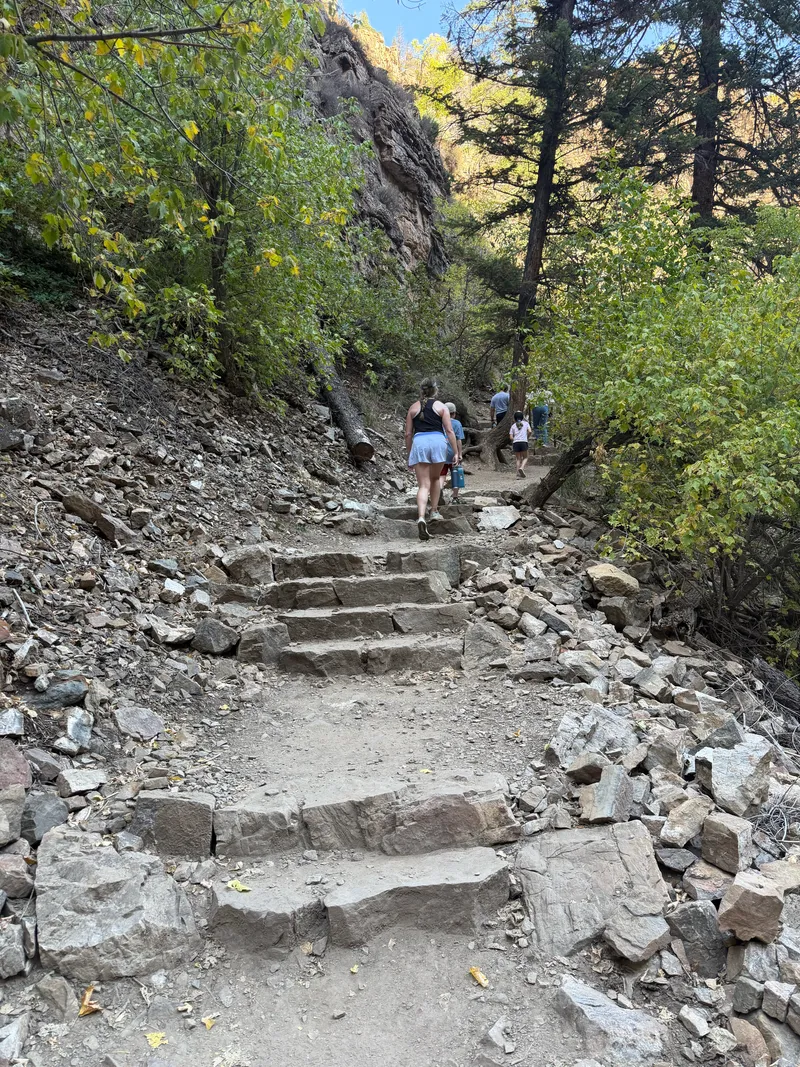
- 1,289 hand-set stone steps, built from about 325 tons of rock moved by hand
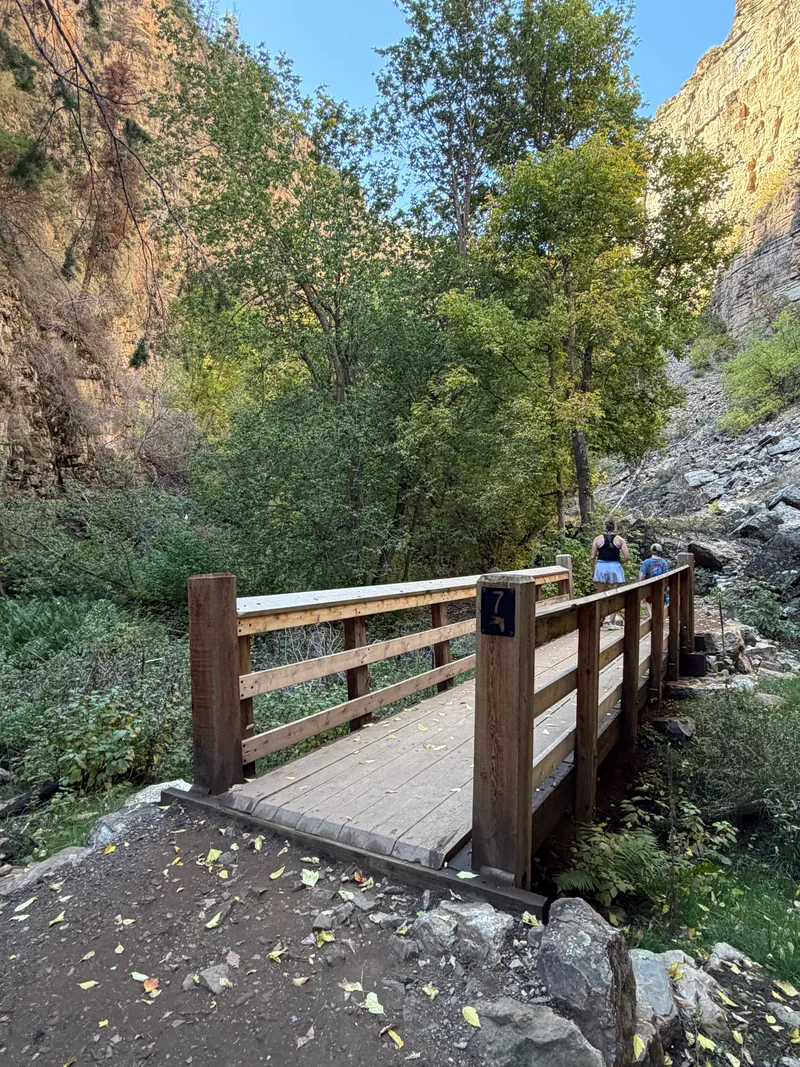
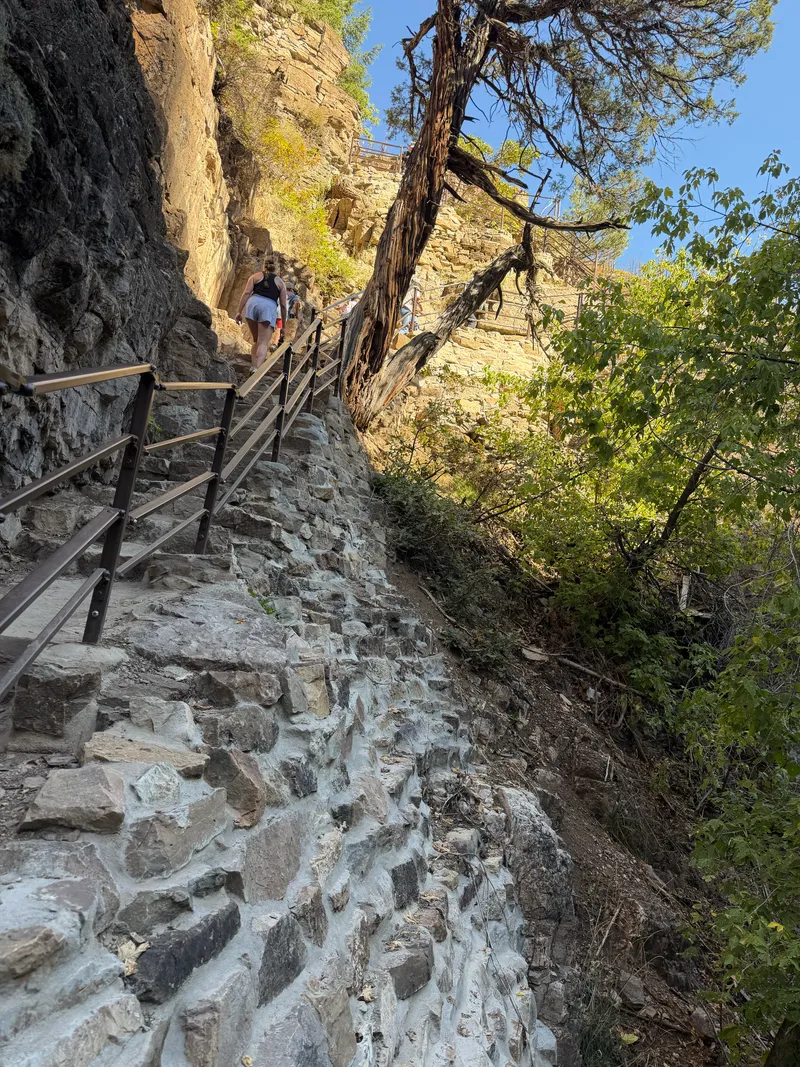
- Seven new bridges over Deadhorse Creek, raised to stand up to floods and debris flows
- New railings on the steepest pitches
- A new boardwalk at Spouting Rock, which lets hikers walk behind the falling water
- A redesigned trailhead with a shade structure, picnic area and new signs
- New bilingual interpretive signs at the lake on geology, water, wildlife and rare plants
Leanne Veldhuis, the Eagle-Holy Cross District Ranger, said the goal was a trail built for the next 100 years. On my hike, the difference was obvious. The path stayed in one narrow line, the steps held their shape, and there was no sign of the braided side trails that once spread across the canyon floor. That’s the point. A trail people want to stay on protects everything next to it.
The life Hanging Lake protects
Hanging Lake has no federally listed endangered species. What it protects is rarer in another way: a small, constantly wet habitat in a dry canyon, and a few species that need exactly those conditions.
Black swift
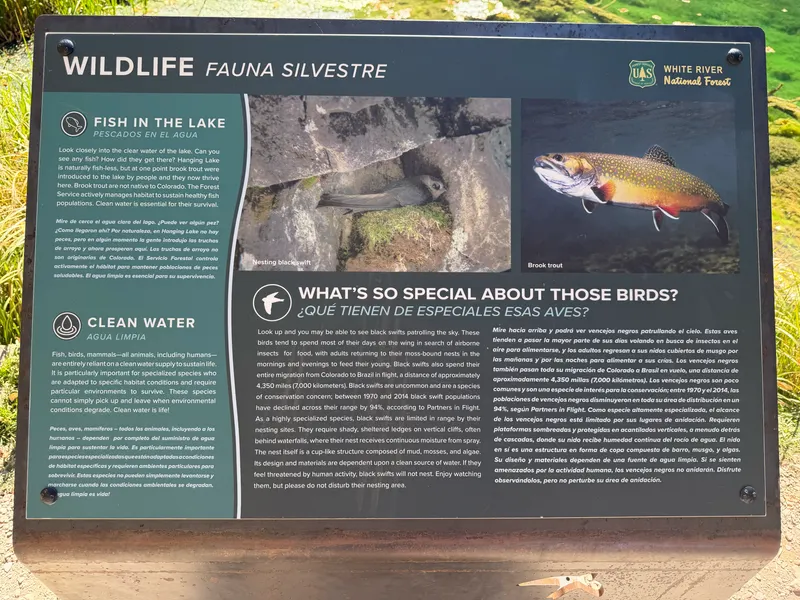
If you look up near the waterfalls, you might see black swifts. They nest on cliff ledges kept cool and damp by spray, and many pick a spot tucked behind a waterfall. A pair glues together a small nest of mud, moss and algae and raises a single chick. Colorado holds most of the known black swift nest sites in the United States and Canada, and Hanging Lake is one of them.
Black swifts spend almost all day in the air, hunting flying insects high above the canyon. A study published in 2012 used tiny trackers on swifts from two Colorado colonies to solve a long-standing mystery: these birds spend the winter in the lowland rainforest of western Brazil, about 4,300 miles away. Black swift numbers have dropped about 94% across their range since 1970, according to Partners in Flight. Colorado Parks and Wildlife lists the species as Tier 1, its top priority, in the 2025 State Wildlife Action Plan. The signs at the lake ask visitors not to disturb the nesting area, because swifts won’t nest where people bother them.
Hanging garden sullivantia
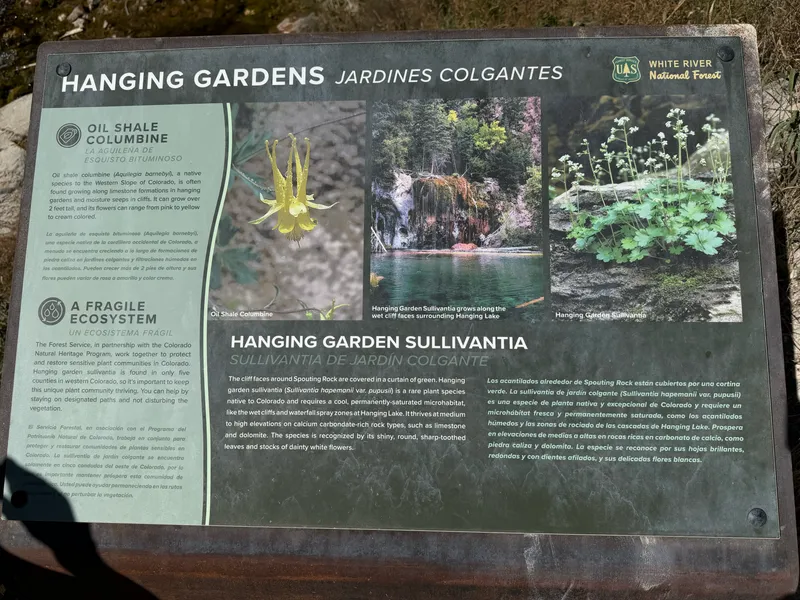
The wet cliffs around Hanging Lake and Spouting Rock are covered with plants growing out of the rock face. Botanists call this a hanging garden. One of its most important plants is hanging garden sullivantia (Sullivantia hapemanii var. purpusii), a low plant you can spot by its glossy, rounded leaves with jagged edges and its airy stems of small white flowers. It grows only in Colorado, in five western counties, and only where water keeps calcium-rich rock such as limestone or dolomite constantly wet. NatureServe ranks it as vulnerable worldwide. In its 2010 study of the site, the Colorado Natural Heritage Program called the Hanging Lake population the largest in the Southern Rocky Mountain region and rated it in excellent condition.
Oil shale columbine
Look for a tall columbine with yellow-to-pink flowers in the same wet spots. Oil shale columbine (Aquilegia barnebyi) grows naturally only in western Colorado and Utah’s Uinta Basin, on damp cliffs and limestone seeps.
The brook trout (and why you can’t fish here)
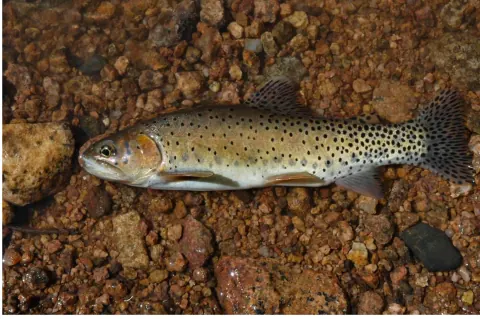
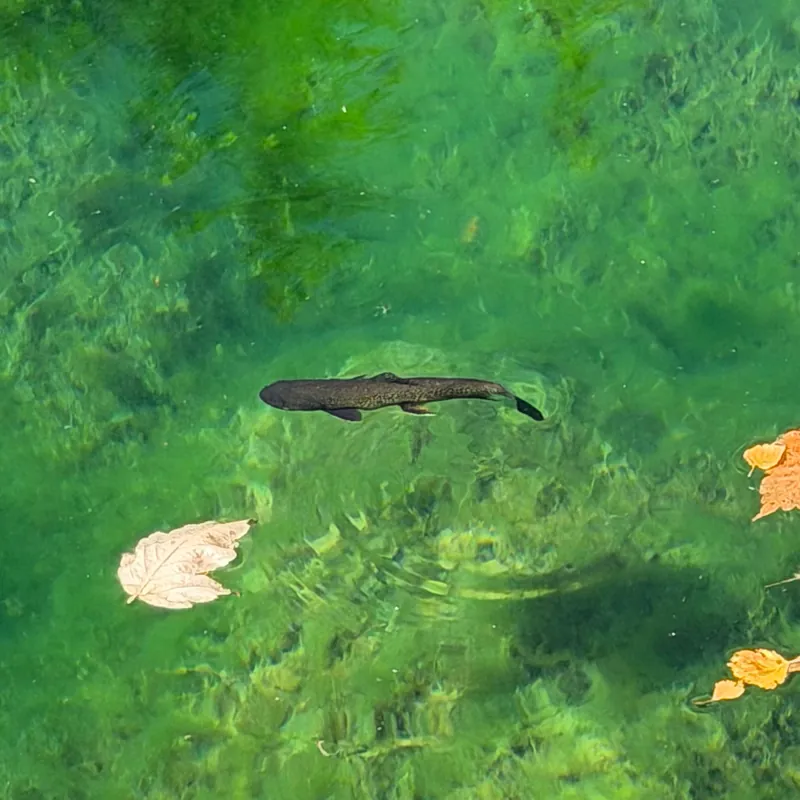
You will probably see fish cruising over the green beds of water plants. They are brook trout, and they don’t belong here. The Forest Service’s sign at the lake explains that Hanging Lake was naturally fishless. The brook trout here were put in by people, and the cold, clear spring water suits them well. Brook trout aren’t native to Colorado. Across the state, non-native trout, including brook trout, are a major reason native greenback cutthroat trout disappeared from so many streams. Fishing is not allowed at Hanging Lake.
Wildlife of the canyon
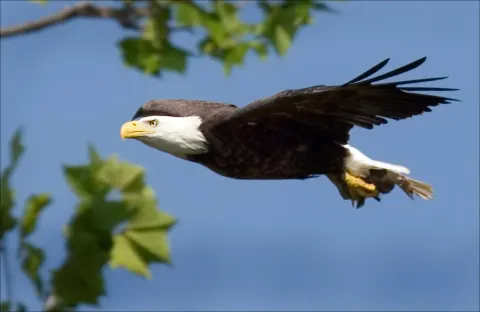
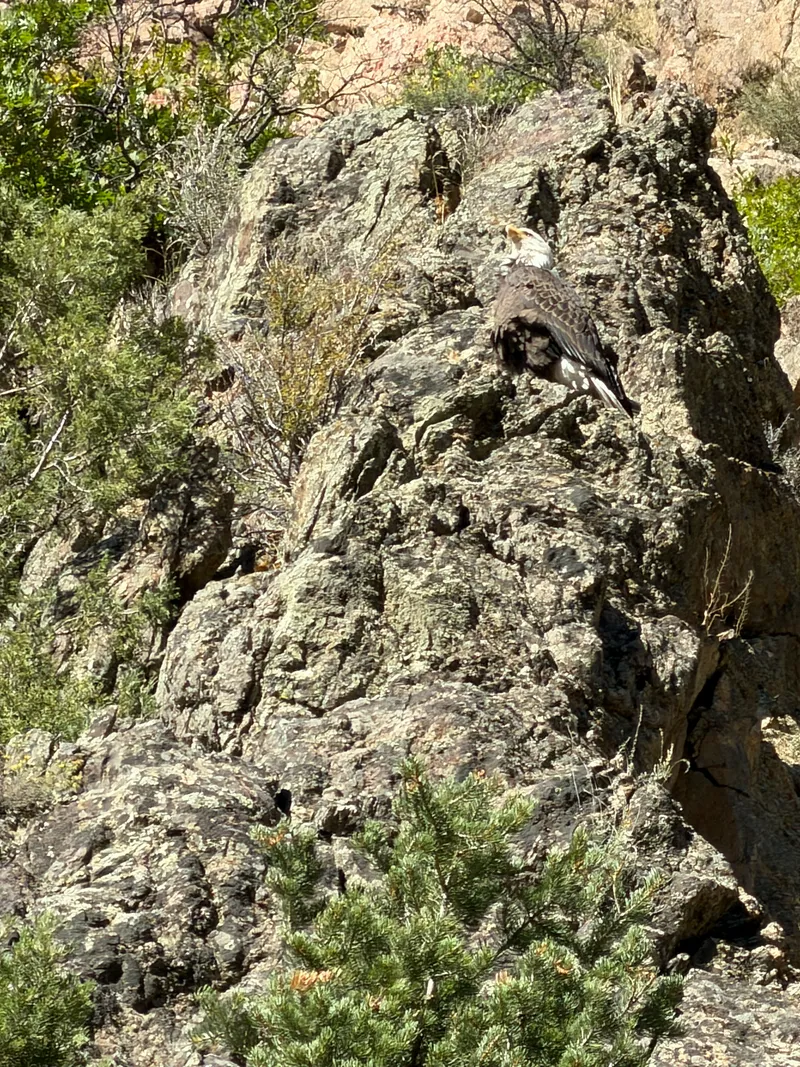
The canyon around the lake supports forests of Douglas-fir and a stream-side forest of box elder and red-osier dogwood, a plant community the Colorado Natural Heritage Program calls rare across its range. Bald eagles also hunt the Colorado River below. On the day I visited, a bald eagle sat on the rocks just above the river, near the start of the trail.
Is it working?
The numbers say yes. Before permits, summer days could top 1,000 hikers. Now no more than 615 people per day can visit. Before the trail closed, it still drew more than 72,000 visitors a year and an estimated $4.6 million a year for the Glenwood Springs area. Fewer people means less trampling, less trash, and fewer feet on the travertine. It also means a quieter trail, which matters for nesting swifts.
On my October hike, the water was clear and green, the travertine rim was intact, and the hanging gardens still dripped from the cliffs at Spouting Rock.
The one gap: Spouting Rock
Not everything I saw was working. At Spouting Rock, the waterfall above the lake, many visitors on the day I hiked were standing directly under the falling water and bathing in it. No one was enforcing the rules there.
That matters because Spouting Rock is where the lake’s water comes from. The stream from the falls runs straight down over Bridal Veil Falls and into Hanging Lake. The Forest Service’s signs at the lake warn that oils from skin and sunscreen can damage this fragile ecosystem, and the official rules ban swimming and any bodily contact with the water at Hanging Lake. Anything that washes off a bather at Spouting Rock flows into the lake a few minutes later. The wet cliffs around the falls are also home to hanging garden sullivantia, and the signs there ask visitors to stay on the designated paths and leave the plants alone.
Hikers are allowed to walk behind the falls on the path, and that’s part of what makes the spot special. But nothing on the ground marks the line between walking behind the water and standing in it. A simple fix would close the gap: a sign at the falls that says no bathing or standing in the water, and a low railing or rope that keeps people on the path. Those same tools already work along the rest of the trail. We hope the White River National Forest will add them at Spouting Rock.
The lesson reaches beyond this one lake. Colorado has many places so popular that crowds put them at risk. Hanging Lake shows that a firm limit, a well-built trail, and clear signs can protect a fragile place without closing it to the public. In June 2026, Glenwood Springs Mayor Marco Dehm said, “We do not own places like Hanging Lake; we are merely stewards of them.”
How to visit responsibly
- Book ahead. Buy your permit ($12 per person) on the official Visit Glenwood Springs permit page. Show up within 30 minutes of your time.
- Plan for the climb. The trail is short but steep. Most people need about two hours up and one down. There are no restrooms or water on the trail.
- Stay off the water and the rim. Don’t swim, wade, touch the water, or walk on the travertine or the log.
- Stay out of the water at Spouting Rock, too. Walk behind the falls on the path, but don’t stand under the falling water or wade in the pool below it. That stream fills the lake.
- Leave dogs and drones at home. Only trained service animals are allowed.
- Give nesting swifts space. Watch from the trail and boardwalk, and keep noise down near the falls.
- Winter hikers need traction. The permit office strongly recommends microspikes and trekking poles on the icy trail.
- Westbound drivers: there is no westbound exit for Hanging Lake. Go to the Grizzly Creek exit (121) and turn around.