Overview
The bald eagle is one of Colorado’s great recovery stories. The state went from 14 known nesting pairs in the late 1980s and early 1990s to more than 300 in 2023. It is still protected by federal law, and CPW lists it as a State Special Concern species.
The bald eagle was removed from the federal endangered species list in 2007. It remains protected by the Bald and Golden Eagle Protection Act and the Migratory Bird Treaty Act.
In Colorado, it is a State Special Concern species and a Tier 2 Species of Greatest Conservation Need. Many more eagles arrive in winter than nest here.
Natural History
Bald eagles are 31 to 37 inches long, with a wingspan of 6 to 8.5 feet. Males average 8 to 9 pounds, and females 10 to 14 pounds.
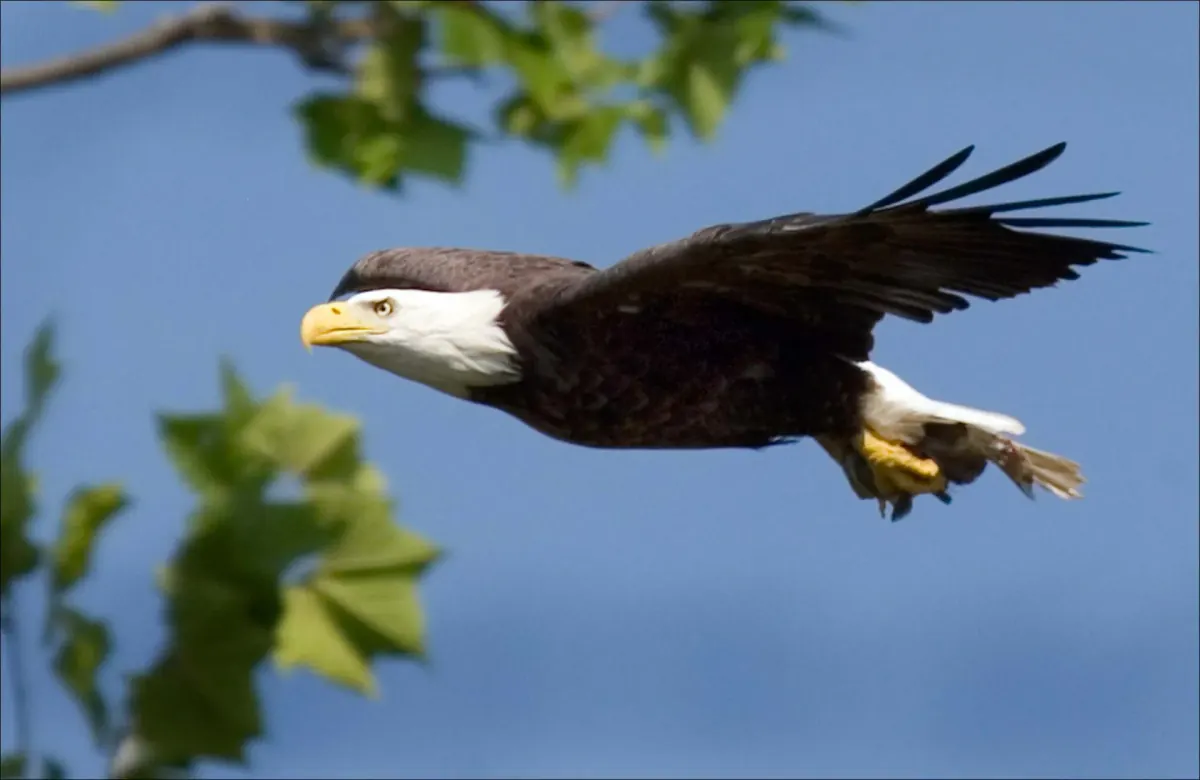
Adults have a snowy white head, neck and tail and a chocolate-brown body. Young eagles leave the nest dark brown at about 12 weeks old and become mostly white-headed in their fourth or fifth year.
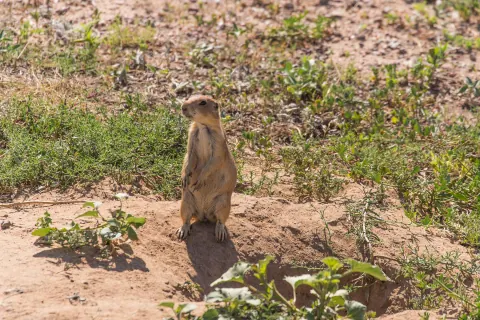
Bald eagles eat fish, which they catch or steal from other birds, along with waterfowl, prairie dogs, rabbits, other small mammals and birds, and carrion. At upland Front Range nests, prairie dogs are the main prey.
Their nests, usually in tall trees near water, can be seven to eight feet across.
Habitat in Colorado
Nesting
Bald eagles usually nest in tall trees near water. The Front Range alone had more than 90 breeding pairs in 2020.
Winter
Many more eagles arrive in winter. CPW researcher Reesa Conrey said eBird data suggest the winter population is roughly 15 times the breeding-season population. Eagles winter near reservoirs and major rivers, including the South Platte, Arkansas, Rio Grande, Yampa and Colorado.
Barr Lake State Park
A nest basket was installed at Barr Lake in 1986, and eagles first fledged young there in 1989. By 2021 the nest had produced 59 young. An estimated 80 to 90 bald eagles were at the park in early February 2025, around the annual Bald Eagle Festival.
Decline and Recovery
The national story
The pesticide DDT, banned in 1972, “nearly decimated” bald eagles, as KUNC put it. The U.S. Fish and Wildlife Service counted 417 nesting pairs in the lower 48 states in 1963, and about 71,467 pairs in 2018–19. In 2024, the bald eagle became the official national bird by law.
Colorado’s recovery
Colorado’s breeding bird atlases found 14 nesting pairs in 1987–1994 and 148 pairs in 2007–2011. CPW counted more than 300 nesting pairs in 2023, the most the state has ever recorded, and at least 300 occupied nests in 2024.
Federal Listing History
- 1967: first listed as endangered, for eagles south of the 40th parallel (32 FR 4001).
- 1978: listed as endangered across the lower 48 states, except in Michigan, Minnesota, Wisconsin, Oregon and Washington, where it was listed as threatened (43 FR 6230).
- 1995: reclassified as threatened throughout the lower 48 (60 FR 36000, published July 12, 1995).
- 2007: removed from the endangered species list by a rule published July 9, 2007 (72 FR 37346), effective August 8, 2007.
Primary Threats
Avian influenza
In 2022, eagles caught the virus by eating infected waterfowl, and Colorado nest success fell about 20%.
Lead
A 2022 study in Science of 1,210 eagles from 38 states found that nearly half showed repeated lead exposure.
Other causes of death
CPW has also documented tagged eagles dying from electrocution, vehicle strikes and West Nile virus.
Recovery & Conservation
Federal protection
Although it is no longer on the endangered species list, the bald eagle is still protected by the Bald and Golden Eagle Protection Act of 1940. The act prohibits “take,” which includes to “pursue, shoot, shoot at, poison, wound, kill, capture, trap, collect, molest or disturb” eagles. The Migratory Bird Treaty Act also protects them.
State status
CPW lists the bald eagle as a State Special Concern species and a Tier 2 Species of Greatest Conservation Need.
Rankings
NatureServe ranks the bald eagle G5, secure, and S3B, S3N in Colorado, meaning vulnerable both as a breeder and as a winter resident.
Nest buffers
CPW recommends no human activity within half a mile of active nests from December 1 to July 31, and recommends that winter roosts not be disturbed from November 15 to March 15.
What You Can Do
- Give eagles space. In Conrey’s words: “If the eagles are changing their behavior in response to your presence, you’re probably too close.”
- Respect nest and roost buffers. CPW recommends no human activity within half a mile of active nests from December 1 to July 31, and no disturbance of winter roosts from November 15 to March 15.
- Don’t handle sick or dead birds. Report three or more dead birds in one area to CPW.
- Consider non-lead ammunition. Hunters can use non-lead ammunition to reduce lead in carcasses and gut piles.
- Explore related species. Read the black-tailed prairie dog profile.
Sources
- Federal Register (2007), removing the bald eagle in the lower 48 states from the list
- Federal Register (1995), bald eagle reclassification
- USFWS, Bald and Golden Eagle Protection Act
- USFWS, bald eagle species page
- CPW, threatened and endangered wildlife list
- CPW species profile: bald eagle (Colorado Natural Heritage Program)
- CPW, bald eagle species page
- NatureServe Explorer, bald eagle
- KUNC (2024), Colorado’s bald eagles are soaring in numbers
- KKTV (2025), CPW studies increase in bald eagle population
- Colorado Outdoors (2021), studying bald eagles along the Front Range
- Colorado Outdoors (2021), Barr Lake State Park eagle nests
- Colorado Public Radio (2024), how to see bald eagle season in Colorado
- Front Range Eagles, nest territories and prey
- ScienceDaily (2022), lead exposure in eagles
- CPW (2024), bald eagle update
- CPW (2025), seasonal increase in avian influenza cases