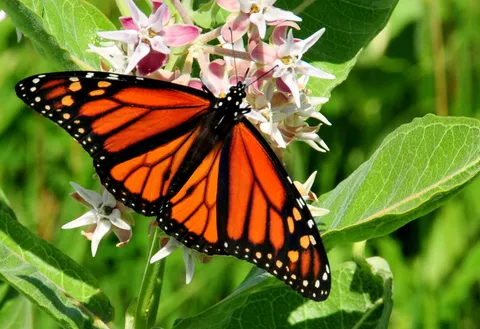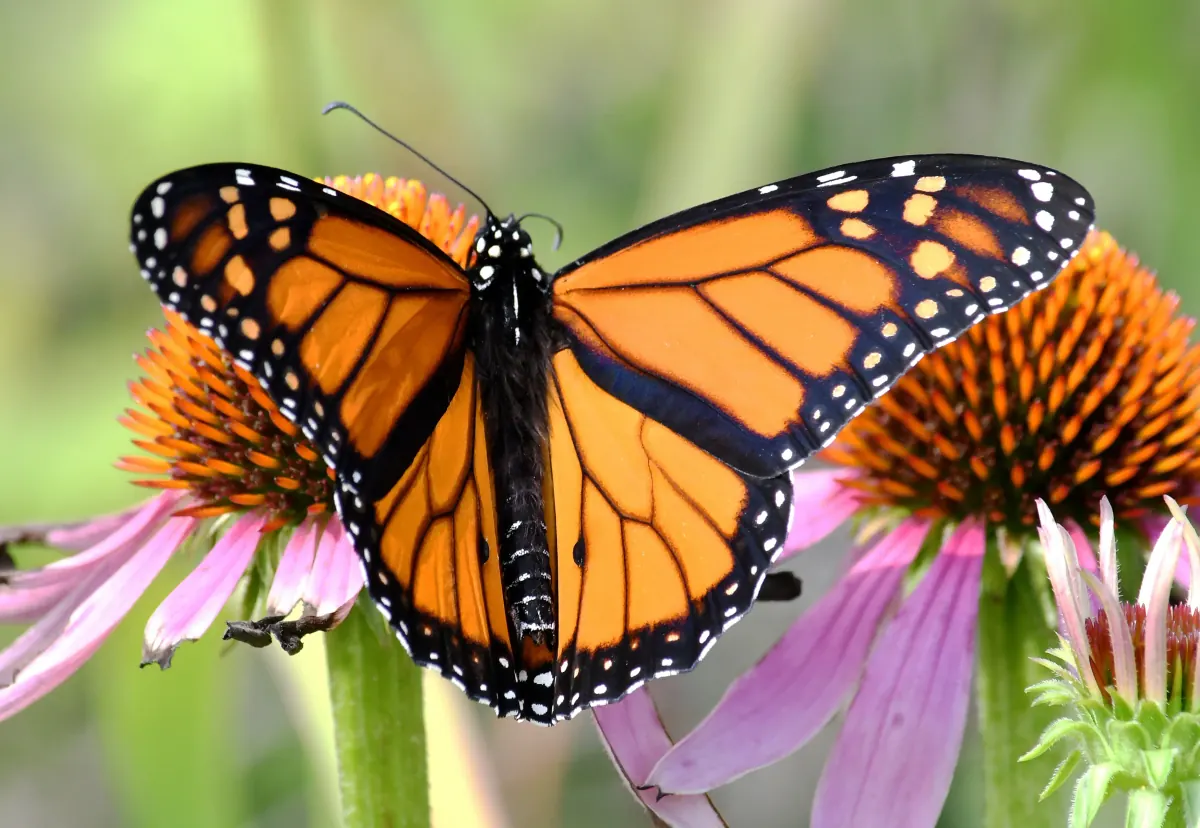
The monarch butterfly still isn’t protected under the Endangered Species Act. The U.S. Fish and Wildlife Service proposed listing it as threatened in December 2024, and a final decision was expected within a year. That didn’t happen. On September 30, 2026, the agency agreed in federal court to make its final decision by June 6, 2030.
For Colorado, where monarchs from both of North America’s migrating populations spend the summer, that means at least three and a half more years without federal protection for one of the state’s most familiar insects.
At a glance
- Federal status
- Proposed threatened (December 2024). Not listed, so no Endangered Species Act protections apply.
- Decision deadline
- June 6, 2030, under a September 30, 2026, court settlement
- Western population
- Down more than 95% since the 1980s; about 12,260 butterflies last winter
- Eastern population
- Down more than 80% since the 1990s
- In Colorado
- Eastern and western monarchs breed here each summer wherever milkweed grows
A decision more than a decade in the making
Conservation groups first petitioned for federal protection in 2014. The petitioners were the Center for Biological Diversity, the Center for Food Safety, the Xerces Society and the monarch scientist Lincoln Brower. In 2020, the Fish and Wildlife Service decided the monarch deserved listing but put it on a waiting list of candidate species, behind higher priorities. After a lawsuit, the agency formally proposed threatened status in December 2024. The proposal included more than 4,000 acres of protected overwintering habitat on the California coast.
By law, a final rule usually follows within a year. In late 2025, the Department of the Interior moved the monarch’s final rule to its list of “long-term actions,” with no set date. The Center for Biological Diversity and the Center for Food Safety sued again in February 2026. The September settlement ends that case and sets the 2030 deadline.
How far monarchs have fallen
The western population breeds across the West and spends the winter mostly on California’s central coast. That population is down more than 95% since the 1980s, and last winter’s count of about 12,260 butterflies was the third-lowest on record. The eastern population, which winters in the mountain fir forests of central Mexico, has dropped more than 80% since the 1990s. Last winter, its colonies covered only about 7.24 acres of forest. That’s less than half of the roughly 15 acres scientists consider the minimum to keep the migration out of danger.
The federal government’s own status review is grim. It projects that by 2080, eastern monarchs have a 56% to 74% chance of extinction, and western monarchs a greater than 95% chance.
What the delay means
Until a final rule is published, none of the Endangered Species Act’s protections apply to monarchs. The threats the Fish and Wildlife Service has identified keep building:
- Habitat loss: breeding, migration and wintering habitat is shrinking, including milkweed lost to herbicides on farm fields.
- Insecticides: they harm monarchs at every life stage.
- Climate change: it is damaging winter forests and disrupting breeding and migration.
For now, recovery depends on voluntary work by farmers, landowners, agencies, tribes and gardeners.
Colorado’s part
Colorado sits where the two migrating populations overlap. Monarchs from both the eastern and western groups arrive in late spring, breed through the summer wherever milkweed grows, and head south in the fall. Milkweed is the only plant monarch caterpillars can eat, so every native milkweed patch in a yard, roadside or prairie adds breeding habitat.
Coloradans don’t have to wait for 2030 to help:
- Plant native milkweed suited to your area.
- Add late-blooming flowers that feed adults on the fall migration.
- Avoid pesticides in your garden.
- Report your sightings to community science projects that track the monarch’s decline.
Learn more on our monarch butterfly profile.