What it is
Pesticides include insecticides, which kill insects, and herbicides, which kill plants. Both can harm wildlife: directly, or by removing the insects and plants animals need.
Neonicotinoids
“Neonicotinoids are a class of insecticides that are used in a wide variety of agricultural applications, including common use as seed coatings in corn, wheat, soybeans, and cotton,” according to USFWS. They “kill insects by interfering with the receptors of their nervous systems, causing overstimulation, paralysis, and death.” The Xerces Society, a conservation nonprofit, explains why that matters for pollinators: “Because they are systemic chemicals absorbed into the plant, neonicotinoids can be present in pollen and nectar, making them toxic to pollinators that feed on them.” Xerces calls them “the most widely used class of insecticides in the world.”
They also last. USGS says “Neonicotinoid insecticides dissolve easily in water, but do not break down quickly in the environment.” A 2015 USGS study found neonicotinoids in “a little more than half of both urban and agricultural streams sampled” across the United States and Puerto Rico.
Herbicides and milkweed
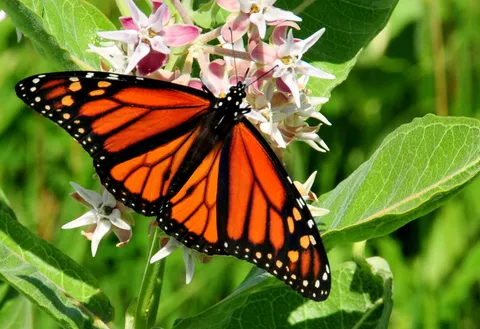
Herbicides work on the plants wildlife depend on. The 2024 proposed listing rule for the monarch says “More than 860 million milkweed stems were lost in the Midwest between 1999 and 2014, a decline of almost 40 percent,” and that “Approximately 89 and 94 percent of corn and soybean crop acreages, respectively, are planted as glyphosate (herbicide)-tolerant crops.” It estimates that the past loss of agricultural milkweeds in the Midwest caused an 81 percent decline in monarch production.
In Colorado
Colorado’s neonicotinoid law
Colorado’s SB23-266, “Neonic Pesticides As Limited-use Pesticides,” was signed on May 17, 2023 and took effect August 7, 2023. It directed the Commissioner of Agriculture to adopt rules “REQUIRING NEONICOTINOID PESTICIDES TO BE DESIGNATED AS LIMITED-USE PESTICIDES,” and to require them “TO BE SOLD ONLY BY DEALERS LICENSED PURSUANT TO SECTION 35-9-114.”
Since July 1, 2024, products with any of eight neonicotinoid active ingredients (acetamiprid, clothianidin, dinotefuran, imidacloprid, nitenpyram, nithiazine, thiacloprid and thiamethoxam) “may only be sold by a licensed dealer,” according to the Colorado Department of Agriculture. Pet care, veterinary, indoor pest control and several other product types are exempt. CDA says these limited-use pesticides “are for distribution to consumers only by licensed dealers.” The law limits who may sell them. It does not require buyers to hold a license, and it does not ban their use.
USFWS lists Colorado among 11 states that have “enacted various regulations on neonicotinoid pesticides to reduce impacts to bees and other pollinators.”
A state study of pollinators
The Colorado Native Pollinating Insects Health Study, required by SB22-199 and released by the Department of Natural Resources in January 2024, says Colorado is home to “over 1,000 species of bees—nearly 30% of North America’s.” One of its recommendations: “Reduce the risks from pesticides to pollinating insects.”
Effects on wildlife
Butterflies and bees
USFWS proposed the monarch for listing as threatened in December 2024. Its eastern population has declined by approximately 80% and its western population by more than 95% since the 1980s, and USFWS names three threats: “Loss and degradation of breeding, migratory and overwintering habitat; exposure to insecticides; and the effects of climate change.” The proposed rule says “Insecticides are pesticides with chemical properties that are designed to kill insects and most are non-specific and broad-spectrum in nature,” and that monarchs “may be exposed to insecticides where they are applied and in areas beyond the insecticide application sites due to drift.” USFWS asked the public whether the final rule should include an exception for the use of pesticides.
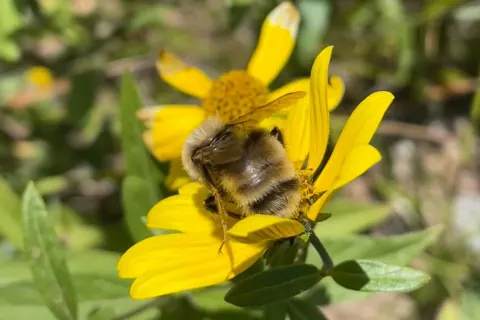
USFWS proposed Suckley’s cuckoo bumble bee for listing as endangered in December 2024. The proposed rule says “Neonicotinoids are currently used throughout the range of Suckley’s cuckoo bumble bee in North America,” and “Sublethal effects of neonicotinoids to bumble bees can include impairments to reproduction.” The cuckoo bee depends on other bumble bees: “The western bumble bee is the most widely known host of Suckley’s cuckoo bumble bee.”
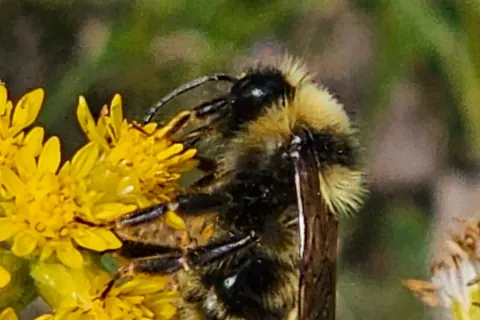
For the western bumble bee, a 2023 USGS study found that “In areas where neonicotinoids were applied, the western bumble bee was less likely to occur and as the rate of neonicotinoid application increased, the bumble bee’s presence declined further.”
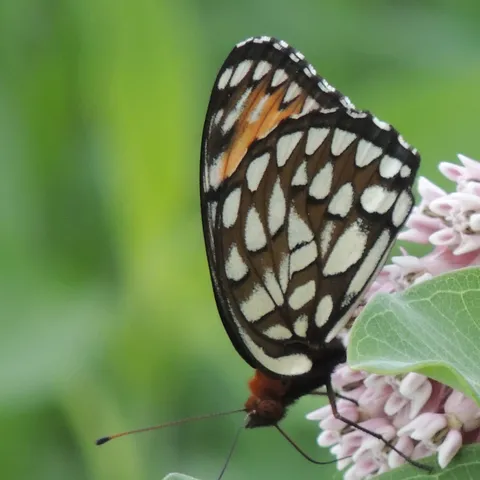
For the regal fritillary, the 2024 proposed rule counts “pesticide use” among the factors in its decline. Most of that rule’s pesticide language is about herbicides, which “may be used at least once in a growing season to control broadleaf weeds or grasses in crop fields.” Colorado is on the edge of the butterfly’s range.
Birds
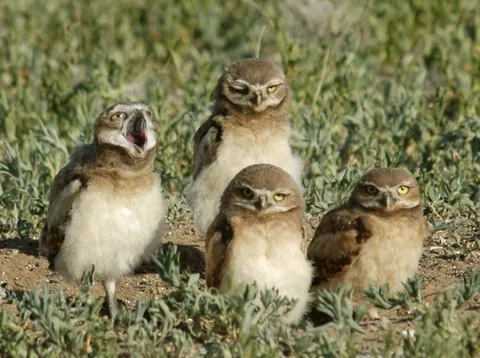
For the burrowing owl, USFWS says “Pesticides, collisions with vehicles, feral animals, electrified fences, collisions with wind turbines and shooting are also sources of mortalities for these birds.” Wyoming Game and Fish, next door, says pesticides used against insects or rodents affect the owl “through toxicity and reduced prey availability.”
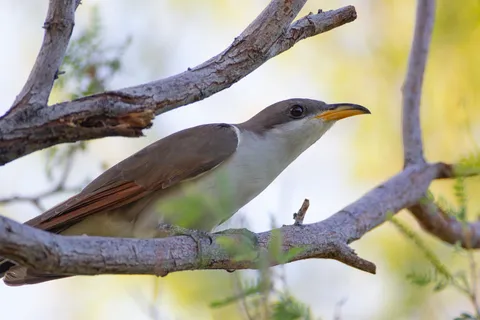
For the western yellow-billed cuckoo, the 2014 listing rule says the threat “is particularly persistent where small habitat patches are in proximity to human-altered landscapes, especially agricultural fields, resulting in the potential for pesticides to poison individual western yellow-billed cuckoos and reduce their prey base.”
A threat that was beaten: DDT
DDT is not a threat to Colorado’s wildlife today. It is the story of a pesticide that was stopped, and of birds that came back.
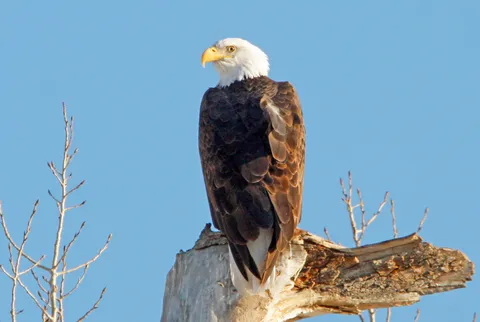
“When DDT entered the food chain, it didn’t kill eagles directly, but it did make their eggs too fragile to survive incubation,” USFWS explains. “By 1963, there were just 417 known nesting pairs left in the lower 48 states.” EPA issued a cancellation order for DDT in 1972 “based on its adverse environmental effects, such as those to wildlife, as well as its potential human health risks.”
The bald eagle recovered. USFWS removed it from the list of threatened and endangered species on June 28, 2007, and estimated 71,467 breeding pairs in the lower 48 states based on data from 2018 to 2019. In Colorado, CPW says “With the ban of the pesticide DDT and protection of nesting habitat, bald eagle populations have significantly recovered.” CPW’s Colorado Outdoors magazine reported that at the end of the 1970s “there were only three known bald eagle nests in Colorado with none on the Front Range”; by 2020 there were more than 90 breeding pairs between the Denver metro area and the Wyoming state line.
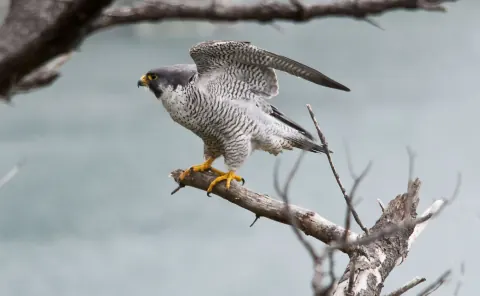
Peregrine falcons tell the same story. When USFWS removed the American peregrine falcon from the federal list in 1999, it noted that eggshells collected in Colorado from 1973 through 1997 averaged 13.5 percent thinner than pre-DDT eggshells. The Rocky Mountain and Southwest peregrine population grew from 367 known pairs in 1991 to 535 in 1998.
What’s being done
Colorado’s law
Since July 1, 2024, neonicotinoid products in Colorado may only be sold by licensed dealers (see above).
Federal reviews
In 2022, EPA finished biological evaluations of three neonicotinoids on more than 1,700 listed species. A “likely to adversely affect” finding sends EPA into consultation with the wildlife agencies, “which will analyze whether those impacts rise to the level of jeopardizing the existence of the entire species.” EPA’s 2024 Herbicide Strategy is a step toward “protecting over 900 federally endangered and threatened (listed) species from the potential impacts of herbicide,” with measures such as cover crops, conservation tillage and windbreaks. Its 2025 Insecticide Strategy “identifies mitigations aimed at protecting more than 900 species listed by the U.S. Fish and Wildlife Service (FWS).”
Labels
In 2013, EPA “Prohibited the use of certain neonicotinoid pesticides when bees are present.” EPA’s 2020 proposed decisions on neonicotinoids included “restrictions on when pesticides can be applied to blooming crops in order to limit exposure to bees.”
Habitat
In 2017, a joint resolution of the legislature called for I-76, from Mile Marker 1 to Mile Marker 183, to be renamed the “Colorado Pollinator Highway.” CDOT says it “is committed to preserving, enhancing, and creating pollinator habitat along our Colorado highways.” The Colorado Pollinator Workgroup, established in May 2011, publishes best practices for applicators; CDA notes they “are not set in law and are not enforceable.”
How you can help
- Skip neonicotinoids at home: check labels for imidacloprid, clothianidin, thiamethoxam and dinotefuran.
- Plant native milkweed and a mix of native flowers that bloom from spring to fall.
- Ask nurseries whether their plants were treated with systemic insecticides.
- Leave flowering native plants at field and yard edges for pollinators.
- Never use pesticides near water, and follow every label.