Quick facts
- Where in Colorado
- Montezuma County
- Colorado range
- About 29 square kilometers (CNHP)
- Size
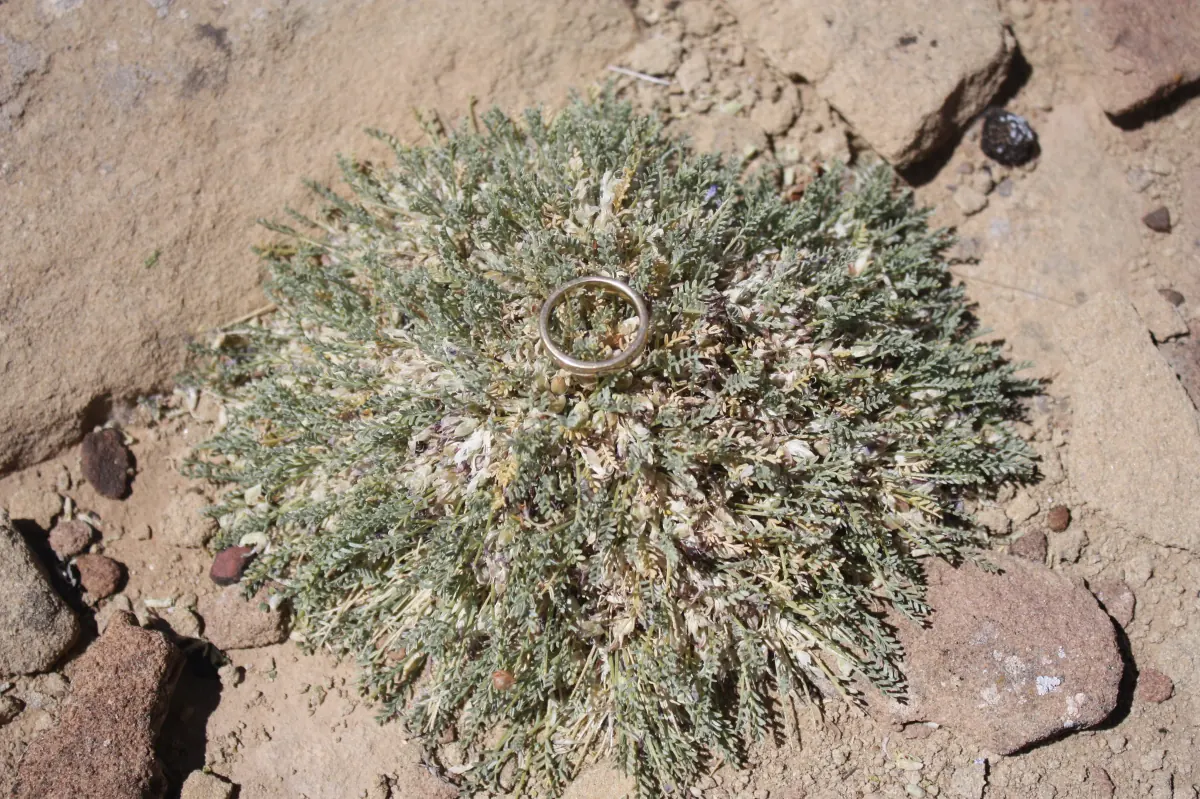
- Tufted clumps up to 30 cm (about a foot) across
- Blooms
- Late April to early June
- Flowers
- Lavender to purple, with a pale spot in the throat
- Status
- Federally endangered since 1985; CNHP G1? / S1?
Overview
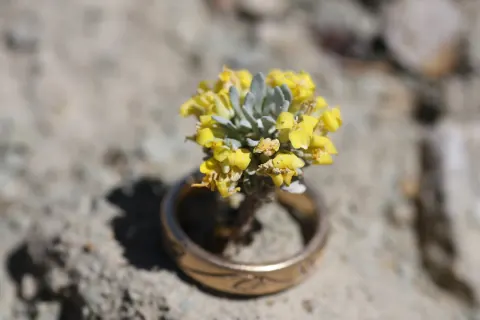
Mancos milkvetch (Astragalus humillimus) is a diminutive, tufted member of the pea family that grows in dense clumps. Its crowded leaves carry tiny oval leaflets, and old leaf stalks stay on the plant as spines. Short branches bear one to three small lavender to purple flowers, each with a lighter spot in the throat.
USFWS listed it as endangered in 1985. The Colorado Natural Heritage Program ranks it G1? and S1?, critically imperiled, and expects it to be extremely vulnerable to climate change. Colorado has no state list for plants.
Where it grows
Mancos milkvetch is a narrow endemic of the Four Corners region. In Colorado it is known from a small area of Montezuma County; it also grows in San Juan County, New Mexico, and on the Navajo Nation. It lives on sandstone ledges and mesa tops in the pinyon belt, in cracks in the rock or shallow pockets of sandy soil, on pale, flaking Lookout Point Sandstone of the Mesa Verde Group. Utah juniper, Indian ricegrass, snakeweed, narrowleaf yucca and big sagebrush grow around it.
Threats
CNHP says all of Colorado’s populations are in an area being intensively developed for energy. Surface disturbance from energy exploration and development has harmed populations in New Mexico, and the plant’s habitat lies near transmission lines, drill pads, oil wells, pipelines and roads (habitat loss). Most damage comes when vehicles and heavy equipment drive over plants. As of 2025, CNHP notes, current threats at the occurrences are not well documented.
Protection and recovery
The Navajo Nation, the Bureau of Land Management, the Bureau of Indian Affairs and the Western Area Power Administration know where the populations are and consider the species in planning, according to CNHP, which rated it “moderately conserved” in a 2011 analysis. CPW’s 2025 State Wildlife Action Plan lists it as Tier 1.
What you can do
- Keep vehicles off slickrock and mesa-top ledges; tires crush the plants and the sandstone pockets their seedlings need.
- Leave plants and seed where they are.
- Visit responsibly on public land in Montezuma County: stay on established roads and trails.
Frequently asked questions
- How do you recognize Mancos milkvetch?
- It is a small mat of crowded leaves with tiny oval leaflets, and old leaf stalks that stay on the plant as stiff spines. No other mat-forming milkvetch in the area keeps spiny leaf stalks, the Colorado Natural Heritage Program says.
- Why do vehicles harm Mancos milkvetch so much?
- Vehicles and heavy equipment crush plants and break apart the small depressions in the sandstone that seedlings need to get started, according to USFWS documents summarized by CNHP.
- What do the question marks in its ranks mean?
- The question mark flags some uncertainty in the rank. The Colorado Natural Heritage Program still places it at 1, critically imperiled, both globally and in Colorado.