What Is the Most Endangered Animal in Colorado?
Short answer
There's no official ranking, but two animals stand out. About 300 black-footed ferrets live in the wild across North America, and Colorado's bonytail survive only through hatchery stocking, with no self-sustaining wild population.
By Threatened Colorado , Two Colorado natives , About us
Last reviewed , Checked against USFWS, CPW sources , Sources (14)
“Most endangered” can mean several things: the fewest animals left, the smallest range, or a wild population that can no longer sustain itself. Depending on the measure, a different Colorado animal comes out on top.
Black-footed ferret: one of North America’s rarest mammals
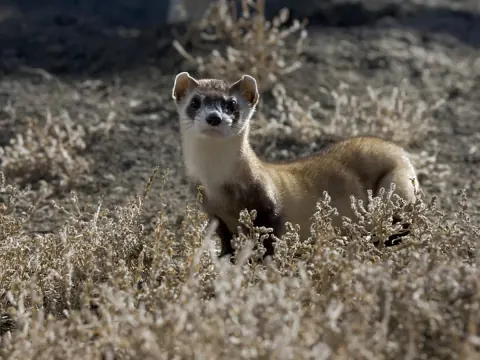
About 300 black-footed ferrets live in the wild across North America, according to the U.S. Fish and Wildlife Service. Colorado has released more than 500 since 2001, at sites from the Rocky Mountain Arsenal National Wildlife Refuge near Denver to ranches in Pueblo County. Ferrets depend almost entirely on prairie dogs, and sylvatic plague can wipe out both. Read the full black-footed ferret profile.
Bonytail: no wild population left
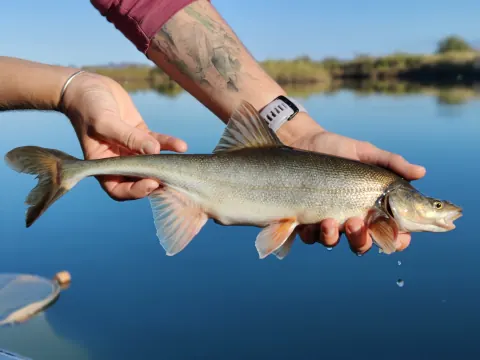
The bonytail is the rarest of the Colorado River’s endangered native fish. Colorado has no self-sustaining wild population. Fish raised at the U.S. Fish and Wildlife Service’s Ouray National Fish Hatchery and at Colorado Parks and Wildlife’s J.W. Mumma facility are stocked into the Colorado and Gunnison rivers. Dams turned a warm, muddy, seasonally flooding river into a chain of reservoirs and controlled releases, which took away the conditions the fish needs to breed. Read the full bonytail chub profile.
Uncompahgre fritillary: the smallest range
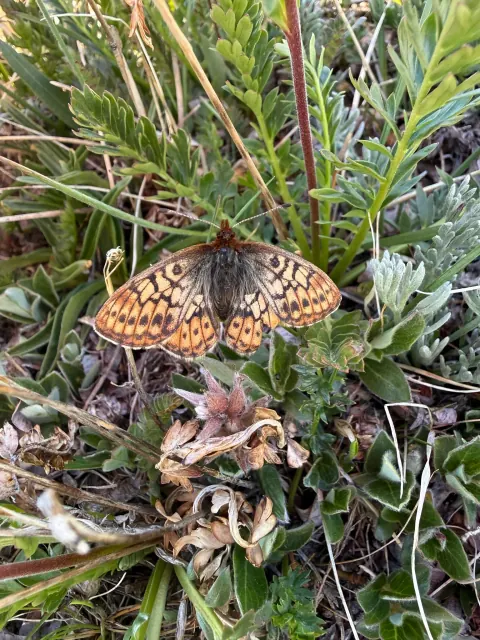
This small butterfly lives nowhere but Colorado, in up to 11 small colonies on San Juan peaks above about 12,400 feet. It has been federally endangered since 1991. The U.S. Fish and Wildlife Service estimates roughly 3,400 to 23,000 adults at monitored colonies, and counts swing widely from year to year. A warming climate could become a major risk, because a shrinking snowpack would hurt snow willow, the plant its caterpillars depend on. Read the full Uncompahgre fritillary profile.
Gunnison sage-grouse: nearly all in one basin
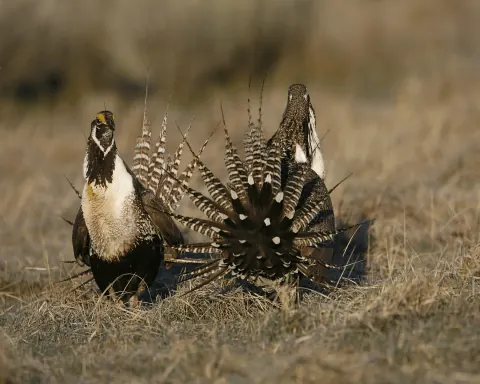
About 3,500 breeding Gunnison sage-grouse are left across Colorado and Utah, CPW says, and about 85% of them live in Colorado’s Gunnison Basin, according to USFWS’s recovery plan. The bird has been federally threatened since 2014. Read the full Gunnison sage-grouse profile.
Kit fox: possibly gone already
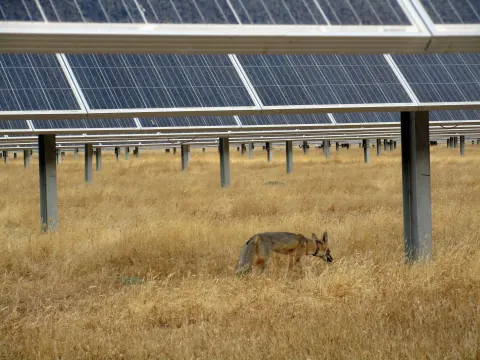
Colorado Parks and Wildlife calls the kit fox, North America’s smallest fox, “one of the state’s most vulnerable mammal species.” It lives only in the semi-desert shrublands from Montrose to Grand Junction. A 2007 survey made about 700 track-plate checks and found a single probable kit fox track, and its report called the species “close to extirpation” in Colorado. No newer statewide survey has been published. Read the full kit fox profile.
New Mexico meadow jumping mouse: two known sites
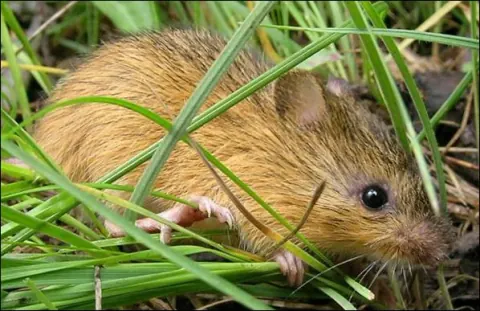
This mouse has been federally endangered since 2014, and in Colorado it is known from only two small populations: along the Florida River in La Plata County and in the Sambrito Wetlands of Navajo State Park in Archuleta County. It hibernates most of the year and needs dense streamside plants at least 24 inches tall, so a summer of heavy grazing, drought or fire can cost it a year of breeding. Read the full New Mexico meadow jumping mouse profile.
Already gone
Some animals are past the point of “most endangered” in Colorado. The last confirmed grizzly bear in the state was killed in 1979. See Lost & Extinct for the species Colorado has already lost.