Quick facts
- Where in Colorado
- Southeast: Arkansas Valley counties from Fremont to Prowers, and south (CSU)
- Males wander
- Late August through September (CSU); some into early November
- Male lifespan
- About 7–10 years to mature, then a few months (CSU)
- Female lifespan
- Over a decade after maturity, near one burrow (CSU)
- Bite
- A sharp pinch; no venom that causes serious harm to people (CSU)
- Other Colorado tarantulas
- Smaller "mini-tarantulas" in western Colorado (CSU)
Overview
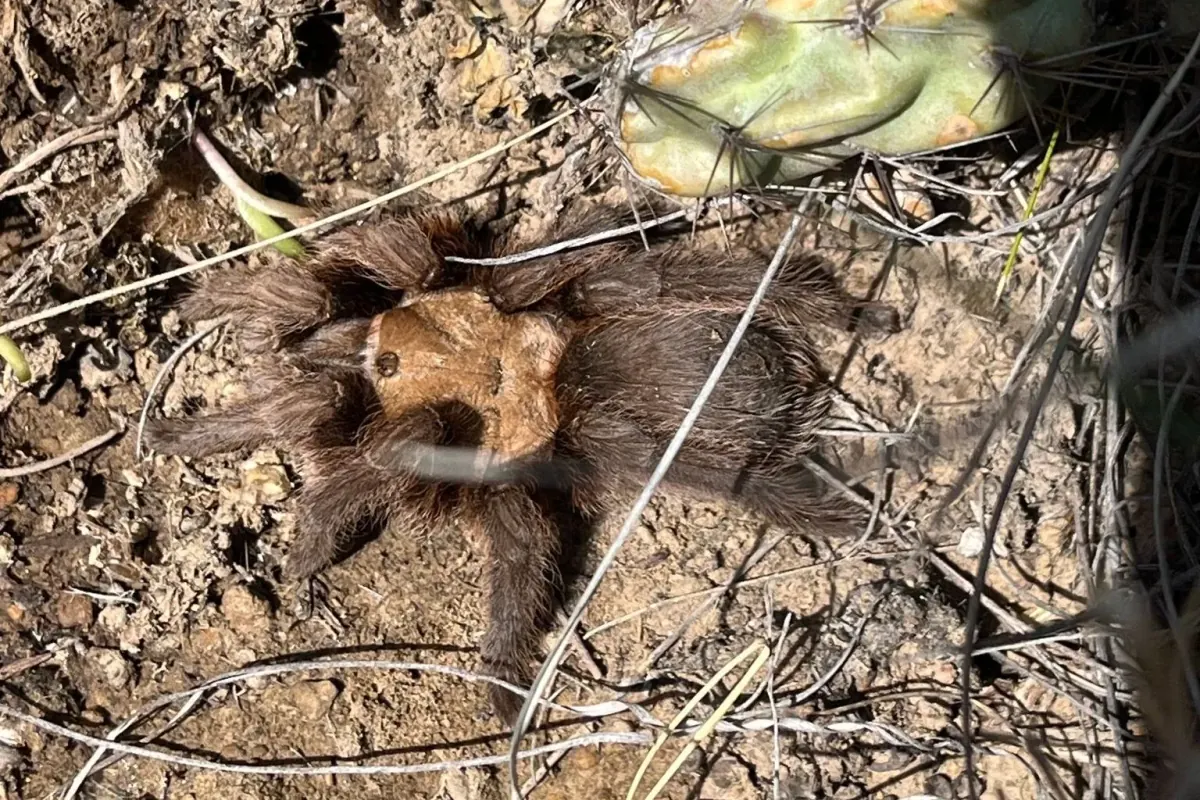
The Oklahoma brown tarantula is the big, hairy, dark brown spider of southeastern Colorado’s prairie. Almost all the tarantulas people see, CSU Extension says, are mature males out in late summer and early fall; females stay close to their burrows.
Its scientific name changed in 2016. A study of all 55 tarantula species then named in the United States (Hamilton, Hendrixson and Bond, ZooKeys) found that Aphonopelma coloradanum, first described from near Sugar City in Crowley County, and A. echinum, from the Arkansas Valley, are the same species as A. hentzi. That study calls A. hentzi the most widely distributed tarantula in the United States, from Missouri and Louisiana west to Colorado and Arizona, and says it is secure. NatureServe calls it the Texas brown tarantula; La Junta calls it the Colorado brown tarantula.
It is on this site because it is southeastern Colorado’s best-known invertebrate, and its fall wanderings draw visitors to the Comanche National Grassland.
Habitat in Colorado
CSU Extension says the most commonly encountered tarantulas in Colorado live in the southeast, in the counties along the Arkansas Valley and south. The 2016 study lists Colorado specimens of A. hentzi from Bent, Crowley, Fremont, Otero, Prowers and Pueblo counties, including a male from the Comanche National Grassland near La Junta.
They need native prairie. Within their range, CSU says, they can be locally common in areas of prairie, but “cultivation destroys tarantula habitat and they are not found in croplands.” La Junta’s guide gives the same advice to visitors: the burrows are in relatively intact native prairie, not plowed land.
Western Colorado has its own, smaller tarantulas. The 2016 study places A. marxi in the southwest, in counties such as Archuleta, Conejos and Dolores.
Natural History
A tarantula lives in a silk-lined burrow that can reach more than a foot deep, CSU Extension says. By day the entrance is often covered with a veil of silk; at dusk the spider sits at the edge and waits for prey such as scarab beetles and ground beetles to pass within two or three inches. Late in the season it plugs the burrow and stays sealed in until spring.
Females lay eggs in June, wrap them in a silk sac and keep it in the burrow, carrying it up to warm in the sun. Spiderlings hatch after about 50 to 60 days and settle near their mother’s burrow. Both sexes grow slowly (the ages are in Quick facts), and except for the wandering males, tarantulas stay near one burrow their whole lives.
The Fall Mate Search
At their last molt, males grow longer legs and leave the burrow for good to search for females. In southeastern Colorado, CSU says, this happens from late August through September, the time of year when tarantulas are most often seen. The males stay active until cold weather kills them; few survive past November. The 2016 study notes that A. hentzi breeds in spring and summer in some places and in fall in others.
The City of La Junta’s tourism office calls it an annual mating ritual rather than a migration, with males roaming the Comanche National Grassland’s 443,000-plus acres. It sets expectations plainly: instead of “waves of tarantulas,” you “might see one, two, or ten crawl across the prairie at a time. Or, you might see none.” La Junta holds a Tarantula Fest downtown each September, with guided tarantula tours.
If You See One
- Leave it be. CSU says tarantulas pose little hazard to people. A roughly handled tarantula may bite, “a sharp pinch that may break the skin,” but none has venom that causes serious complications in people.
- Don’t touch. Their main defense is barbed hairs rubbed off the abdomen, which can cause intense itching and injure eyes. Handling is risky for the spider too: La Junta warns it can be hurt in a fall from as high as your hands.
- When and where. La Junta suggests the hour before dusk from mid-September through October, sometimes into early November, on a warm, calm day. It names Highway 109 south of La Junta on the Comanche National Grassland, and Highways 10 and 350 and the county roads between them.
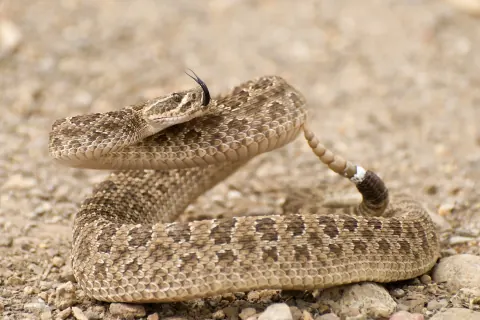
- Watch the road. Tarantulas are harmless; stopping on a highway is not. Pull off only where there is room for passing traffic, respect private land and closed gates, and keep an eye out for rattlesnakes, La Junta advises. Hunting seasons are open in fall, so it suggests an orange vest and avoiding tan and white.
Primary Threats
The species is secure, and NatureServe notes it thrives even in big-city neighborhoods elsewhere in its range. In Colorado the main pressure is the loss of native prairie: CSU says cultivation destroys tarantula habitat (habitat loss).
Conservation and Management
No state or federal program manages the Oklahoma brown tarantula, and it is not a Species of Greatest Conservation Need. A 2024 Colorado law (House Bill 24-1117) let CPW study invertebrates and run voluntary programs for them, but it states that it “does not grant the state the authority to regulate the take of these species without further legislation.” So CPW has no collecting rules for tarantulas. La Junta’s guide says females favor the plentiful undisturbed prairie on the Comanche National Grassland.
What You Can Do
- Visit in fall and watch from a distance. Photos are fine; leave the spider where it is.
- Protect native prairie. Tarantulas are absent from cropland, so unplowed grassland is what keeps them here.
- Share what you see. Photos with a date and place help map Colorado’s tarantulas; see Report a Sighting.
Frequently asked questions
- Do tarantulas really migrate in Colorado?
- Not in the usual sense. The spiders on the road are mature males that have left their burrows for good to find females; La Junta's tourism office calls it an annual mating ritual. Details are under The Fall Mate Search.
- Can you keep a wild tarantula from Colorado?
- State law gave CPW authority to study invertebrates in 2024 but not to regulate their take, so CPW has no tarantula collecting rule. The males you see in fall are near the end of their lives, and La Junta asks visitors to let them be (If You See One).
- What eats tarantulas in Colorado?
- Lizards, coyotes and birds likely take many, CSU Extension says. The most dramatic enemy is the tarantula hawk, a large wasp that paralyzes a tarantula with its sting and lays an egg on it; six species live in Colorado.