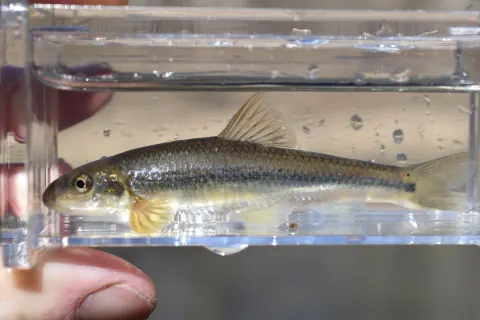
Photo: indianaspeciesfishing / iNaturalist — CC BY-NC 4.0
Shortgrass Prairie
Eastern Plains
By Threatened Colorado , Two Colorado natives , About us
Last reviewed , Checked against USFWS, CPW, NPS sources , Sources (8)
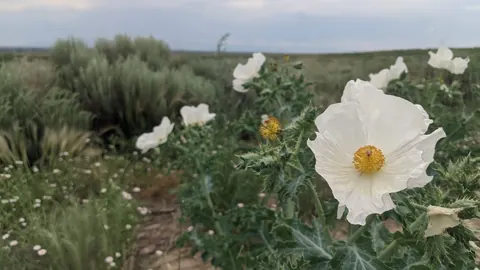
About 3,450–6,500 ft
Short grasses such as blue grama dominate Colorado's eastern plains. It is the most altered of Colorado's major ecological systems: nearly half of the state's shortgrass prairie was converted in the past century, according to 2011 data from the Colorado Natural Heritage Program.
Why it matters
The defining grasses are short and tough. At Bent's Old Fort on the Arkansas River, the National Park Service describes shortgrass prairie where "grama and buffalo grasses predominate."
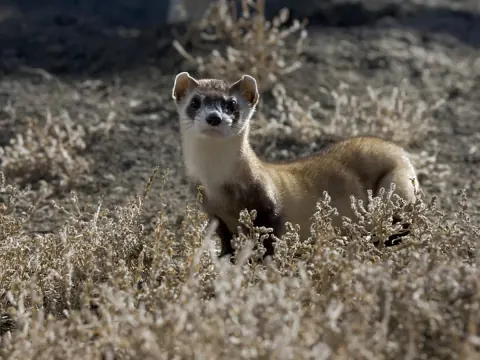
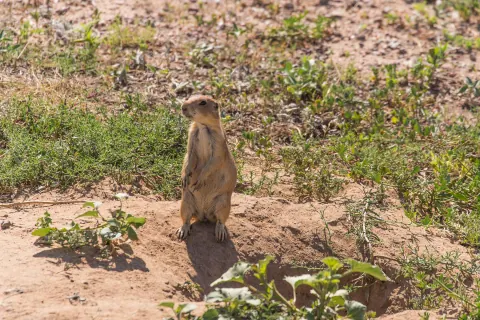
Prairie dog towns hold the system together. CPW calls prairie dogs "a keystone species integral to the health of ecosystems across Colorado and beyond," and the endangered black-footed ferret eats mostly prairie dogs and lives in their burrows, according to USFWS.
Plants
- blue grama
Who lives here and why
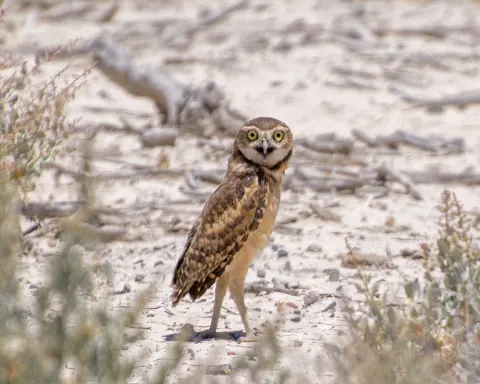
Open ground and other animals' burrows. CPW says the burrowing owl lives in dry, open country with short grass and no trees, and in Colorado never digs its own burrow: it nests underground in holes dug by prairie dogs, ground squirrels and badgers, arriving from March to May and leaving from August to October.
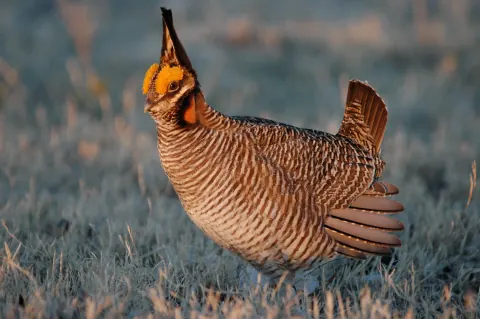
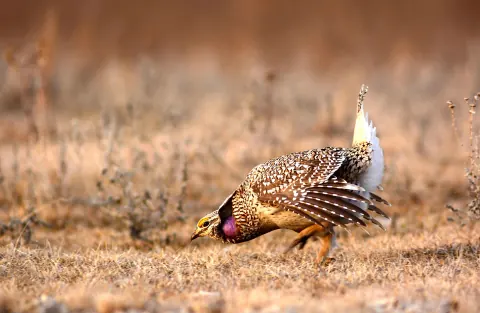
Grass tall enough to hide a nest. The plains sharp-tailed grouse once nested over much of the northern two-thirds of the eastern prairie, CPW says; it now lives mainly in northern and central Weld County, almost entirely on Conservation Reserve Program grasslands. From March to June the males dance at dawn on leks, patches of short vegetation.
Under pressure
- Plowing and development. The Colorado Natural Heritage Program called shortgrass prairie "by far the most altered of any of Colorado's major ecological systems," down 48% from its historic extent in its 2011 report. Habitat Loss & Fragmentation
- Plague. CPW says prairie dog declines "have been caused by plague, a fatal bacterial disease," and that insecticides and a vaccine can prevent colonies from collapsing. Sylvatic Plague
Where to see it
Rocky Mountain Arsenal National Wildlife Refuge
A 15,000-acre refuge near Denver with a growing bison herd and an 11-mile Wildlife Drive; it protects the endangered black-footed ferret. USFWS asks visitors to stay in their vehicles when viewing bison.
Bent's Old Fort National Historic Site
Low benches along the Arkansas River in southeastern Colorado, with grama and buffalo grasses on the higher ground.
Species in this habitat (24)
- Photo: Ryan Hagerty / USFWS — Public DomainReintroduced Featured
- Photo: Kayt Jonsson / USFWS — Public Domain
- Photo: Gojilynx / iNaturalist — CC BY 4.0USNot Listed COThreatened
Brassy Minnow
Hybognathus hankinsoni
fish Plains Stream Pools and Backwaters - Photo: Rod Colvin / USFWS — Public Domain
- Photo: Henry Dennison / iNaturalist — CC BY-NC 4.0USNot Listed COThreatened
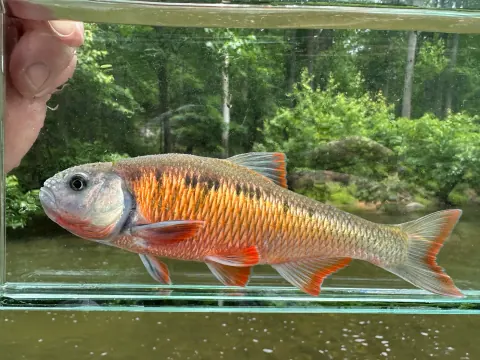
Common Shiner
Luxilus cornutus
fish Transition-Zone Streams Where the Foothills Meet the Plains - Photo: Robert Dobbs / iNaturalist — CC BY-NC 4.0
- Photo: Brett Billings / USFWS — Public Domain
- Photo: Patricia Zenone / USFWS — Public Domain
- Photo: Jim Hudgins / USFWS — Public Domain
- Photo: Derek Freed / iNaturalist — CC BY-NC 4.0
- Photo: Sam Stukel / USFWS — Public Domain
- Photo: Carter Dorscht / iNaturalist — CC0
- Photo: Joshua Smith / iNaturalist — CC0
- Photo: Tom Kennedy / iNaturalist — CC BY 4.0
- Photo: Rick Bohn / USFWS — Public DomainUSNot Listed COEndangered
Plains Sharp-tailed Grouse
Tympanuchus phasianellus jamesi
bird Conservation Reserve Program Grasslands - Photo: Robert Schorr / Colorado Natural Heritage Program — Public DomainFeatured
- Photo: Jill Haukos / Konza Prairie Biological Station — CC BY 4.0
- Photo: Conway Hawn / iNaturalist — CC0USNot Listed COEndangered
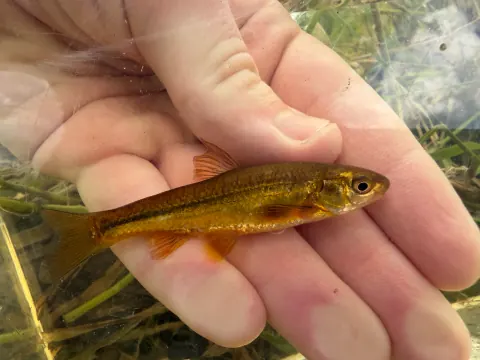
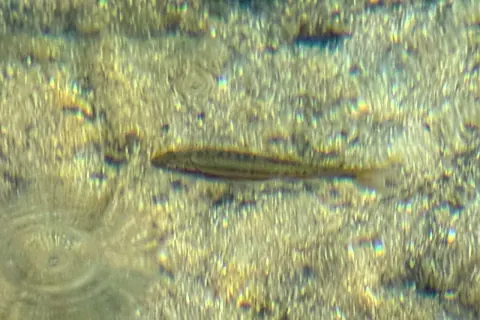
Southern Redbelly Dace
Chrosomus erythrogaster
fish Small Spring-Fed Tributary Streams - Photo: ccarrollc1 / iNaturalist — CC BY-NC 4.0
- Photo: Kendra Parrish / iNaturalist — CC0
- Photo: Craig Miller / Bureau of Land Management — Public Domain
- Photo: Steve Hillebrand / USFWS — Public Domain
- Photo: Allison Clark / iNaturalist — CC0
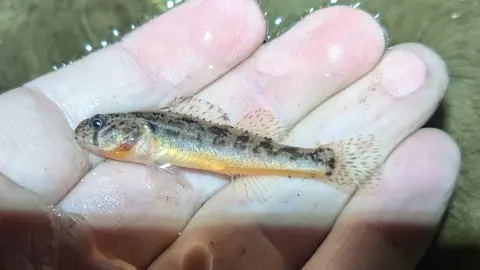
See shortgrass prairie in the explorer
Sources (8)
- Colorado Natural Heritage Program, The State of Colorado's Biodiversity (2011)
- Colorado Natural Heritage Program, Ecological Systems: Grasslands
- Colorado Parks and Wildlife, Burrowing owl
- Colorado Parks and Wildlife, Plains sharp-tailed grouse
- National Park Service, Bent's Old Fort NHS: Nature
- Colorado Parks and Wildlife, Prairie dogs
- U.S. Fish and Wildlife Service, Black-footed ferret (Mustela nigripes)
- U.S. Fish and Wildlife Service, Rocky Mountain Arsenal National Wildlife Refuge
Photo credits
- Shortgrass Prairie: Dana Shellhorn / USFWS, Public domain