Quick facts
- State reptile
- Adopted March 2008 (HB 08-1017)
- Native range in Colorado
- Most of eastern Colorado; locally in La Plata and Archuleta counties (CPW)
- Introduced
- Established in several areas of western Colorado (CPW)
- Size
- Female shell up to about 10 inches, rarely over 8; males much smaller
- Maturity
- Males at 2–9 years, females at 6–16 years
- Colorado rank
- S5, secure (NatureServe)
Overview
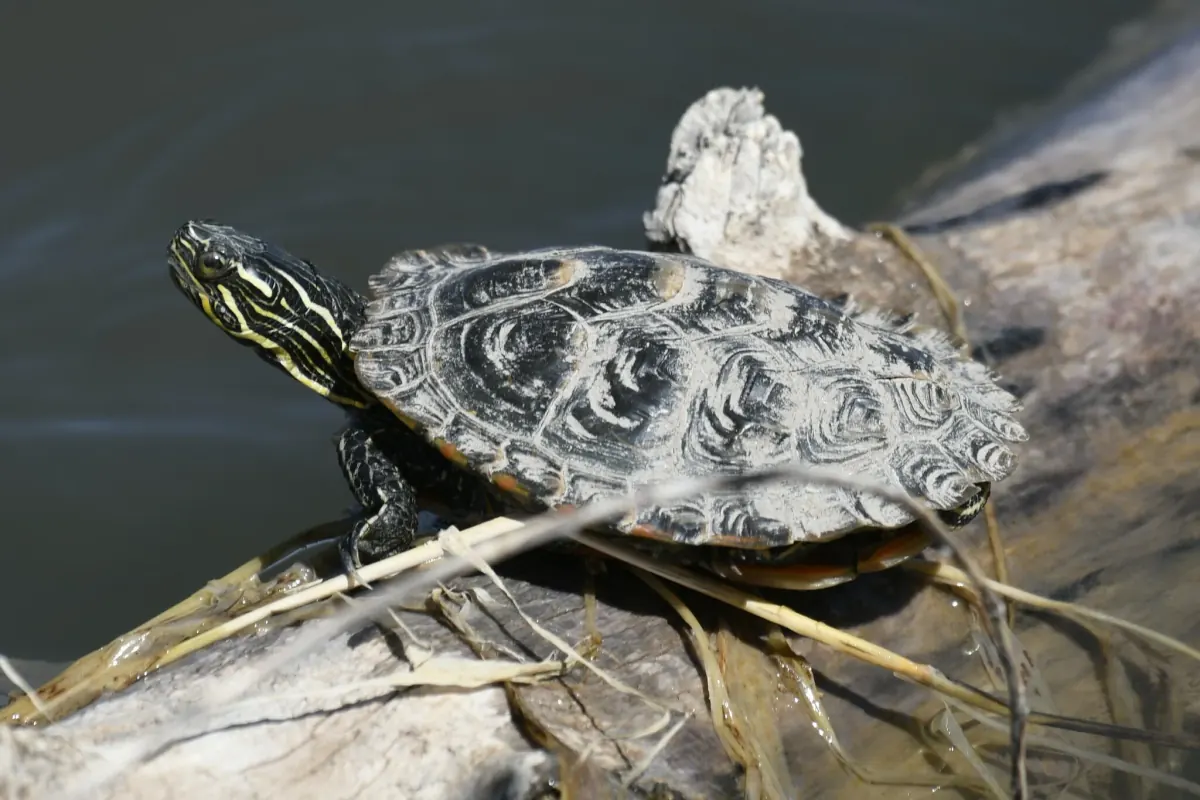
The western painted turtle is the turtle on a log in a Colorado pond. Its upper shell is hard, smooth and somewhat flat, often with narrow yellow lines, and its head and limbs carry bright yellow lines. The lower shell is orange or red with dark markings, most vivid in young turtles.
It became Colorado’s official state reptile in March 2008 (HB 08-1017). In 2007, fourth graders at Skyline Vista Elementary School realized Colorado had no state reptile, researched the state’s reptiles and chose this one as the most representative, according to the Colorado State Archives. The legislature passed the bill and Governor Bill Ritter signed it.
The species is common and secure: NatureServe ranks the western painted turtle S5 in Colorado. It is on this site as the state reptile and a familiar animal of the state’s ponds and wetlands.
Habitat in Colorado
CPW finds it in permanent ponds, reservoirs, marshes, river backwaters and slow-moving streams, and in nearby temporary waters such as seasonally flooded areas. It favors soft bottoms, plenty of aquatic plants, and partly submerged logs or other basking spots; often many turtles bask on a single log.
Its native range covers most of eastern Colorado, plus a small area of the southwest in La Plata and Archuleta counties. Elsewhere in western Colorado, painted turtles were introduced and have become established in several areas, CPW says.
Natural History
Females nest in sunny spots, sometimes several hundred yards from water. A female may lay more than one clutch in a year and may skip a year between nestings. Most hatchlings spend their first winter in the nest and come out the following spring.
Painted turtles mature slowly; the ages are in Quick facts. Males are much smaller than females, with very long claws on the front feet.
Primary Threats
CPW and NatureServe do not identify any threat putting the western painted turtle at risk in Colorado. The state’s 2026 rules (below) were written partly because many reptile and amphibian populations are declining and because of the risks that the pet trade, disease and invasive species pose to native species, the Parks and Wildlife Commission wrote in the rules’ statement of basis and purpose.
Conservation and Management
Under CPW’s 2026 herpetofauna rules (Chapter W-7), painted turtles are no longer on the list of native species a licensed collector may take from the wild. A person who legally collected one on or before May 1, 2026 could keep it for life by filing a CPW Legacy Report by July 30, 2026. The same rules make it unlawful to release live reptiles in Colorado except as the regulations allow, and they name the red-eared slider as invasive and detrimental to Colorado wildlife and habitat. CPW notes the two are easily confused: painted turtles have flatter, smoother shells and lack the slider’s red streak on the side of the head.
What You Can Do
- Watch from the bank, with binoculars if you have them.
- Leave wild turtles in the wild. Collecting painted turtles from the wild is no longer allowed.
- Never release a pet turtle. Releasing live reptiles is against CPW’s rules, and red-eared sliders are listed as invasive.
- Give nesting females room. They may nest several hundred yards from water, so a turtle on dry land near a pond may be looking for a nest site.
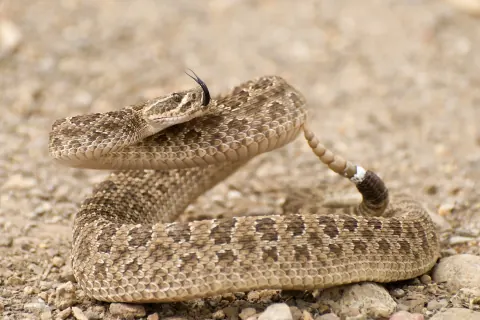
- Explore related species. Read the prairie rattlesnake profile, Colorado’s other common native reptile on this site.
Frequently asked questions
- How did the painted turtle become Colorado's state reptile?
- Fourth graders at Skyline Vista Elementary noticed in 2007 that Colorado had no state reptile, researched the state's reptiles and picked this one; the legislature and Governor Bill Ritter made it official the next year, the State Archives says.
- Can I keep a painted turtle I find in Colorado?
- Not one taken from the wild after May 1, 2026. CPW's new rules dropped the painted turtle from the native species that may be collected; the details are under Conservation and Management.
- How do you tell a male painted turtle from a female?
- Males are much smaller and have very long claws on the front feet; their vent sits beyond the rear edge of the upper shell when the tail is extended. Females have short front claws and a vent at or inside the shell's edge, CPW says.
- Are painted turtles native to western Colorado?
- Only in a small corner of the southwest; elsewhere on the West Slope they were introduced. The Habitat in Colorado section gives the counties.