Quick facts
- Size
- 2½–3 inches
- In Colorado
- Lower South Platte basin; historically also the Republican basin and Lodgepole Creek
- Listed
- State threatened in 1998, after declines since the 1970s
- Colorado rank
- S3, vulnerable (NatureServe)
- Range-wide
- G5, secure (NatureServe)
- Status
- State threatened; SWAP Tier 1 (CPW, 2025); never federally listed
Overview
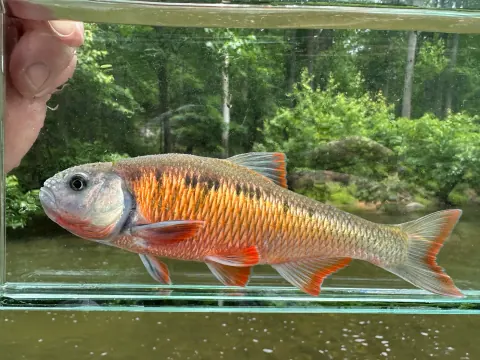
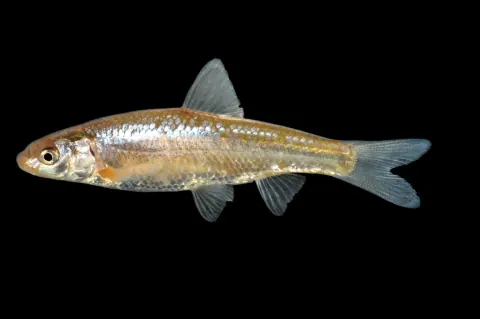
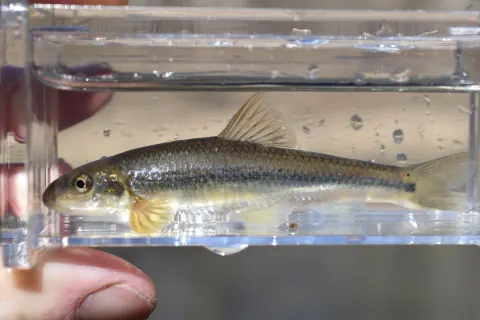
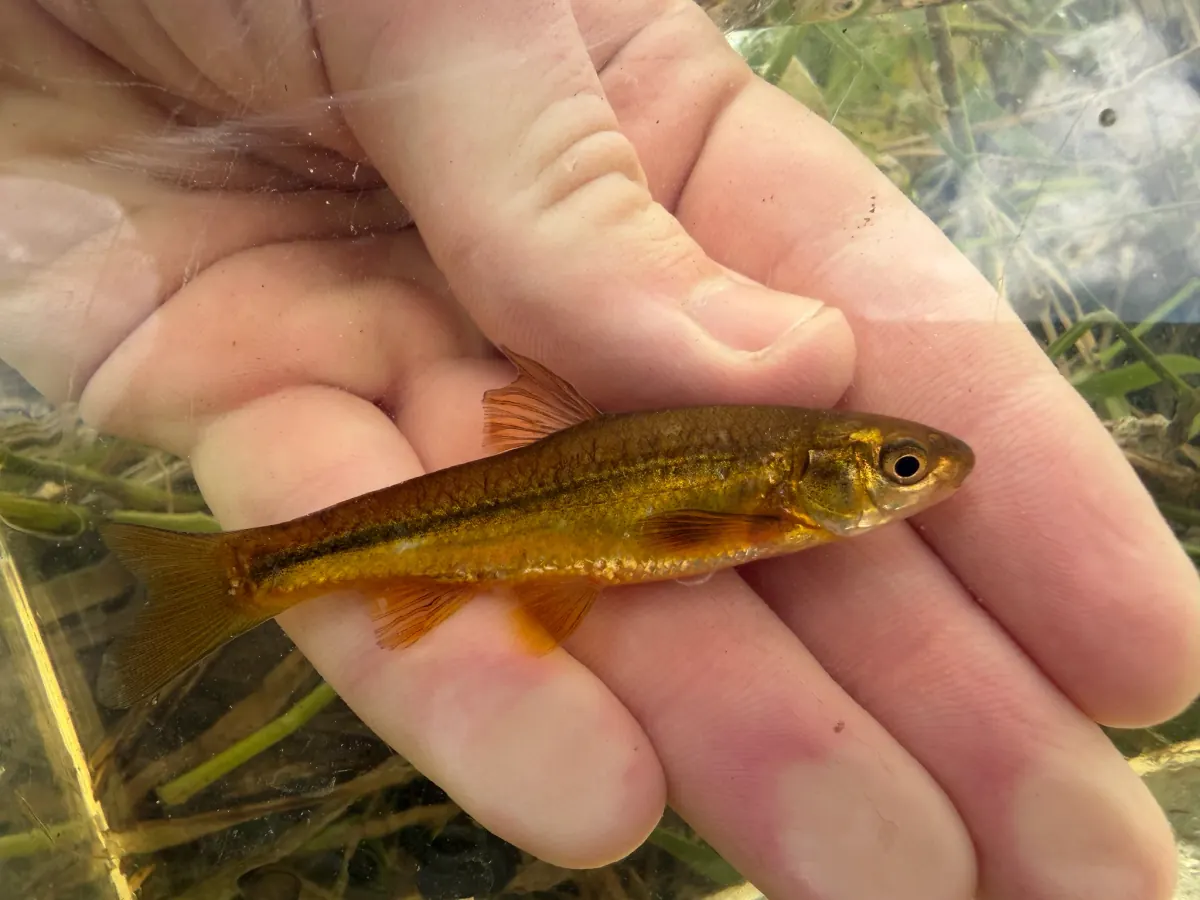
The brassy minnow (Hybognathus hankinsoni) is a small native fish of the Colorado plains, 2½ to 3 inches long, named for the brassy color along its sides. It ranges from Canada south to Colorado, and from Montana across the northern states to the Northeast. Range-wide NatureServe ranks it secure (G5).
In Colorado it has declined in distribution and abundance since the 1970s. Colorado listed it as state threatened in 1998, when it listed the plains minnow as endangered. NatureServe ranks it S3, vulnerable, in the state, and CPW’s 2025 State Wildlife Action Plan names it a Tier 1 Species of Greatest Conservation Need. It has never been federally listed.
Habitat in Colorado
CPW says brassy minnows occur in low numbers in the lower South Platte River basin. They use stream channels, especially pools, plus backwaters and beaver ponds. CPW’s habitat guidance describes the best sites as permanent deep pools and backwaters with abundant underwater plants, organic sediment over gravel, lots of woody debris, no large predatory fish, and a connection to other water through the driest months (rivers and wetlands).
A Colorado State University study by Julie Scheurer, Kurt Fausch and Kevin Bestgen sorted out old museum records of this fish and the look-alike plains minnow. The two historically lived together in the lower South Platte, North Platte, Republican and Smoky Hill basins. The brassy minnow alone lived in transition-zone tributaries, where mountain streams reach the plains, of the upper South Platte and North Platte drainages, and in Lodgepole Creek (shortgrass prairie).
CPW also mentions brassy minnows in backwaters of the Colorado River. The U.S. Geological Survey treats those West Slope records as introduced; see the FAQ below.
Primary Threats
- Stream drying. On the Arikaree River, a Republican River tributary on the eastern plains, a 2009 Colorado State University study found that drought and the hydrology of each river segment strongly shaped how much habitat brassy minnows had and how many young survived. Its groundwater model projected that, at current irrigation pumping, over half of the remaining refuge habitat in the wettest segment would dry within 35 years, leaving what survives isolated in about 1 kilometer of river (drought).
- Water development. The same study notes that habitat loss to dewatering is widespread across the western Great Plains, not only in eastern Colorado. CPW’s guidance calls for keeping pools permanent and increasing spring flows (water diversion).
- Predators and competitors. CPW recommends keeping native fish communities intact and preventing invasions of exotic predators and competitors (nonnative fish).
Recovery Efforts
CPW’s habitat guidance for the brassy minnow focuses on water and cover: create or keep permanent pools, protect spring flows, manage streamside plants for root mass and native woody growth, and encourage beaver where they can build suitable pools. It also recommends finding suitable habitat and moving fish there. As a state threatened fish, any brassy minnow caught must be returned to the water unharmed right away.
What You Can Do
- Welcome beaver. Beaver ponds are brassy minnow habitat. Landowners on plains creeks can leave dams in place where they don’t threaten property.
- Don’t move fish. Releasing bait fish spreads species where they don’t belong, on either side of the Divide.
- Report it. See Report a Sighting for where to send a photo of a possible brassy minnow.
Frequently asked questions
- Why is it called the brassy minnow?
- Most descriptions note a brassy color along its sides, CPW says, though accounts of its color vary, perhaps with region or with how specimens were preserved. Its large eyes sit with their centers level with the tip of the snout.
- What do brassy minnows eat?
- Mostly plankton, according to CPW.
- Are there brassy minnows on Colorado's West Slope?
- There are records from the Colorado River headwaters and the lower Gunnison from 1982 to 1993, but the U.S. Geological Survey treats them as introduced, possibly from bait-bucket releases. The native range in Colorado is east of the Divide.