Quick facts
- Size
- 2½–3 inches; a perch-family fish
- In Colorado
- Eight drainages in the Arkansas River basin (CPW)
- Range
- Colorado, Kansas, Oklahoma, Missouri and Arkansas; 80 populations (USFWS, 2016)
- Federal history
- Candidate 1989–2016; not warranted Oct 6, 2016
- Colorado rank
- S2, imperiled (NatureServe)
- Status
- State threatened; SWAP Tier 1 (CPW, 2025)
Overview
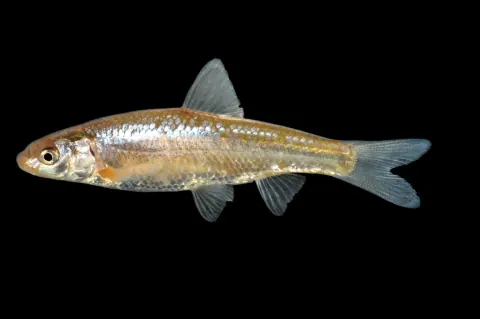
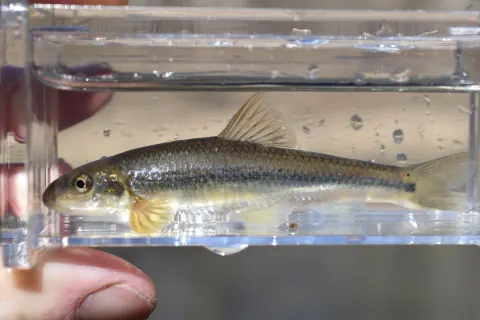
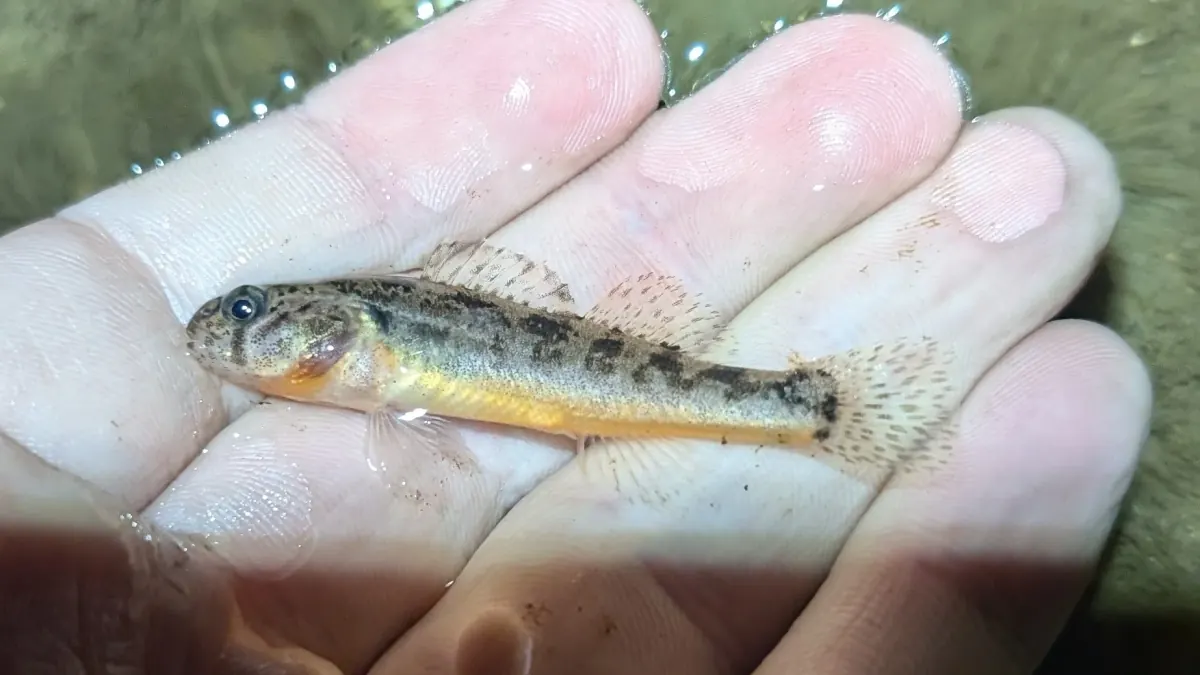
The Arkansas darter (Etheostoma cragini) is a 2½- to 3-inch member of the perch family. Its back is covered in fine black specks, it has a dark wedge-shaped spot under the eye and 12 to 14 dusky bars along each side, and in April and May breeding males turn bright orange underneath. It lives only in parts of Colorado, Kansas, Oklahoma, Missouri and Arkansas.
Colorado lists it as state threatened, and CPW’s 2025 State Wildlife Action Plan names it a Tier 1 Species of Greatest Conservation Need. It is not federally listed. NatureServe ranks it S2, imperiled, in Colorado.
Habitat in Colorado
In Colorado the darter is known from eight drainages in the Arkansas River basin: the Upper Arkansas, Fountain, Chico, Upper Arkansas–Lake Meredith, Horse, Upper Arkansas–John Martin, Big Sandy and Rush (shortgrass prairie).
It lives in spring-fed streams and in pools along the shore, often with undercut banks. CPW describes good habitat as small first- and second-order streams, 1.5 to 22 yards wide and 4 to 20 inches deep, with sand, silt or gravel bottoms, lots of sun and floating broad-leaved plants such as watercress (rivers and wetlands). Water temperatures in Colorado sites range from 55 to 86°F.
Primary Threats
- Groundwater pumping. USFWS calls water depletion the stressor with the largest potential impact on the species, affecting about 25% of its range, mainly through groundwater withdrawals for agriculture in southwestern Kansas, northwestern Oklahoma and parts of Colorado. On the plains the darter survives dry spells in permanent pools where groundwater reaches the surface. CPW says large-scale groundwater withdrawals and dewatered streams are thought to have caused local extirpations (water diversion).
- Non-native fish. CPW’s habitat guidance calls for removing predatory and non-native fish from darter streams (nonnative fish).
- Tamarisk and grazing. CPW recommends tamarisk control with a long-term focus on native plants, and reducing the effects of livestock grazing, which leaves streams unsuitable when heavy (invasive plants).
Federal Listing History
USFWS first named the Arkansas darter a Category 2 candidate in 1989. From 1996 it was a candidate whose listing was “warranted but precluded” by higher priorities, and a 2005 petition finding kept it there. On October 6, 2016, after a species status assessment, USFWS found that listing was not warranted (81 FR 69425). The agency counted 80 populations in 15 groups across five states, more than earlier assessments had found, and concluded that the species had endured more than 40 years of groundwater pumping. It expected some range contraction in small parts of the Colorado range.
Recovery Efforts
CPW raises Arkansas darters at its Native Aquatic Species Restoration Facility in Alamosa. Its habitat guidance lists the work that keeps darters going: protecting springs, individual pools and the streams that connect them, promoting natural flows, conserving water, avoiding pesticides and herbicides near small streams, and translocating darters to start new populations. As a state threatened fish, any darter caught by any means must be returned unharmed right away.
What You Can Do
- Protect springs. On ranches with spring-fed creeks in southeastern Colorado, keeping springs and pools wet and fencing out heavy grazing helps the darter.
- Don’t stock ponds near darter streams with bass or other predatory fish, and never release bait fish.
- Report it. See Report a Sighting for where to send a photo of a darter from an Arkansas basin creek.
Frequently asked questions
- What does an Arkansas darter eat?
- Mostly snails, CPW says, along with insects, crustaceans, other small invertebrates and fish eggs.
- When do Arkansas darters spawn?
- Through spring and summer, over coarse gravel in shallow water, laying eggs on organic material over a sandy bed. They mature in a year or less, and in April and May breeding males turn bright orange underneath.