Quick facts
- Where
- Piceance Creek area, Rio Blanco County
- Size
- About 4 to 7 inches tall and 7 inches wide
- Occurrences
- 12 documented (CNHP)
- Blooms
- Mid May to mid June
- Weeds
- Invasive plants, mostly cheatgrass, at nearly half of occurrences
- Status
- Federally threatened since 1990; CNHP G1G2 / S1S2
Overview
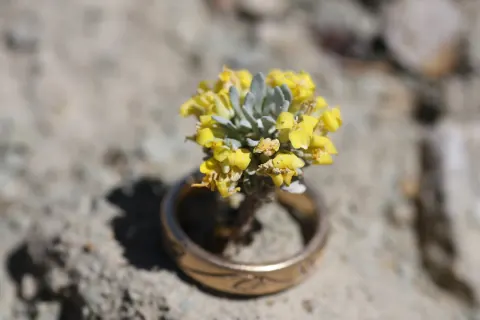
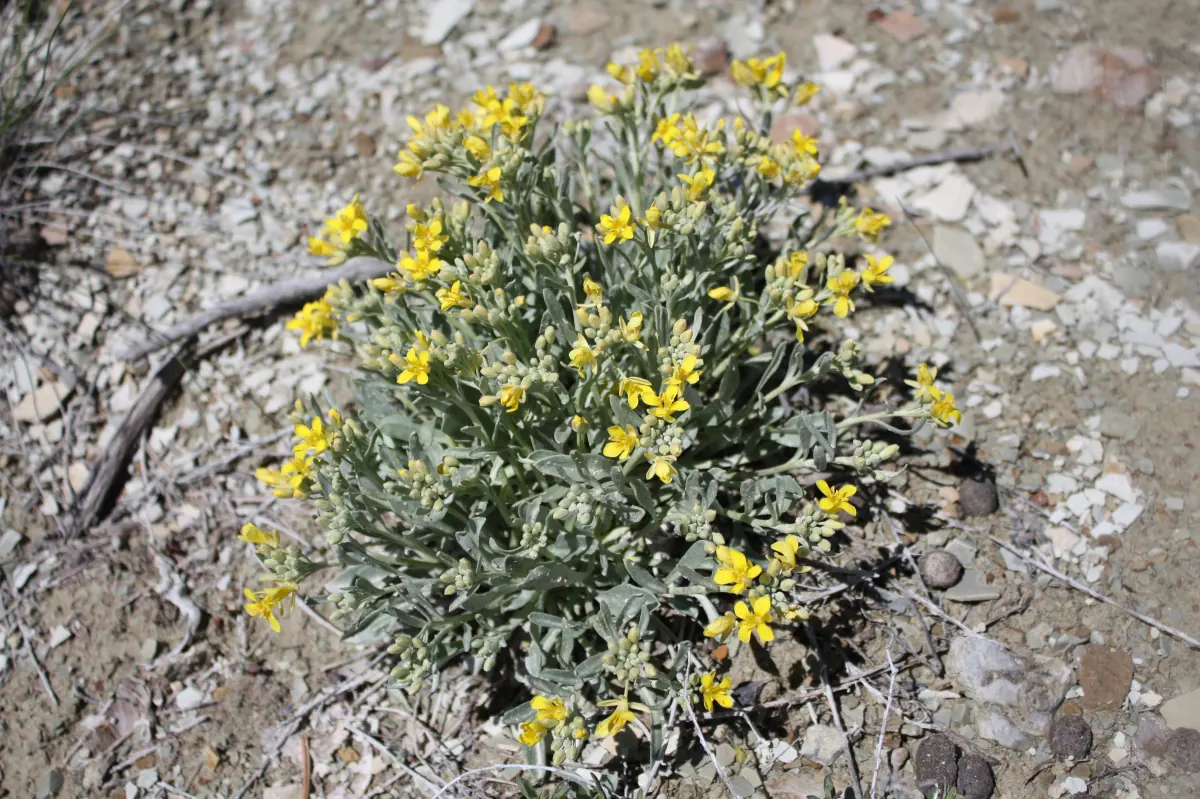
The Dudley Bluffs twinpod (Physaria obcordata), called Piceance twinpod by the Colorado Natural Heritage Program, is a compact member of the mustard family. Many raised branches grow from a deep taproot, the leaves have a silvery sheen, and short-lived clusters of bright yellow flowers open between mid May and June. It grows beside the even smaller Dudley Bluffs bladderpod, and the two were listed together.
USFWS listed it as threatened in 1990. CNHP ranks it G1G2 and S1S2, imperiled to critically imperiled. Colorado has no state list for plants.
Where it grows
The twinpod is known only from the Piceance Creek area of Rio Blanco County, near Meeker. It is restricted to barren white outcrops and steep slopes of the Parachute Creek Member and certain tongues of the Green River Formation, rock exposed where creeks have cut down. Few plants can tolerate these conditions, which is what makes the habitat distinctive.
Threats
The same geology that supports the twinpod sits in the Piceance Basin’s multimineral oil shale zone, with large reserves of oil shale, natural gas and minerals. USFWS says energy exploration, extraction and related activity can disturb or degrade the fragile shale habitat and harm the native ground-nesting bees that pollinate the plant. CNHP considers mining and oil and gas development the primary threats, notes that many occurrences sit along roadsides threatened by road maintenance, and reports invasive plants, mostly cheatgrass, at nearly half of them (invasive plants). Livestock grazing, wild horse trampling, recreation and climate change add to the pressure.
Protection and recovery
USFWS prepared a species biological report and a draft recovery plan for both Dudley Bluffs plants, followed by a 2020 recovery implementation strategy. CPW’s 2025 State Wildlife Action Plan lists the twinpod as Tier 1, and CNHP’s 2011 analysis rated it “weakly conserved.”
What you can do
- Stay on routes in the Piceance Creek area; the white outcrops are the plant’s whole habitat.
- Don’t spread cheatgrass. Clean seeds from boots, tires and animals before moving between sites.
- Leave plants and seed where they are.
Frequently asked questions
- How do you tell Dudley Bluffs twinpod from common twinpods?
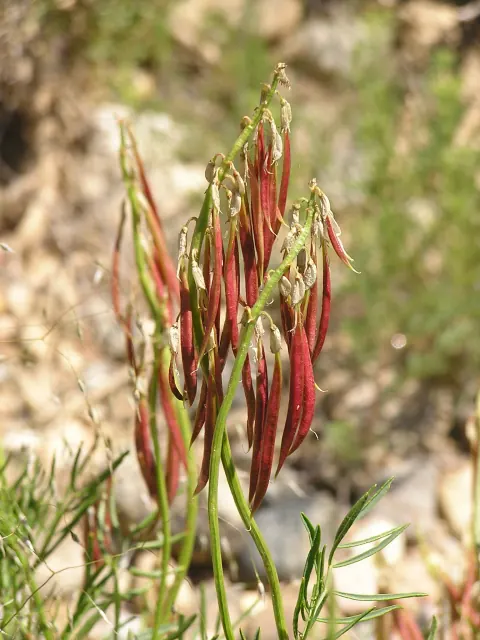
- Look at the fruit. Dudley Bluffs twinpod's mature pods are heart-shaped (obcordate), while the similar sharpleaf twinpod and its relatives have oval or round fruits, according to the Colorado Natural Heritage Program. At a glance the plants are hard to tell apart.
- Why are its leaves silvery?
- The whole plant is covered in tiny circular hairs that CNHP likens to solder splatters, which give the leaves their silvery sheen.
- Who pollinates Dudley Bluffs twinpod?
- Native ground-nesting bees, USFWS says, and energy development that disturbs the ground threatens them as well as the plant.