Quick facts
- Where
- North Park (Jackson County) and the Laramie River valley (Larimer County)
- Size
- 6 to 12 inches tall
- Life cycle
- Biennial: a leaf rosette one year, flowers and dies the next
- First collected
- 1918, by Colorado botanist George Osterhout
- Blooms
- July and August
- Status
- Federally endangered since 1982; proposed for delisting 2024; CNHP G2 / S2
Overview
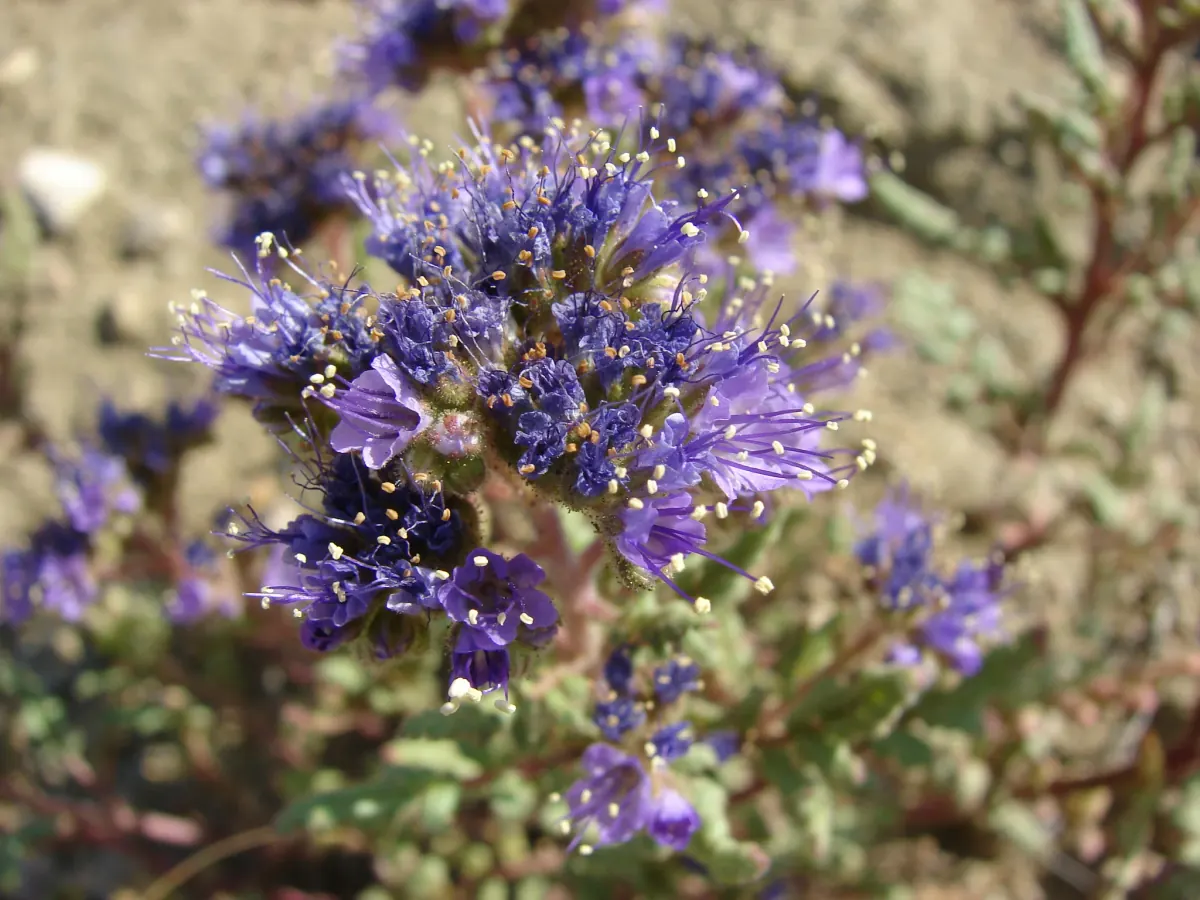
North Park phacelia (Phacelia formosula) is a biennial wildflower 6 to 12 inches tall, with bright purple flowers arranged in coils at the ends of its stems and dark green, deeply lobed, bristly leaves. It spends its first year as a rosette, then flowers and dies. The Colorado botanist George Osterhout first collected it in 1918.
USFWS listed it as endangered in 1982. It is still listed today, but USFWS proposed removing it from the list on March 19, 2024, finding that its threats have been reduced or are being managed and that its known range is larger than once thought. The agency reopened comments on that proposal in April 2026. The Colorado Natural Heritage Program ranks it G2 and S2, imperiled. Colorado has no state list for plants.
Where it grows
USFWS describes the species in North Park, the high basin of Jackson County, on eroded, barren exposures of the coal-bearing Coalmont Formation at about 8,000 to 8,300 feet. CNHP also counts outcrops of Niobrara shale in the Laramie River valley of Larimer County, after genetic studies found those plants belong to the same species. Its population swings widely from year to year, which, combined with isolated populations, makes it vulnerable to chance events.
Threats
USFWS lists concentrated livestock use and trampling, off-highway vehicle recreation, energy development, commercial and residential development, range improvements, and the loss of the insect pollinators it relies on to keep its genetic diversity. CNHP reports grazing as the main land use in 81% of occurrences, off-highway vehicle use and invasive Russian thistle at 45% each (invasive plants), and roads near just over half. Two occurrences have a power line running through them.
Protection and recovery
The March 2024 proposed rule says threats have been eliminated or reduced to the point that the species no longer meets the definition of an endangered or threatened species. If USFWS finalizes it, the Endangered Species Act’s protections would no longer apply; until then the plant remains endangered. USFWS also prepared a draft post-delisting monitoring plan. CPW’s 2025 State Wildlife Action Plan lists it as Tier 1.
What you can do
- Keep vehicles on roads in North Park; off-highway vehicle tracks reach almost half of its sites.
- Watch for Russian thistle and other weeds on your land near its outcrops.
- Leave plants and seed where they are; each plant flowers only once.
Frequently asked questions
- Why did USFWS propose removing North Park phacelia from the list?
- In its 2024 proposed rule, USFWS said the threats identified at listing in 1982 were not as significant as expected and are being managed, and that taxonomic studies added four populations and an expanded range by including plants once thought to be other species.
- Is the Larimer County population the same species?
- Recent genetic and morphological studies say yes. The Colorado Natural Heritage Program now includes the Larimer County plants in North Park phacelia, and is waiting on published research before deciding whether a similar Grand County plant, Phacelia gina-glenneae, belongs too.
- How common are weeds in North Park phacelia sites?
- Invasive plants, mostly Russian thistle, were reported at 45% of extant occurrences in 2022, up 18% since 2019, the Colorado Natural Heritage Program says. Off-highway vehicle use was reported at the same share, 5 of 11 occurrences.