What it is
CPW calls it “A serious and growing problem in the West”: non-native plants, commonly called noxious weeds, that “outcompete native plants for food, space, light and nutrients.”
Cheatgrass is the best-known example. According to USGS, “Cheatgrass (Bromus tectorum) originated in Europe or Eurasia and was introduced to the U.S. in the mid- to late-1800s as a contaminant in seed and straw.” It germinates in fall and early spring and grows fast, “making it highly competitive with native species,” and it “is also disrupting the fire cycle in sage habitat and other Western ecosystems, leading to more frequent and more intense burns.”
BLM puts numbers on that fire cycle. Cheatgrass “can change the fire recurrence interval from the natural 20 to 100 years for sagebrush grassland ecosystems to 3 to 5 years for cheatgrass-dominated sites,” and “The frequent cycle of large fires eliminates native shrubs, forbs, and perennial grasses and results in a self-perpetuating stand of cheatgrass.”
In Colorado
The state’s weed lists
Colorado’s Noxious Weed Act (C.R.S. 35-5.5) sorts weeds into three lists. The Colorado Department of Agriculture (CDA) defines them this way:
- List A: “A newly arrived, uncommon, and potentially dangerous plant that requires mandatory eradication from all lands within the state.”
- List B: “Invasive plants with discrete, statewide distributions that must be managed to stop their continued spread.” Salt cedar (tamarisk) and Russian olive are on List B.
- List C: “The species are widespread and well-established throughout the state, making statewide eradication impractical.” Cheatgrass is on List C. For these, “Control is recommended by the state, but not required by state law.”
“All public and private landowners in Colorado have a legal duty to control noxious weeds on their property,” according to CDA, and local governments can write and enforce their own weed management plans. A 2020 CDA analysis counted weed programs in “all 64 counties and 300+ municipalities,” and warned that the cost to control some weeds “can increase as much as 15% to 20% per year” if they are not dealt with in time.
Tamarisk and Russian olive
CDA says tamarisk, or saltcedar, “crowds out native stands of riparian and wetland vegetation by creating large deposits of salt in the soil.” Russian olive “is a perennial tree or shrub native to Europe and Asia” that “can reproduce by seed or root suckers.”
Removing tamarisk does not reliably free up water. A 2009 USGS study on the lower Colorado River found that although saltcedar grows much better than native shrubs and trees where salinity has increased, their “rates of transpiration are similar.”
The tamarisk beetle
- 2001: USDA approved the release of the tamarisk beetle (Diorhabda spp.) as a biological control.
- 2005: APHIS began a biocontrol program for saltcedar in the northern United States, and the northern tamarisk beetle was released in western Colorado.
- 2010: The beetle had spread farther than expected, into southwestern willow flycatcher habitat. APHIS “terminated the biological control program and cancelled all tamarisk leaf beetle release permits because of the potential for effects on flycatcher habitat.”
By 2016, USGS reported, “The tamarisk beetle now occupies hundreds of miles of rivers throughout the Upper Colorado River Basin (UCRB) and is spreading into the Lower Basin.” The beetles “feed on the leaves of tamarisk, leaving them dry and brown,” according to RiversEdge West, formerly the Tamarisk Coalition.
The plains
Woody plants are a problem too. NRCS says “Great Plains grasslands lose 22.4 million tons of forage production every year to woody encroachment,” and “Woody encroachment displaces these species and causes population declines,” meaning the grassland-dependent species that “thrive in large intact grasslands.” Those figures are for the Great Plains as a whole.
Effects on wildlife
Sagebrush birds
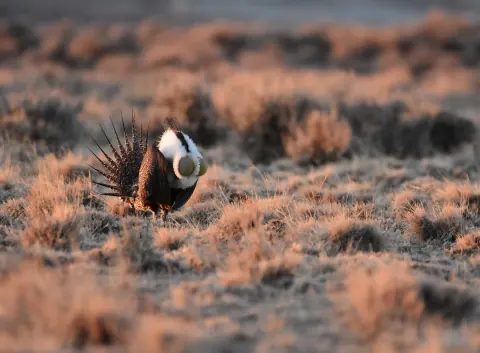
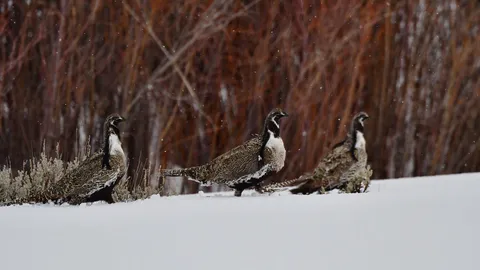
For the Gunnison sage-grouse, the 2014 listing rule lists “invasive plants, fire, mineral development, piñon-juniper encroachment” among habitat threats, and says that in the San Miguel Basin “grazing pressure and competition from introduced grasses have limited overall sagebrush.” The 2019 species status assessment says invasive plants “alter the native plant community structure,” and that fires can spread invasive plants and degrade habitat, “which may take decades to recover to suitable condition or may not recover at all.”
Plains birds
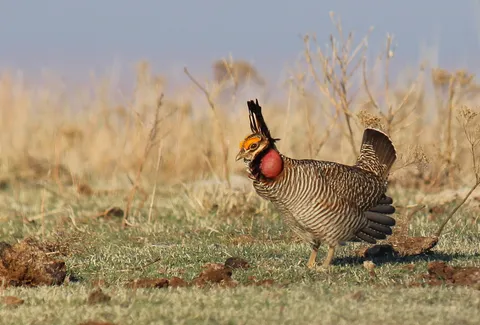
The 2022 listing rule for the lesser prairie-chicken described habitat “encroached by woody vegetation such as mesquite and eastern red cedar,” and noted that “Lesser prairie-chickens tend to avoid using areas with trees, vertical structures and other disturbances.” That federal listing was vacated by a court in August 2025 and removed in February 2026. Colorado has listed the bird as threatened since 1973, and CPW says many of the state’s remaining birds are associated with Conservation Reserve Program grasslands in southeast Colorado.
Wetland and riparian birds
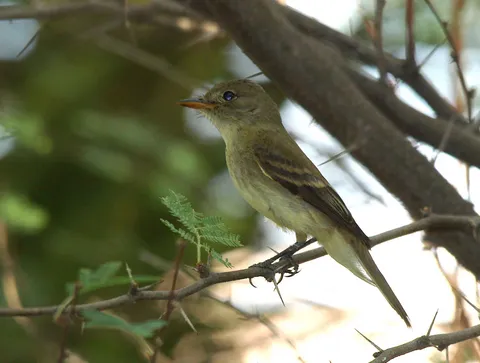
Tamarisk is both a problem and, now, nesting habitat. The 2014 five-year review for the southwestern willow flycatcher says “The flycatcher and other riparian obligates extensively use tamarisk for successful nesting,” and found “no evidence” that nesting in tamarisk-dominated habitat is detrimental. Killing the tamarisk can hurt. When beetles defoliated tamarisk along Utah’s Virgin River in 2009, “Thirteen of the 15 (87%) flycatcher nests in this area of defoliation failed.” APHIS says defoliation “increases temperatures in breeding habitat, which may exceed the flycatchers’ embryonic thermal tolerance, ultimately reducing hatching success.”
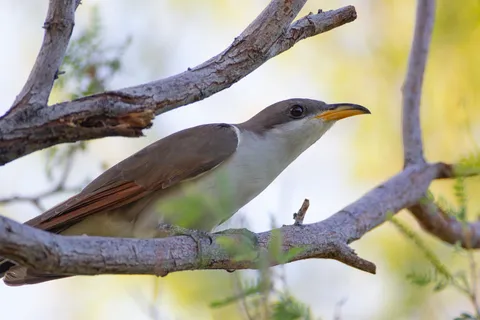
The western yellow-billed cuckoo is a different case. Its 2014 listing rule says “Tamarisk is considered a nonnative, invasive species across the West,” and that “sites occupied by western yellow-billed cuckoos do not include dense tamarisk patches.” Russian olive “forms dense stands dominating the understory of the largest cottonwood galleries,” but the 2021 critical habitat rule cautions that “the possible effects to western yellow-billed cuckoo and its habitat should be considered during widespread removal of Russian olive.”
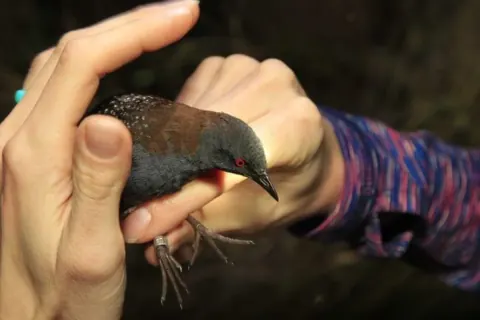
The 2020 listing rule for the eastern black rail names the “introduction of invasive plant species (e.g., Phragmites australis” as a rangewide threat. In Colorado, the rule says, the rail is “reliably located within the Arkansas River Valley.” Phragmites is not always invasive here: the Colorado Natural Heritage Program notes that “both native and introduced genotypes exist in North America,” and that they can be hard to tell apart.
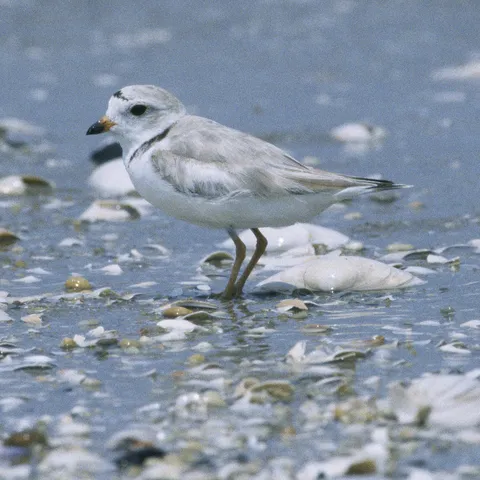
For the piping plover, a 2016 draft recovery plan for the Northern Great Plains says “Vegetation encroachment is a major factor limiting the amount of suitable nesting habitat,” and that salt cedar and phragmites “are a growing concern in plover nesting habitat.”
Mammals
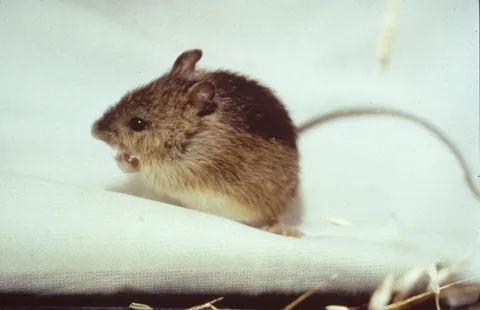
The 2018 recovery plan for the Preble’s meadow jumping mouse says invasive plants can displace native plants and “negatively impact cover and food.” It singles out leafy spurge, which “can form a monoculture,” and reports that Russian olive occurred in six (33 percent) of the areas where no jumping mice were found, but was absent where mice were captured. Its overall conclusion is that “nonnative plants constitute a LOW threat to Preble’s mouse populations.”
Butterflies
For the silverspot butterfly, the 2022 proposed rule warns that exotic woody or herbaceous species such as Russian olive, tamarisk or leafy spurge “can rapidly take over habitat and could eliminate bog violets,” and that nonnative thistles “can create monocultures that create poor overall habitat conditions.” USFWS listed it as threatened in 2024; it is documented in ten populations across southwestern Colorado, eastern Utah and northern New Mexico. The listing’s 4(d) rule exempts noxious weed control done in a way that is compatible with conserving the butterfly and its bog violets.
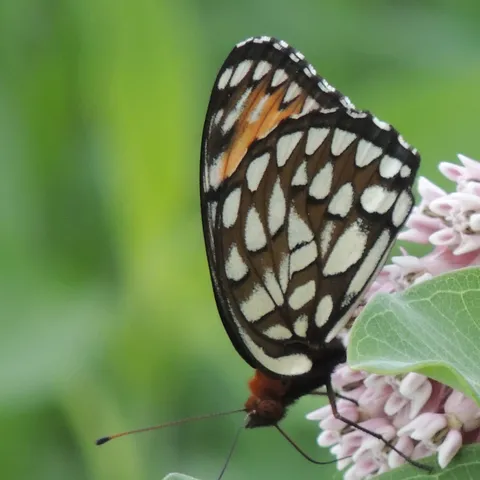
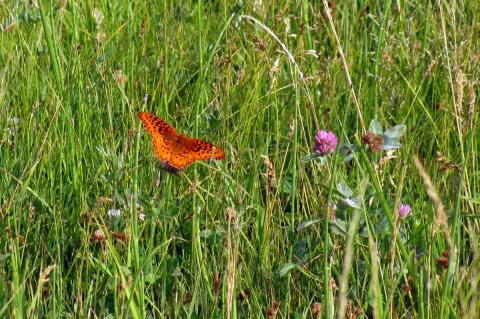
For the regal fritillary, the 2024 proposed rule says “Invasive, nonnative (exotic) plants and woody vegetation may degrade the quality and quantity of native grasslands.” Colorado is on the edge of its range.
Bees
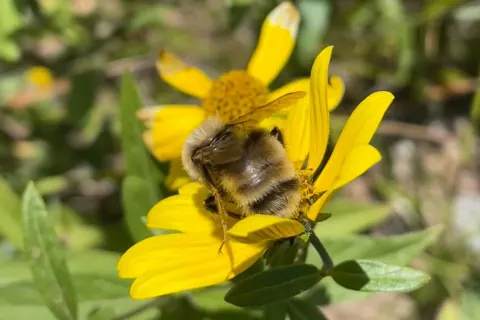
No federal source we found ties invasive plants to the western bumble bee directly. CPW says the bees “require healthy populations of flowers throughout the growing season and access to suitable nest sites,” and the profile counts invasive plants in rangeland among the reasons native flowers have declined.
What’s being done
Weed grants
In November 2024, CDA offered about $700,000 from the Noxious Weed Fund and about $40,000 from the USFS State & Private Forestry Program for weed projects, and each grant must have a 1-to-1 funding match.
Cheatgrass in sagebrush
- Moffat County: A USFWS Partners project funded aerial herbicide treatment of cheatgrass “on approximately 7,125 acres of privately owned sagebrush” habitat, “to benefit Greater Sage Grouse nesting and brood-rearing habitat.”
- Bipartisan Infrastructure Law: The first Colorado project was “an aerial application of the herbicide Rejuvra on 3,700 acres of sagebrush habitat.” USFWS says “Rejuvra works by preventing germination of shallow-rooted, early-emerging invasive annual grasses.”
- Gunnison Basin: “In 2022 and 2023, two grants totaling almost $800K were awarded in the Gunnison Basin for cheatgrass treatments” and wet meadow restoration, according to the 2024 five-year review.
River restoration
RiversEdge West formed the Desert Rivers Collaborative in 2012. From 2014 to 2024 its 20 organizations completed 864 acres of initial tamarisk and Russian olive removal and 272 acres of revegetation with native plants. “The Dolores River Restoration Partnership spans 170 miles of the Dolores River in Colorado and Utah.” CDA says tamarisk beetle biocontrol continues in Colorado, including releases along the Green and Yampa rivers in Dinosaur National Monument.
Clearing trees from the prairie
Through NRCS’s Lesser Prairie-Chicken Initiative, “More than 306,000 acres of rangeland were treated for woody encroachment” from 2010 to 2024. That total covers the whole Great Plains initiative, not Colorado alone.
How you can help
- Report List A weeds to your county weed program or CDA.
- Clean boots, tires and gear before moving between trailheads.
- Plant natives instead of ornamental invaders like Russian olive.
- Use certified weed-free hay on public lands.
- Join a weed pull with a local land trust or watershed group.