Quick facts
- Where in Colorado
- Montezuma County
- Size
- Mostly 1.5 to 2.5 inches tall; rarely to about 7 inches
- Flowers
- Yellow to cream, about 1 inch across
- Blooms
- Mid April to mid May
- Droughts
- Four exceptional droughts since 2000 (USFWS)
- Status
- Federally threatened since 1979; CNHP G2 / S1S2
Overview
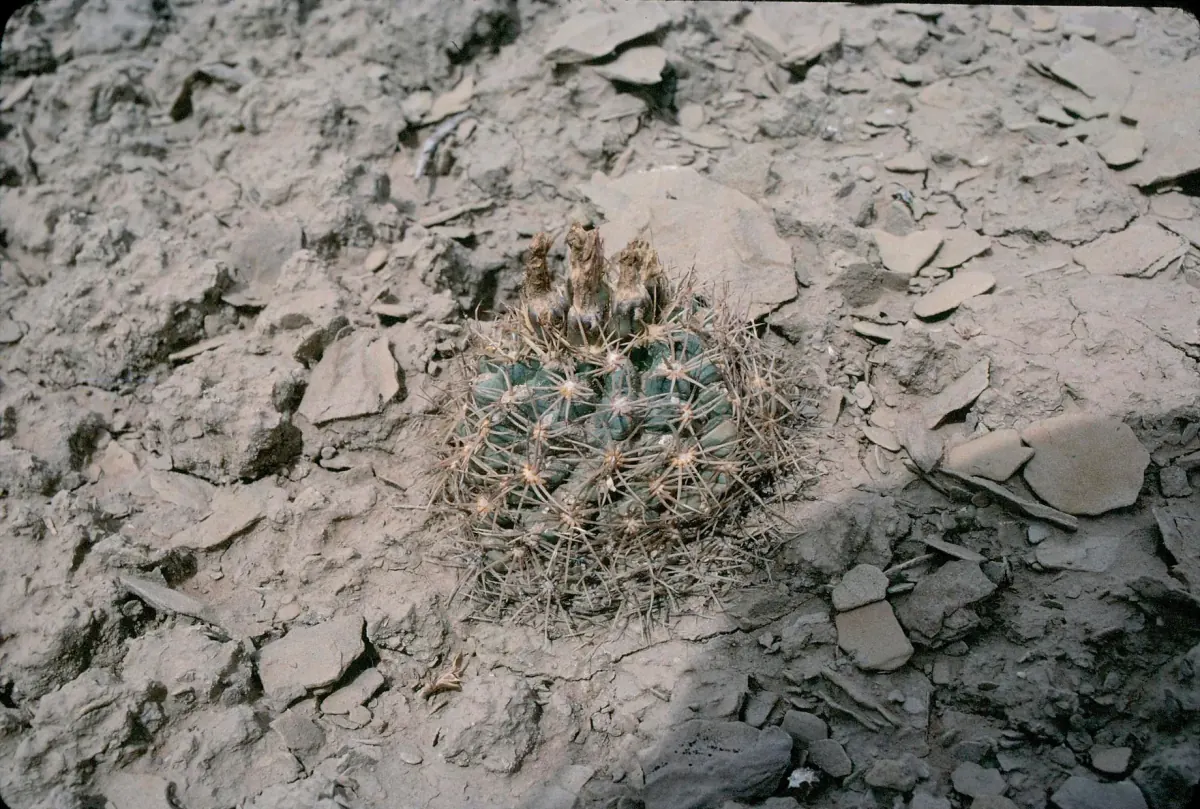
The Mesa Verde fishhook cactus (Sclerocactus mesae-verdae) is a small, nearly round cactus with pale green or gray-green stems. Small spines sit on the tops of its bumps, which merge into ribs as the plant matures. In spring it flowers at the top in yellow to cream.
USFWS listed it as threatened in 1979, and its recovery plan dates from 1984. The Colorado Natural Heritage Program ranks it G2 and S1S2, imperiled to critically imperiled in Colorado, and rated it “under conserved” in 2011. Colorado has no state list for plants.
Where it grows
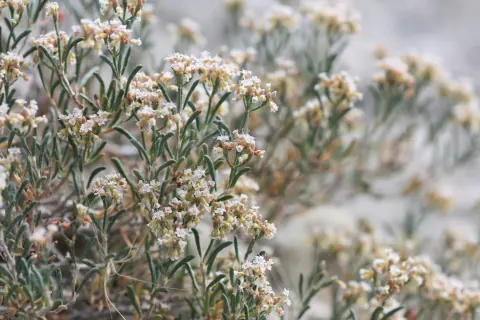
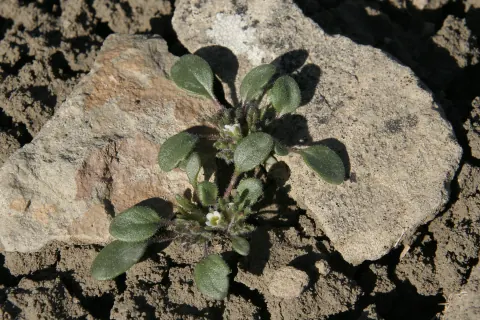
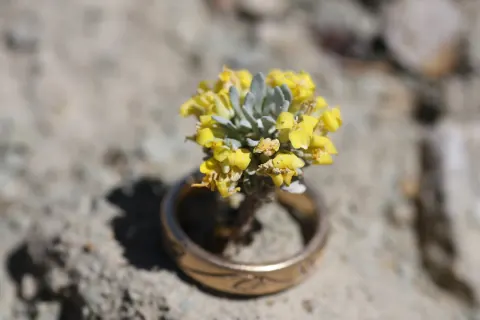
In Colorado the cactus is documented only in Montezuma County, and most of the state’s occurrences are known from historical observations; it also grows on the Navajo Nation and in New Mexico. It lives on dry, exposed hillsides of Mancos and Fruitland adobe clay badlands, usually on gentle slopes, and only on alkaline soil. Mat saltbush, Gardner’s saltbush, desert trumpet, prince’s plume and Phacelia splendens grow with it.
Threats
Drought is a major concern: USFWS links large population declines in the early 2000s to it (see Quick facts) (drought). Off-road vehicle use is pervasive across its range and is the most significant human-caused threat. Oil and gas development, pipelines and utility lines have affected it and will continue to, and large solar projects proposed in its habitat could alter the soil and affect its pollinators and nurse plants. Cows and feral horses trample cacti and compact the soil. Insects and rodents eat it (see the FAQ), and the invasive weed halogeton grows alongside it and may change soil chemistry (invasive plants).
Protection and recovery
All land management agencies in its range run demography monitoring sites where livestock impacts have been documented, CNHP reports. CPW’s 2025 State Wildlife Action Plan lists it as Tier 1. This page gives county-level range only, because collectors seek out rare cacti.
What you can do
- Never dig or buy wild-collected cacti. Buy cacti only from nurseries that propagate their own.
- Stay on roads in the badlands of Montezuma County; off-road vehicles are its biggest human-caused threat.
- Keep locations private. If you photograph one, share it without coordinates; iNaturalist automatically obscures this species’ locations.
Frequently asked questions
- Do people still collect Mesa Verde fishhook cacti?
- Less than they did. Illegal collecting for the cactus trade appears to have decreased since the 1984 recovery plan and is now believed to be a minor threat, the Colorado Natural Heritage Program says. Keeping it that way depends on people leaving wild cacti in the ground.
- What eats Mesa Verde fishhook cactus?
- The native longhorn cactus beetle and army cutworm both hit the cacti hard during the 2002–2003 drought, and rodents have been linked to declines at several monitoring sites, according to the Colorado Natural Heritage Program.
- Do Mesa Verde fishhook cacti grow alone or in clumps?
- Usually alone, but sometimes in clumps of up to ten, the Colorado Natural Heritage Program says. Its small fruits start green and turn tan.