Quick facts
- Where
- Pagosa Springs area, Archuleta County
- Populations
- Two, within about 13 miles of each other, on about 388 acres
- Height
- 12 to 24 inches when flowering
- Blooms
- Late May to early August
- Protected land
- Nearly 90% of plants are on land CPW manages mainly for the species
- Status
- Federally endangered since 2011; critical habitat 2012; CNHP G1 / S1
Overview
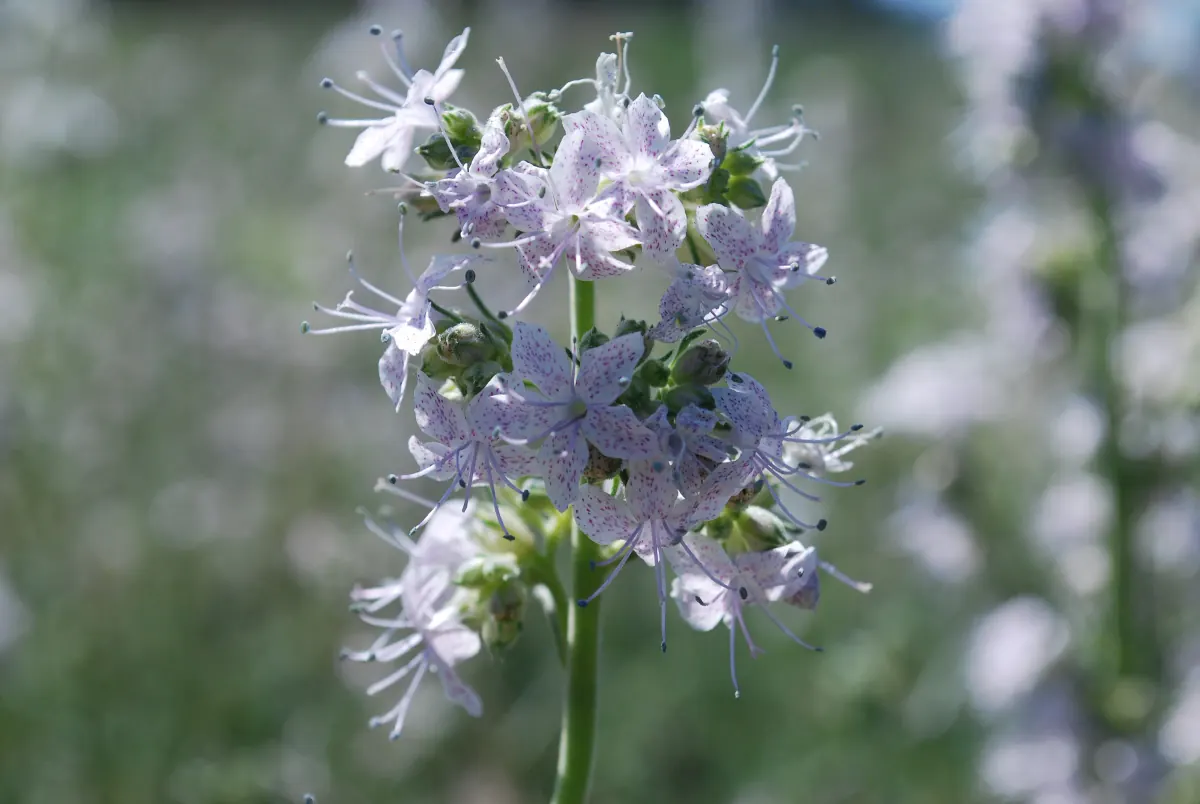
Pagosa ipomopsis (Ipomopsis polyantha), long known as Pagosa skyrocket, is a member of the phlox family that lives only around Pagosa Springs. Its flowering stalk carries clusters of white or light pink flowers, often flecked with purple or pink spots. The plant spends one to several years as a low rosette before it flowers, sets seed and dies.
USFWS listed it as endangered in 2011 and designated critical habitat for it in 2012, together with the Parachute beardtongue and DeBeque phacelia. The Colorado Natural Heritage Program ranks it G1 and S1, critically imperiled both globally and in Colorado. Colorado has no state list for plants.
Where it grows
Pagosa ipomopsis grows only on soils weathered from Mancos Shale in the southern San Juan Mountains, in Archuleta County. CNHP describes it on shale knolls in montane meadows, rabbitbrush shrublands, openings in ponderosa pine woodland and lightly grazed or abandoned pastures. It is most common where the soil holds moisture longer, such as the foot of shale knolls and the sides of eroded gullies. It avoids bare shale outcrops with coarse rubble.
Development has squeezed much of what is left into roadsides, dry ditches, lots between buildings and pastures, USFWS says.
Threats
USFWS names land use change as the primary threat: commercial, residential, municipal and agricultural development, with the utility lines and access roads that come with it (habitat loss). Invasive plants (invasive plants), concentrated livestock use and climate change add to it, and so does the loss of the bees that pollinate it. CNHP adds pipeline work and geothermal energy development, and reports few plants persisting where grazing is continual.
Protection and recovery
According to CNHP, nearly 90% of the plants grow on land managed by Colorado Parks and Wildlife primarily for the species’ conservation, which shields them from most disturbance. Roadside populations still face mowing and road work. USFWS completed a recovery plan for the species in 2022. CPW’s 2025 State Wildlife Action Plan lists it as Tier 1.
What you can do
- Look from the road. Many plants grow along roadsides around Pagosa Springs. Enjoy them without stopping on the shoulder to pick or trample.
- Leave rosettes alone. A plant may spend years as a rosette before it flowers once; digging one ends its only chance to seed.
- Control weeds on your land. USFWS lists invasive plants among its threats.
Frequently asked questions
- Why is it also called Pagosa skyrocket?
- Both names belong to the same plant. The Colorado Natural Heritage Program and USFWS recovery documents call it Pagosa skyrocket; the USFWS species page now lists Pagosa ipomopsis first, after its genus, Ipomopsis.
- Does Pagosa ipomopsis bloom every year?
- No. It grows as a flat rosette of finely divided leaves for one or more years until conditions are right, then sends up a single flowering stalk and dies after setting seed, according to USFWS and the Colorado Natural Heritage Program.
- What color is Pagosa ipomopsis pollen?
- Blue at first, turning yellow as it matures, the Colorado Natural Heritage Program notes. The stamens stick well out of the short, tubular flowers.