Quick facts
- Where
- Mosquito Range: Lake, Park and Summit counties
- Populations
- Nine, within an area about 11 miles across (USFWS)
- Height
- Half an inch to 6 inches
- Blooms
- June into August, after snowmelt
- First collected
- 1935, by Colorado College botanist C. William T. Penland
- Status
- Federally threatened since 1993; CNHP G2 / S2
Overview
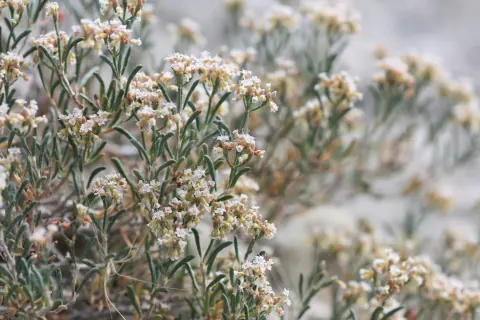
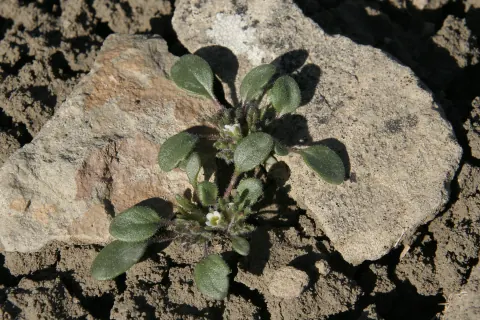
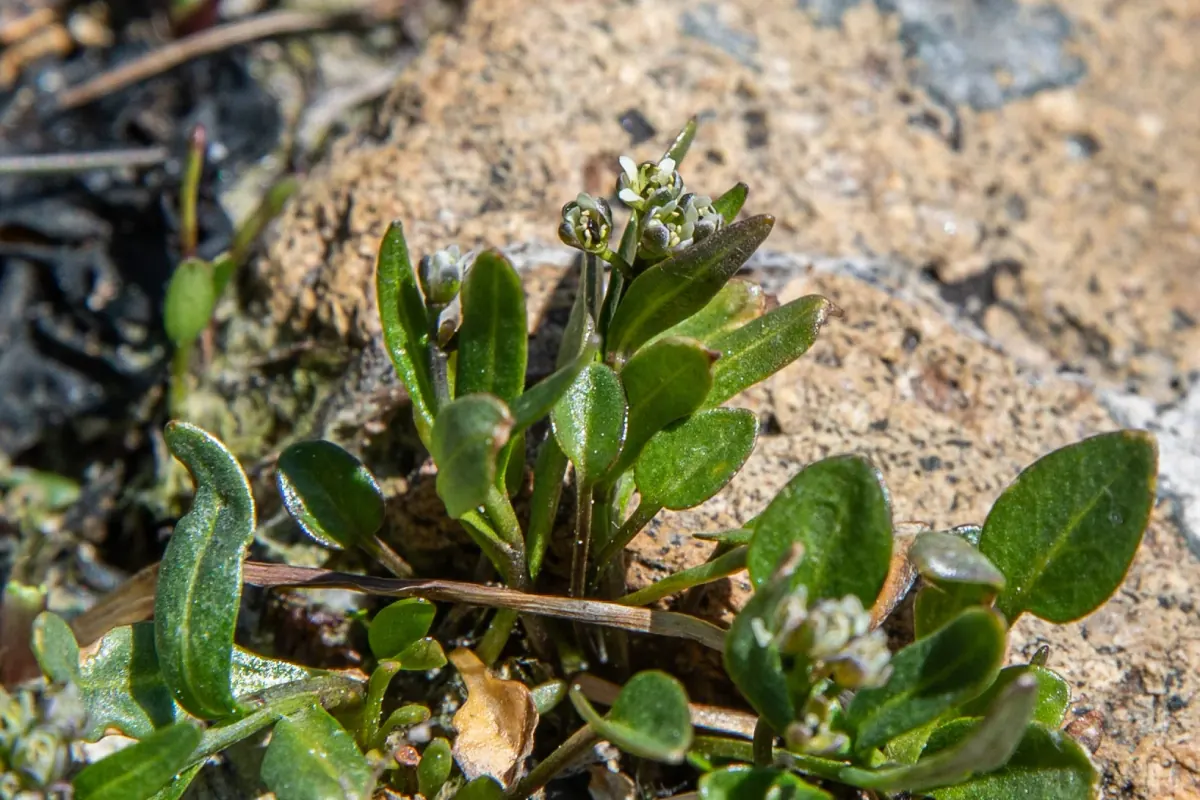
Penland alpine fen mustard (Eutrema penlandii), also called Mosquito Range mustard, is a small perennial in the mustard family. Clusters of tiny white, four-petaled flowers top each stem; its leaves are shiny and oval along the stem and spoon-shaped at the base. It is one of only two species in its genus in North America.
USFWS listed it as threatened in 1993 and released a draft recovery plan in 2021. The Colorado Natural Heritage Program ranks it G2 and S2, imperiled, and considers it extremely vulnerable to climate change. Colorado has no state list for plants.
Where it grows
The mustard lives only in the Mosquito Range of central Colorado, on a stretch of the Continental Divide that runs east–west instead of north–south, in Lake, Park and Summit counties. It grows in fens: constantly wet, moss-covered patches fed by snowbeds that build up on the downwind side of ridges and melt slowly through the summer. Plants are most often on gentle east-facing slopes and basins below the snowbeds, rooted in moss or hidden among short grasses, though some grow in drier spots.
Threats
The fens sit close to mines. CNHP says mineral extraction, especially ditching that could change the area’s water, and drainage from mine tailings that could acidify the fens are threats (water diversion). The Mosquito Range’s scenery also draws summer visitors: USFWS names off-road vehicle use, including winter travel, as well as camping, hiking and roads. Climate change is the largest unknown (see the FAQ).
Protection and recovery
USFWS published a draft recovery plan for the species in July 2021. CPW’s 2025 State Wildlife Action Plan lists it as Tier 1. The plant’s taxonomy is still debated: the Flora of North America treats it as part of the arctic E. edwardsii, while a genetic and morphological study found the two distinct.
What you can do
- Stay on trails above treeline in the Mosquito Range; fens are easily rutted and drained.
- Keep vehicles on roads in summer and winter.
- Leave wet ground wet. Don’t dig ditches or divert seeps near alpine fens.
Frequently asked questions
- Why does a plant from the Arctic grow in Colorado?
- Its closest relative, Eutrema edwardsii, is an arctic plant found around the North Pole, about 1,000 miles away. CNHP calls Penland alpine fen mustard the only Eutrema in the lower 48 states; some botanists treat the two as one species, and research on that question continues, USFWS says.
- Can Penland alpine fen mustard move higher as the climate warms?
- Hardly. It already lives at the top of the range with nowhere higher to go, and it depends on snowmelt and wet ground, so USFWS expects it to be vulnerable to warming trends.
- How does it reproduce?
- Only by seed; it does not spread by runners or roots. Little is known about its pollinators or how its seeds disperse, according to USFWS.