Quick facts
- Where
- Middle Park near Kremmling, Grand County
- Occupied area
- Less than 1,500 acres (USFWS); two occurrences (CNHP)
- Size
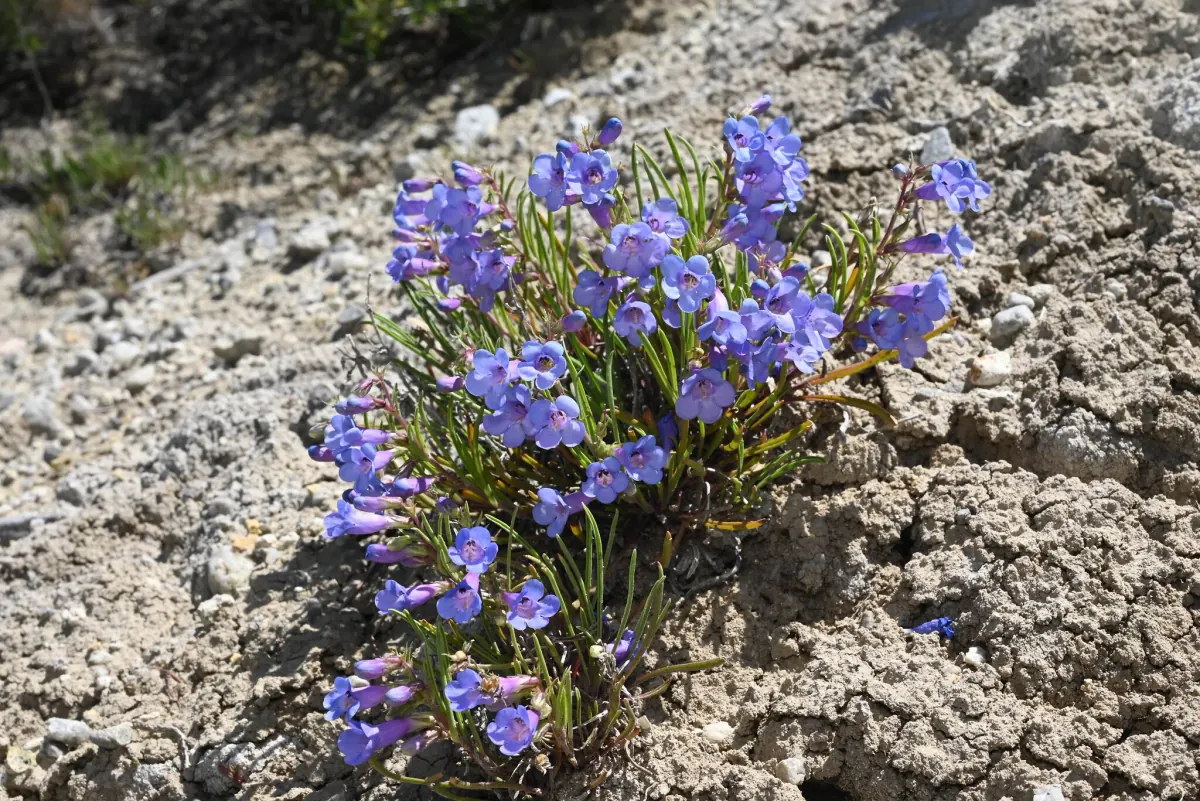
- 2 to 6 inches tall, up to 8 inches wide
- Flowers
- Blue-violet, tubular, about 3/4 inch long
- Nearest relatives
- Nearly 150 miles away
- Status
- Federally endangered since 1989; CNHP G1 / S1
Overview
Penland’s beardtongue (Penstemon penlandii), also called Kremmling beardtongue, is a compact, clumping member of the plantain family. Its dark green leaves are narrow, straight and rolled inward, and in June and July it carries showy blue-violet, tubular flowers. USFWS says there is only one population of the species in the world.
USFWS listed it as endangered in 1989. The Colorado Natural Heritage Program ranks it G1 and S1, critically imperiled. Colorado has no state list for plants.
Where it grows
The beardtongue is endemic to Middle Park, a high sagebrush valley around 7,500 feet near Kremmling in Grand County. It grows only on sparsely vegetated shale exposures of the Troublesome Formation that are high in selenium, along with Niobrara Shale badlands, in open grassy places with scattered sagebrush, rabbitbrush and bitterbrush. It is locally abundant but highly restricted, and its nearest relatives grow far away (see Quick facts).
Threats
USFWS lists off-highway vehicle recreation, road maintenance, dust kicked up from nearby roads, utility maintenance, climate change and invasive plants (invasive plants). CNHP adds power line repair and prolonged drought (drought). With so small a range and so little habitat, USFWS says the species is more susceptible to extinction than plants with broader ranges, and losing its native bee pollinators would threaten it too.
Protection and recovery
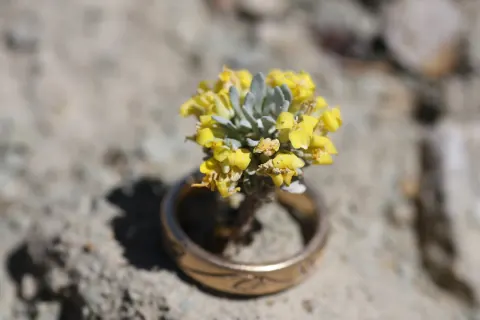
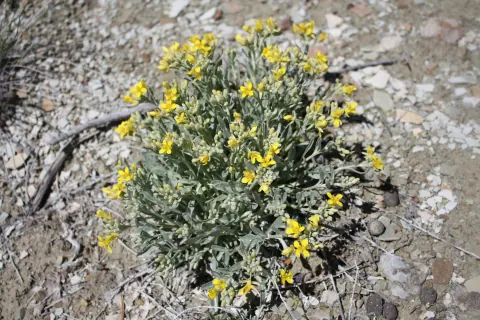
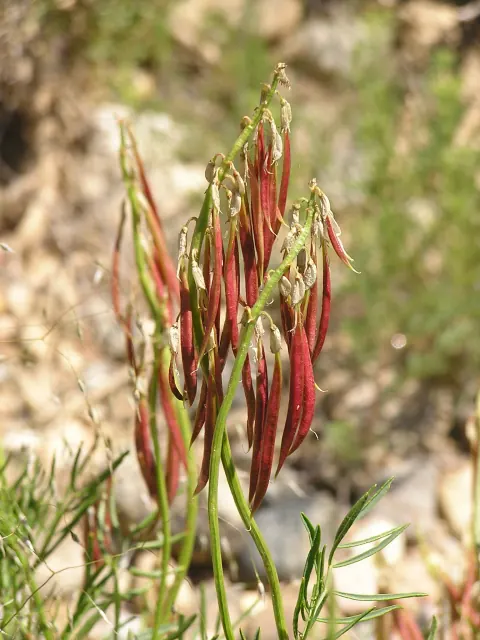
A USFWS recovery plan approved on September 30, 1992 covers Penland’s beardtongue together with the Kremmling milkvetch. CPW’s 2025 State Wildlife Action Plan lists it as Tier 1.
What you can do
- Stay on designated routes around Kremmling; off-highway vehicles are the first threat USFWS lists.
- Slow down on dirt roads near shale barrens; road dust settles on the plants.
- Protect bees. USFWS calls protecting its native bee pollinators and their nesting habitat essential to its survival.
Frequently asked questions
- Who pollinates Penland's beardtongue?
- Native solitary bees, especially mason bees in the genus Osmia, USFWS says. The plant can set seed with its own pollen but does much better with pollen from another plant, so protecting these bees and their nesting habitat is part of protecting it.
- What holds Penland's beardtongue in such loose soil?
- A spreading, deep root system anchors the compact clumps in highly erodible shale, according to USFWS. The plant also spreads by rhizomes.
- Does it grow with the Kremmling milkvetch?
- Often. The Colorado Natural Heritage Program reports Penland's beardtongue growing with the Kremmling milkvetch on the same selenium-rich shales, and USFWS covers both in one recovery plan.