Quick facts
- Size
- 8–9 inches long, 1.6–2.5 ounces (Audubon)
- Where
- Spruce-fir and other conifer forests to 11,500 feet (Rocky Mountain National Park)
- Diet
- Mainly wood-boring beetle larvae, found by flaking bark off the trunk
- Beetle outbreaks
- Occupancy rose from about 57% to 99% of survey points as infested spruce increased (Kelly and others, San Juan Mountains)
- Colorado trend, 1968–2024
- No clear trend, from 36 survey routes (USGS Breeding Bird Survey)
- In Colorado
- Year-round resident
Overview
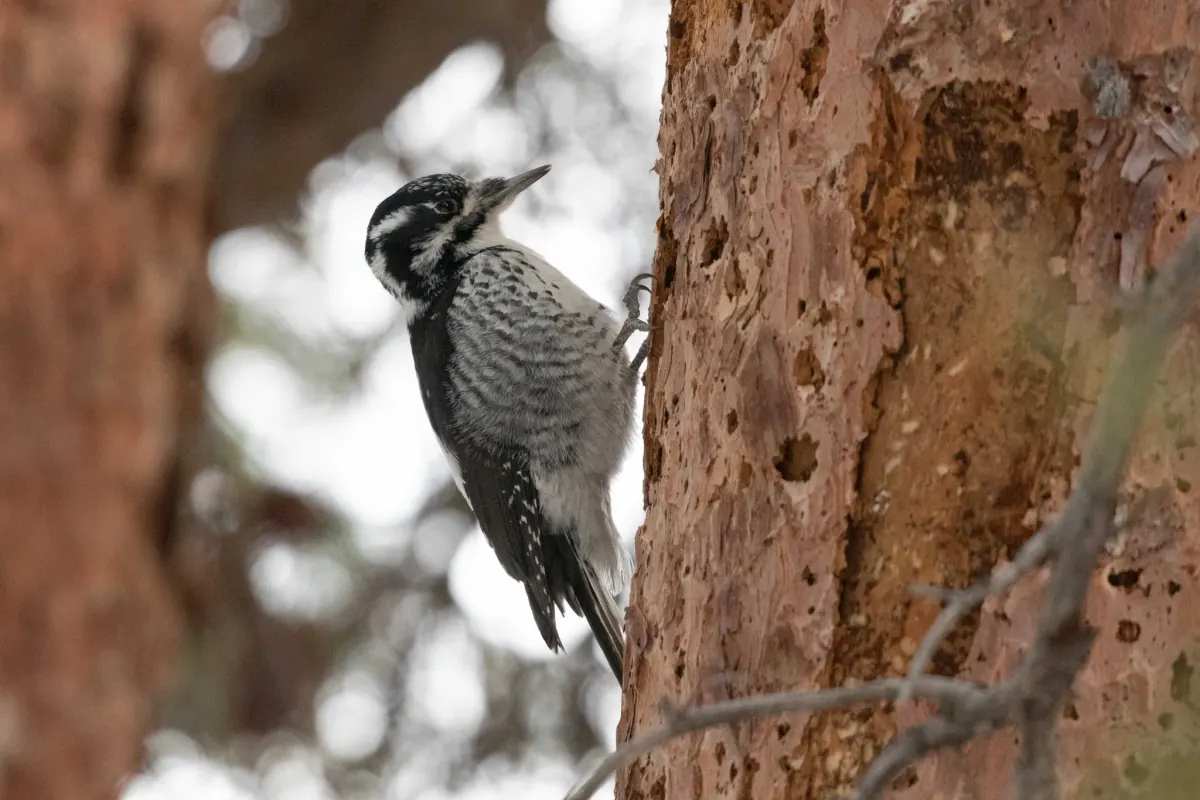
The American three-toed woodpecker is a quiet black-and-white woodpecker of Colorado’s high conifer forests. Audubon describes a bird 8 to 9 inches long with black barring on its sides and a back that ranges from mostly white to heavily barred; the male has a yellow crown spot.
It eats mainly the larvae of wood-boring beetles. Instead of drilling deep holes, it often scales flakes of bark off live or dead conifers, especially spruce, and can gradually strip a dead tree bare. Audubon notes that adults are often unwary around their nests and ignore nearby people.
Habitat in Colorado
Rocky Mountain National Park describes three-toed woodpeckers as year-round residents of dense spruce-fir and other conifer forests up to 11,500 feet, and common in forests that have recently burned or been otherwise disturbed. Audubon adds that they favor places with many standing dead trees and may gather where wood-boring insects are thick. That makes the subalpine forest of Engelmann spruce and subalpine fir their core range, with some birds in the conifers of the montane forest below.
They nest in cavities, usually in dead conifers 5 to 15 feet up, and dig a new one each year (Audubon).
Beetles and burns
Spruce beetle outbreaks are this bird’s boom times. Kelly, Latif, Saab and Veblen surveyed three-toed woodpeckers in spruce-fir forest at about 9,800 to 12,000 feet (3,000–3,650 m) on the San Juan and Gunnison national forests from 2013 to 2016, during an epidemic that affected 695,000 hectares of Colorado from 1996 to 2016. Occupancy climbed with the number of trees under active beetle attack (see Quick facts). Trees killed three or more years earlier, older snags and tree size made no difference.
Fire works the same way, up to a point. After the 2002 Hayman Fire on the Front Range, Kotliar, Reynolds and Deutschman (2008) found the birds mostly setting up home ranges in moderately burned areas that kept patches of live and dead trees, and less often in unburned forest or in large, severely burned areas with no live trees.
Primary Threats
- Salvage logging. Kelly and colleagues warn that logging beetle-killed spruce soon after an outbreak may put three-toed woodpecker habitat at risk and removes nest sites for the birds and mammals that later use their cavities.
- A boom-and-bust food supply. The woodpecker’s best habitat lasts only as long as the beetles are in the trees; the San Juan study found no benefit from trees killed three or more years before.
What the Survey Shows
The U.S. Geological Survey’s analysis of North American Breeding Bird Survey data for 1966–2024:
- Colorado, 1968–2024: about +0.7% a year (95% credible interval −2.2% to +3.5%), from 36 routes, flagged for low abundance; no clear trend.
- Colorado, 2014–2024: about −5.2% a year (−11.5% to +1.4%), from 28 routes; the interval includes zero, so the recent dip is not statistically clear.
A quiet bird of dense forest is hard to count from roadside routes, so the margins are wide.
Conservation and Management
The American three-toed woodpecker is not on CPW’s threatened and endangered list and does not appear in CPW’s 2025 State Wildlife Action Plan tiers. It has no federal Endangered Species Act status. Kelly and colleagues note that the Bureau of Land Management treats it as a sensitive species and that it is on the U.S. Fish and Wildlife Service’s Watch List.
Their management advice is specific: keeping spruce beetle-infested trees standing for at least three years after an epidemic begins would benefit the woodpecker and the other species that depend on woodpecker-excavated cavities.
What You Can Do
- Look at the bark. Trunks with their bark flaked away to bare, reddish wood are a three-toed woodpecker’s signature. Stop and listen for its soft pik call, which Audubon compares to a downy woodpecker’s.
- Visit a recovering burn or beetle stand. Dead forest is living habitat for this bird. Stay on trails, and watch for falling snags.
- Report sightings on iNaturalist or eBird, noting whether the trees are beetle-killed, burned or green.
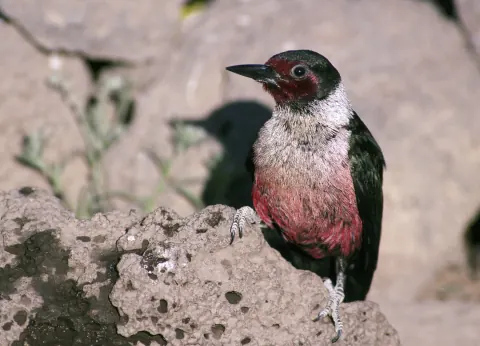
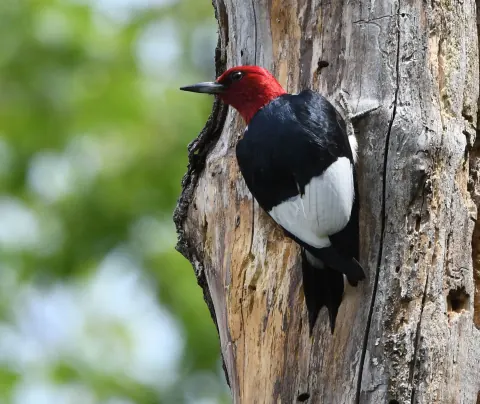
- See its neighbors. The same forests hold the Canada lynx; compare the open-country Lewis’s woodpecker and the plains red-headed woodpecker.
Frequently asked questions
- How do you tell a three-toed woodpecker from a hairy woodpecker?
- Check the sides: the three-toed is barred black and white there, and its back can be heavily barred too. Audubon warns that young hairy woodpeckers can show both yellow on the crown and some barring, so look at more than one mark.
- Why do three-toed woodpeckers show up after a fire?
- Fire-killed and beetle-killed conifers fill with the wood-boring larvae they eat. In the Hayman Fire they settled where moderate fire left a mix of live and dead trees; more is under Beetles and burns.
- Where can I see an American three-toed woodpecker in Colorado?
- In high spruce-fir forest, especially stands with standing dead trees. Look for trunks with the bark flaked off; the subalpine habitat page lists public places to start.
- Is the three-toed woodpecker rare?
- It is uncommon and hard to count, and NatureServe's Colorado rank sits between vulnerable and apparently secure. Audubon notes that local numbers swing widely and can jump during insect outbreaks.