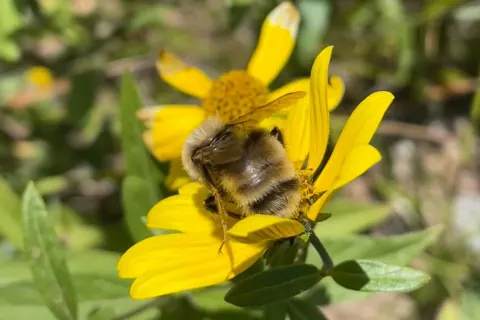
Photo: Roy W. Lowe / USFWS — Public Domain
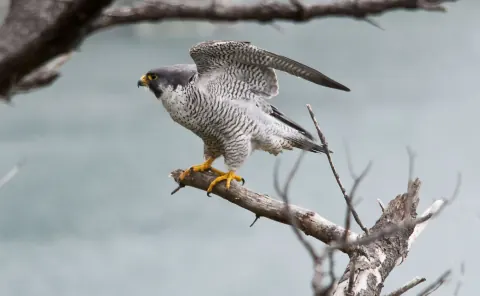
USNot Listed COSpecial Concern
American Peregrine Falcon
Falco peregrinus anatum
bird High Cliffs and Bluffs
Foothills and lower mountain slopes
By Threatened Colorado , Two Colorado natives , About us
Last reviewed , Checked against USFWS, CPW, NPS sources , Sources (16)
About 5,600–9,500 ft
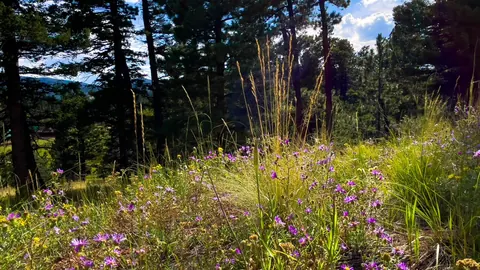
Forests of ponderosa pine, lodgepole pine and Douglas-fir, with aspen groves and open meadows. Ponderosa pine is most common between 6,000 and 9,000 feet.
Montane country is a mix of forest and meadow. In Rocky Mountain National Park, the National Park Service says, elk graze the open meadows near the pine forests in winter, wildflowers bloom among the grasses in summer, and streams winding through the meadows create "riparian habitat for migrating songbirds."
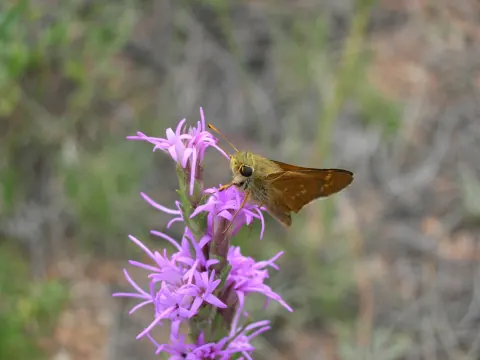
Some rare animals need it in a particular condition. The threatened Pawnee montane skipper lives only in "dry, open ponderosa pine woodlands" of the South Platte River drainage, USFWS says, where it depends on blue grama grass and prairie gayfeather.
Water decides which forest grows where. On dry, south-facing slopes the Park Service describes open stands of large ponderosa pines with grasses and shrubs between them. North-facing slopes lose less moisture to the sun, so trees grow closer together and taller, a mix of Douglas-fir, lodgepole pine, ponderosa pine and the odd Engelmann spruce. Flat valley floors are often too waterlogged for evergreens, which is why the montane zone has so many open meadows.
Ponderosa pine is usually the first forest above the plains. The Colorado State Forest Service calls it the dominant lower-timberline tree of the montane zone, covering about 2 million acres, 8% of the state's forested land; a long taproot carries it through drought. Lodgepole pine, just over 1.5 million acres, grows higher, between 8,000 and 10,000 feet in Colorado's northern Rockies.
Aspen fills the moist spots. It covers about 5 million acres, 20% of Colorado's forested land, and the State Forest Service ranks aspen forests second only to streamside areas for the variety of life they hold. Along streams the Park Service lists willows, mountain alder, water birch and sometimes blue spruce.
Each montane tree has its own relationship with fire. Ponderosa pine evolved with frequent, low-intensity fires that killed competing seedlings and spared the big pines, the State Forest Service says. Most of Colorado's lodgepole forests, by contrast, grew back after hot, stand-replacing crown fires: many lodgepoles carry serotinous cones that open in extreme heat, and the regrowth can reach 20,000 or more trees per acre. Aspen sprouts from its roots, so it is often the first tree to fill a burn or clearing.
Without those low fires, shade-tolerant Douglas-fir fills in under the pines and can carry fire up into their crowns. Insects add to the change: mountain pine beetle and dwarf mistletoe are the most damaging agents in lodgepole pine, and the Douglas-fir beetle has affected about 18.5% of the state's mixed-conifer forests containing Douglas-fir since 2000.
Abert's squirrel is the montane zone's specialist: CPW says it lives only in ponderosa pine forests and eats whatever part of the pine is in season, including the cones and the inner bark of twigs. The Park Service also lists Steller's jay, pygmy nuthatch and western tanager among the zone's birds; western tanagers breed in the park each summer and fly south for winter.
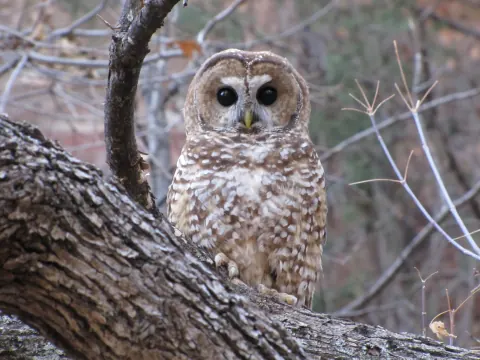
The threatened Mexican spotted owl nests and roosts in closed-canopy forests, often mature mixed conifer, or in rocky canyons. In Colorado most of its nests are in caves or on cliff ledges in steep-walled canyons; in forests most are in Douglas-firs, in witches' brooms caused by dwarf mistletoe. USFWS calls landscape-scale, stand-replacing wildfire its main threat today.
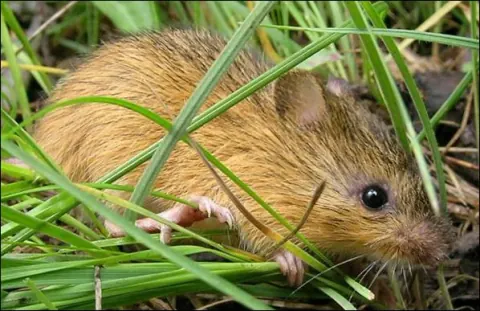
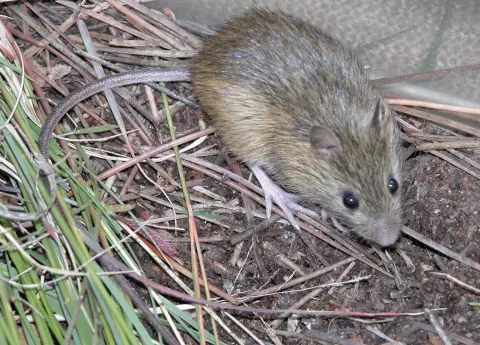
Two federally listed jumping mice live in the zone's streamside meadows, in separate parts of the state, CPW says: Preble's meadow jumping mouse along the foot of the Front Range, and the endangered New Mexico meadow jumping mouse on the southwestern border. Both depend on dense streamside plants.
Even an eastern bat has turned up. In summer 2020, acoustic detectors in lodgepole pine forest on the Roosevelt National Forest recorded the tricolored bat, which USFWS has proposed listing as endangered; a 2024 study in the Journal of Mammalogy called it the first documentation of the species in Colorado's high-elevation forests.
Burned and open ponderosa pine is prime nesting ground for Lewis's woodpecker, which catches insects in the air instead of drilling for them and needs soft, decayed wood for its nest hole. A Forest Service assessment names fire suppression and post-fire management among the important factors in its numbers.
The park's montane meadows and forests, on Bear Lake Road, near the Beaver Meadows and Fall River entrances on the east side, and in the Kawuneeche Valley on the west side.
Montane forests and woodlands grow along the drier foothills of the Sangre de Cristo Mountains.
Falco peregrinus anatum
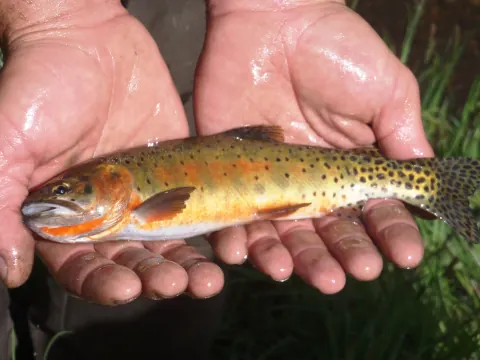
Oncorhynchus clarkii pleuriticus
Oncorhynchus clarkii virginalis
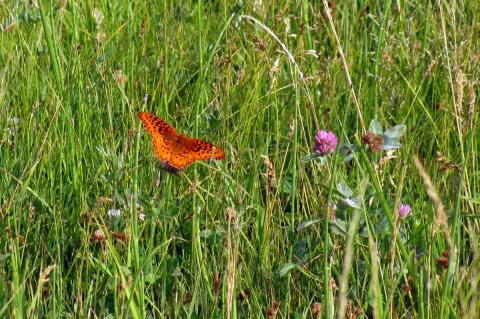
Speyeria nokomis nokomis
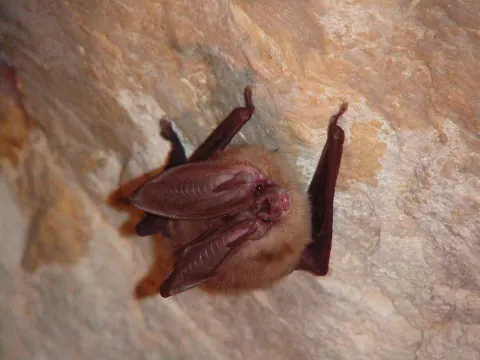
Corynorhinus townsendii pallescens
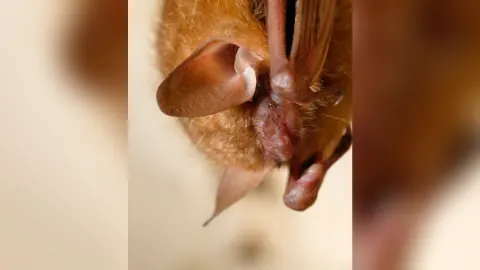
Perimyotis subflavus
See montane forest in the explorer