Photo: Dana Shellhorn / USFWS — Public Domain
Subalpine Forest
High mountain slopes, just below treeline
By Threatened Colorado , Two Colorado natives , About us
Last reviewed , Checked against CPW, NPS sources , Sources (9)
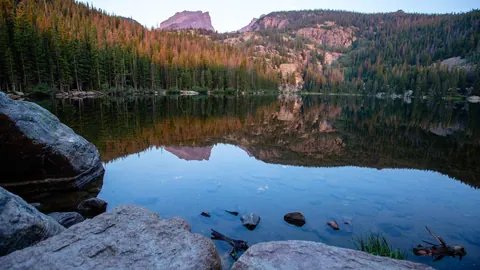
About 9,000–11,000 ft
Dense forests of Engelmann spruce and subalpine fir, covering about 4.6 million acres, or 19% of Colorado's forested land. Near treeline, wind stunts the trees into low, dense krummholz; well-established krummholz trees may be several hundred to a thousand years old.
Why it matters
These are Colorado's snow forests. The Colorado State Forest Service says snowpacks in spruce-fir forests "may exist well into summer and water yield from these forests is very important," and that lower-elevation Engelmann spruce stands can hold more moisture than any other forest type in the state.
The forest shelters red squirrels, snowshoe hares, pine martens, boreal owls, Clark's nutcrackers and three-toed woodpeckers, according to the Forest Service. Between the trees, the Park Service says, lie clear lakes and lush meadows of tall wildflowers.
Plants
- Engelmann spruce
- subalpine fir
- Trail Ridge Road travels above treeline, "the elevation near 11,500 feet where the park's evergreen forests come to a halt."Source: National Park Service, Rocky Mountain NP: Trail Ridge Road
- "The resulting low growth of dense trees is called krummholz." "Well-established krummholz trees may be several hundred to a thousand years old."Source: National Park Service, Rocky Mountain NP: Subalpine Ecosystem
Spruce, fir and the trees that come first
A mature subalpine forest is mostly Engelmann spruce and subalpine fir. Both tolerate shade and quickly fill gaps in the canopy, so at high elevations they often form what the State Forest Service calls a climax-type forest.
After a fire the order changes. The Park Service says burned areas can grow almost pure stands of lodgepole pine, whose seedlings do well in full sun; two kinds of huckleberry often cover the ground. As the forest closes in, spruce and fir slowly take back over. Limber pine, with needles in bundles of five and flexible twigs, grows into twisted shapes on high, windy sites.
Fire, wind and slow recovery
Fire comes rarely here but changes the forest for centuries. Natural fires in spruce-fir may return only every 300 years or more, and the State Forest Service says these forests, unlike many in Colorado, are not adapted to fire; after a stand-replacing fire, regrowing a spruce-fir forest can take 300–400 years.
Wind shapes the upper edge. Spruce and fir grow straight and tall in the lower subalpine but shorter and bent near treeline, where cold, dry winds kill new growth on the windward side. Trees left with branches on one side only are called banner or flag trees.
Dead spruce feeds a woodpecker. In the San Juan Mountains, the American three-toed woodpecker occupied more survey points the more trees spruce beetles were actively attacking, and trees killed three or more years earlier made no difference; the researchers suggest leaving infested trees standing for at least three years after an outbreak begins.
Who lives here and why
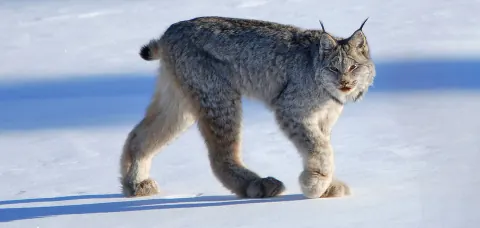
The threatened Canada lynx is here because its food is. CPW says lynx live in dense subalpine forest and willow-choked corridors along mountain streams and avalanche chutes, home of the snowshoe hare, and their huge hind feet carry them across heavy snow. CPW says hares make up about 70% of the lynx's diet; their own broad, furred hind feet work the same way in deep snow.
The forest's wetlands matter as much as its trees. The wood frog lives in Colorado only around North Park, in the upper Colorado River tributaries of Grand County and in the upper Laramie River drainage, mostly at 7,900–9,800 feet, using subalpine marshes, bogs, beaver ponds, wet meadows and willow thickets, CPW says.
Under pressure
- Drought and insects. The Colorado State Forest Service lists fire and native insects such as spruce beetle and western spruce budworm as threats, "particularly in times of drought or when trees are otherwise stressed." Climate Change & Drought
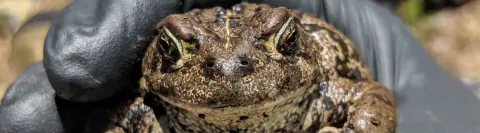
- Disease in the wetlands. CPW says chytrid fungus causes high mortality in boreal toads, whose breeding sites peak between 9,400 and 10,400 feet. Chytrid Fungus
Where to see it
Rocky Mountain National Park: Sprague Lake and Odessa Lake
Subalpine forest of subalpine fir and Engelmann spruce, giving way to mountain lakes like Odessa Lake.
Great Sand Dunes National Park and Preserve
In the Sangre de Cristo Mountains above the dunes, subalpine forest climbs to treeline.
Species in this habitat (7)
- Photo: Ryan Pennesi / U.S. Forest Service — Public DomainReintroduced
- Photo: Lori Iverson / USFWS — Public DomainReintroduced
- Photo: Blue Mountains – Oregon Conservation Strategy — Public DomainReturn Planned
- Photo: Kendra Parrish / iNaturalist — CC0
- Photo: Allison Clark / iNaturalist — CC0
- Photo: Gary Eslinger / USFWS — Public Domain
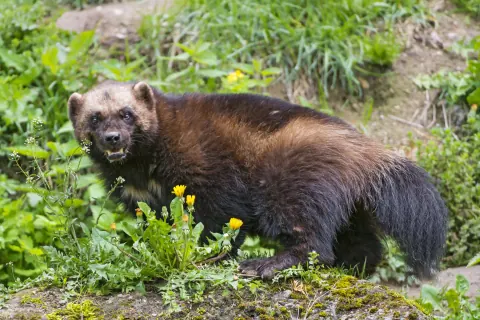
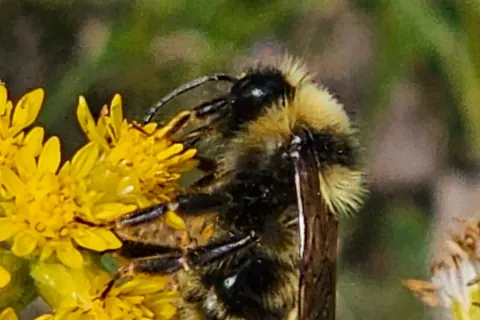
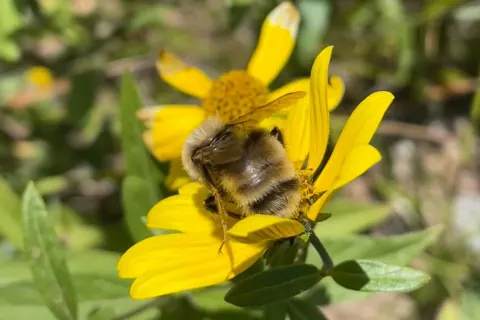
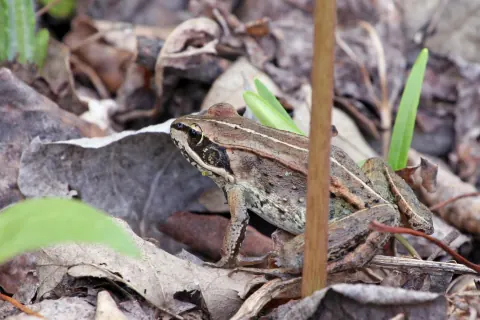
See subalpine forest in the explorer
Sources (9)
- Colorado State Forest Service, Spruce-Fir
- National Park Service, Rocky Mountain NP: Subalpine Ecosystem
- National Park Service, Rocky Mountain NP: Trail Ridge Road
- Colorado Parks and Wildlife, Lynx
- Colorado Parks and Wildlife, Snowshoe hare
- Colorado Parks and Wildlife, Wood frog
- Colorado Parks and Wildlife, Boreal toad
- Kelly, Latif, Saab and Veblen (2018), Spruce Beetle outbreaks guide American Three-toed Woodpecker occupancy patterns in subalpine forests, Ibis
- National Park Service, Great Sand Dunes NP & Preserve: Natural features and ecosystems
Photo credits
- Subalpine Forest: NPS / M. Reed, Public domain