Quick facts
- Size
- About 9 inches; wingspan about 20 inches (CPW)
- In Colorado
- A few lower Arkansas River reservoirs
- Season
- Arrives mid-May; shoreline closures early April–mid-August
- Nest
- A scrape on bare sand or gravel; 2–3 eggs
- Federal status
- Interior population delisted 2021
- State status
- Endangered
Overview
The least tern is North America’s smallest tern. It was taken off the federal endangered list in 2021 but is still state endangered in Colorado, where it nests at only a few reservoirs on the lower Arkansas River.
In Colorado, the least tern is State Endangered and a Tier 2 Species of Greatest Conservation Need. NatureServe ranks the interior least tern G4T3Q, and S1B in Colorado, meaning it is critically imperiled as a breeding bird here.
Natural History
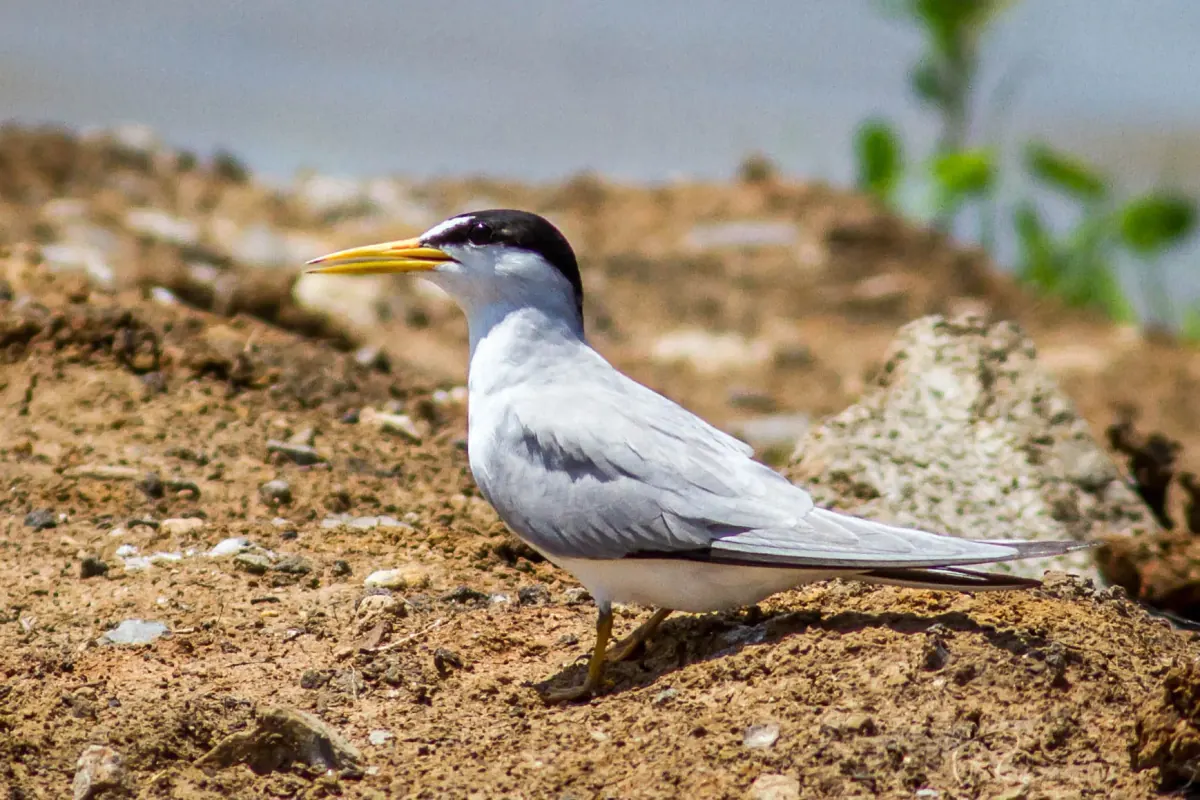
Least terns are about 8 to 9 inches long, with a wingspan of about 20 inches. In breeding plumage they have a black cap, a white forehead, and a yellow bill with a black tip.
They dive for small fish 1 to 4 inches long.
Least terns nest in colonies, laying their eggs in shallow scrapes on bare sand or gravel. A clutch is typically 2 or 3 eggs. The eggs are incubated for about three weeks, and the chicks can fly at about three weeks old. Banded birds have lived more than 20 years.
Adults arrive in Colorado in mid-May. Least terns winter along the coasts of the Gulf of Mexico, the Caribbean, and Central and South America.
Habitat in Colorado
In Colorado, least terns breed only in the lower Arkansas River basin.
Colorado Parks and Wildlife posts seasonal shoreline closures at John Martin, Adobe Creek (Blue Lake) and Neegronda reservoirs from early April to mid-August. The closures use signs, buoys and temporary fencing. People can be cited for entering closed areas or for letting dogs off leash.
Nee Noshe Reservoir was a historical nesting site.
Colorado’s first breeding bird atlas (1987–94) confirmed least tern breeding at three locations. The second atlas (2007–11) confirmed breeding in only two survey blocks.
Primary Threats
River flows
CPW notes that regulated Arkansas River flows likely keep terns from nesting successfully on river sandbars.
Predators, disturbance and water levels
Tern colonies are also vulnerable to predators, disturbance, and changing reservoir levels.
Drought
In 2026, drought dried much of Nee Noshe Reservoir. How that affects nesting terns is not yet known.
Recovery & Conservation
Federal listing and delisting
The interior population of the least tern was listed as endangered on May 28, 1985, when fewer than 2,000 birds remained. The U.S. Fish and Wildlife Service removed it from the federal list in a final rule published January 13, 2021, which took effect February 12, 2021. At that point there were more than 18,000 birds at more than 480 nesting sites in 18 states, including Colorado.
Still protected
Least terns remain protected under the Migratory Bird Treaty Act. The California least tern is still federally listed.
Monitoring
USFWS must monitor the interior population for at least five years after delisting.
In Colorado
The least tern remains State Endangered in Colorado, and CPW’s seasonal shoreline closures (see Habitat in Colorado) protect its nests.
What You Can Do
- Respect the closures. Stay out of posted shoreline closures at lower Arkansas River reservoirs.
- Keep dogs leashed at reservoirs.
- Watch from a distance.
- Report sightings to eBird.
- Explore related species. Read the piping plover profile.
Frequently asked questions
- Where can I see least terns in Colorado?
- At a few reservoirs on the lower Arkansas River, in the La Junta–Lamar area, from mid-May through summer (Habitat in Colorado). CPW calls the species an infrequent visitor to Colorado, so watch from outside the posted closures and report what you see to eBird.
- Why do least terns dive-bomb people?
- To defend their nests and chicks: adults mob, dive-bomb and even defecate on intruders, according to the University of Nebraska–Lincoln's Tern and Plover Conservation Partnership. If terns start diving at you, back away (What You Can Do); the chicks hide by lying flat on the sand like a rock.
- What do least terns eat?
- Only small fish. CPW says a least tern dives from as high as 20 feet into the water to catch them. Changing reservoir levels are one of the threats to their colonies (Primary Threats).
- Why are beaches closed at John Martin Reservoir?
- To protect tern and plover nests. Closures go up as active nests are found, can cover up to 15 acres, and stay through mid-August, when the young leave their nests; CPW officers and U.S. Army Corps of Engineers rangers can cite people who enter them or let dogs run off leash. The piping plover nests on the same shorelines.