Quick facts
- Colorado records
- Boulder and Weld counties; first evidence of reproduction reported 2018
- High-elevation detections
- Roosevelt National Forest, about 8,900–9,300 feet (2020)
- Size
- 3–3.5 inches; 0.16–0.28 ounces; wingspan about 8 inches
- White-nose syndrome
- Estimated 90–100% declines across 59% of the range
- Status
- Proposed federally endangered (September 14, 2022); S2 in Colorado; not state-listed
Overview
The tricolored bat is a tiny eastern bat that white-nose syndrome has devastated, and USFWS proposed listing it as federally endangered in 2022. In Colorado it is rare and only recently documented, with a handful of Front Range records.
Natural History
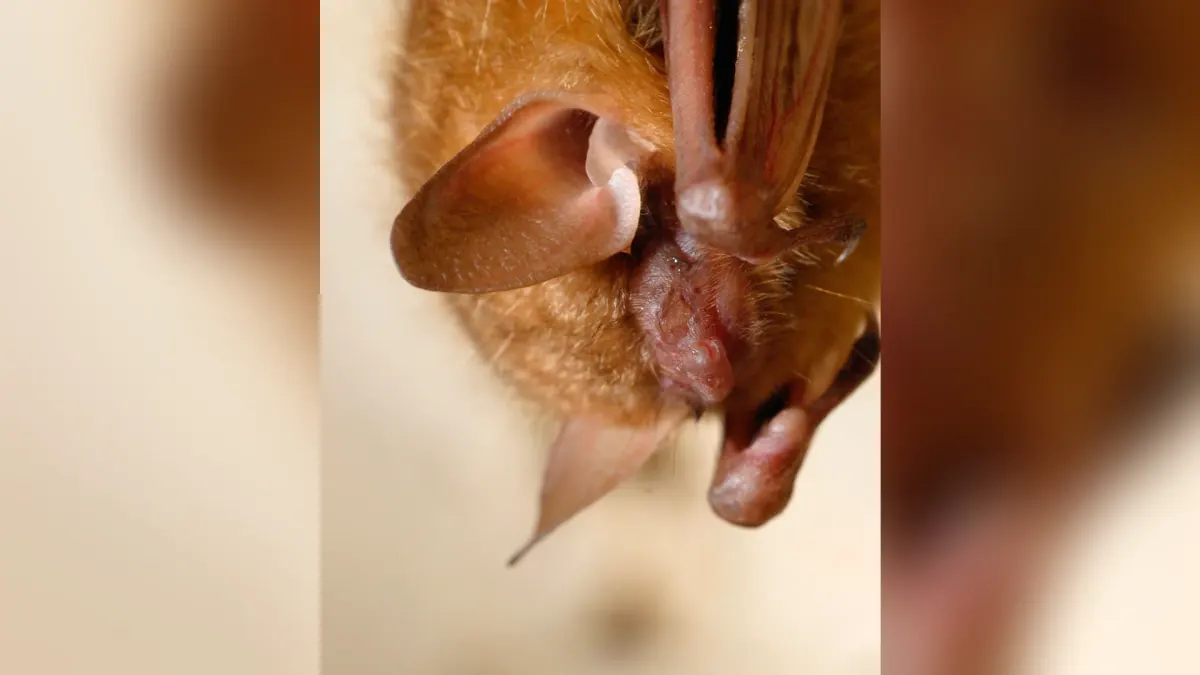
The tricolored bat is about 3 to 3.5 inches long and weighs 0.16 to 0.28 ounces, with a wingspan of about 8 inches (210 mm).
It is named for its fur: each hair is dark at the base, lighter in the middle and dark at the tip.
It comes out early, while it is still light, to hunt small insects such as moths, flies and beetles over clearings and still water. Its flight is slow, erratic and fluttery.
In summer, the tricolored bat roosts among leaf clusters in deciduous trees. It hibernates in caves and mines.
Females usually have twins, in late spring or early summer. The oldest known tricolored bat was recorded 14.8 years after it was first banded.
Range
The tricolored bat is found in 39 states and the District of Columbia, four Canadian provinces, and Mexico and Central America. It is mainly a bat of eastern North America.
Tricolored Bats in Colorado
The tricolored bat is not on Colorado’s threatened and endangered list. CPW’s species page still mentions only a single Colorado report, from Weld County, and the Colorado Bat Working Group describes the species as an accidental occurrence here.
Recent research has added more records.
New records and reproduction
A 2018 paper by Rick Adams and colleagues reported new tricolored bat records in Boulder and Weld counties, with the first evidence of reproduction in Colorado. The authors suggested the species may be expanding westward and that “the Rocky Mountain West may provide at least a temporary refugium” from white-nose syndrome.
Acoustic detections
A 2024 study in the Journal of Mammalogy by Bevan Zientek, Colpitts and Adams reported that the first acoustic detection in Boulder County was in 2012. In August 2017, detectors along South Boulder Creek recorded 707 tricolored bat passes over 10 nights.
High-elevation forests
From June 1 to August 14, 2020, detectors in lodgepole pine forest on the Roosevelt National Forest, at about 8,900–9,300 feet (2,705–2,827 m), recorded 439 passes. The authors called this the first documentation of the species in Colorado’s high-elevation forests.
A “pass” is a recording of bat calls, not a count of bats.
Primary Threats
White-nose syndrome
White-nose syndrome is a fungal disease first seen in New York in 2006. It has caused estimated declines of 90–100% across 59% of the tricolored bat’s range, and USFWS projected an 89% range-wide decline by 2030.
Other threats
USFWS also lists wind turbine collisions, loss and disturbance of roosting habitat, and climate change.
White-nose syndrome in Colorado
The fungus that causes the disease was first detected in Colorado in July 2022, at Bent’s Old Fort National Historic Site in Otero County, and was also found in Baca, Larimer and Routt counties. The first confirmed case of the disease in Colorado was an adult female bat found unable to fly at Bent’s Old Fort in April 2023. In April 2025, the fungus was confirmed on the west side of Rocky Mountain National Park, in Grand County, and on June 26, 2025, the park reported white-nose syndrome itself in three long-legged bats, two on the west side and one on the east.
Colorado has 19 native bat species, and at least 13 may be susceptible.
Recovery & Conservation
Proposed federal listing
USFWS proposed listing the tricolored bat as endangered on September 14, 2022 (87 FR 56381). It found that designating critical habitat was “not prudent.” As of September 2026, USFWS had not published a final listing decision.
Rankings
NatureServe ranks the tricolored bat G3G4 range-wide and S2, imperiled, in Colorado.
What You Can Do
- Stay out of closed caves and mines, and decontaminate boots and gear before and after visiting caves.
- Don’t touch bats. Report sick or dead bats to CPW at 303-291-7771.
- Check stored gear. Look inside folded canopies and other stored outdoor gear for roosting bats before use.
- Know the risk to people. White-nose syndrome does not make people sick.
Frequently asked questions
- Do bats in Colorado have white-nose syndrome?
- Yes. Colorado's first confirmed case came in 2023, and by June 2025 the disease had been found in bats on both sides of the Continental Divide in Rocky Mountain National Park (White-nose syndrome in Colorado). The White-Nose Syndrome page tracks every Colorado detection.
- How do you identify a tricolored bat?
- The Colorado Bat Working Group says it is slightly larger than the canyon bat and easiest to tell by its back hairs: dark brown at the tips and bases with a yellow band between. Its forearm is 30 to 35 millimeters and it weighs 5 to 8 grams; never handle a bat, though (What You Can Do).
- Do tricolored bats migrate?
- Very little. The Colorado Bat Working Group says they typically spend the summer in the same general region as the cave or mine where they hibernate; where Colorado's few records come from is under Tricolored Bats in Colorado.