What it is
Electrocution
A bird is electrocuted when “the distance between energized conductors or between an energized conductor and grounded hardware is less than that of the head-to-foot or wrist-to-wrist (flesh-to-flesh) distance of a bird.” Eagles and hawks are most at risk. The Avian Power Line Interaction Committee recommends 60 inches of horizontal and 40 inches of vertical separation for eagle-safe poles.
Collisions
A 2014 study in PLoS ONE estimated that “between 12 and 64 million birds are killed each year at U.S. power lines,” 8 to 57 million by collision and 0.9 to 11.6 million by electrocution. On the Platte River in Nebraska, sandhill cranes hit marked power-line spans far less often than unmarked ones: 11 versus 25 collisions.
Wind turbines and bats
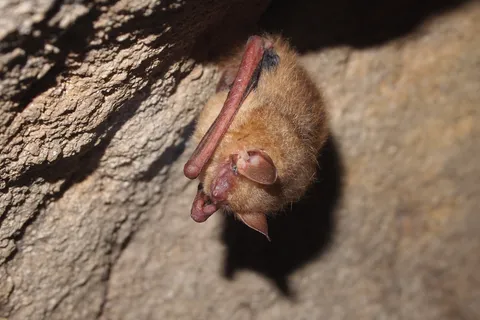
The 2022 proposed listing rule for the tricolored bat says “Tricolored bats are killed at wind energy projects primarily through collisions with moving turbine blades.” Hoary, eastern red and silver-haired bats, which migrate through treetops, make up about 72% of bats found dead at U.S. wind facilities. No Colorado-specific bat fatality numbers are available.
In Colorado
- 2000: In United States v. Moon Lake Electric Association, after at least 17 raptors were electrocuted at an oilfield near Rangely, the utility was sentenced to three years’ probation and $100,000 in fines and restitution, and had to retrofit poles and adopt an avian protection plan. The case established that federal bird-protection laws apply to utilities.
- April 2025: Colorado had over 5,379 MW of wind capacity across 34 wind farms, sixth in the nation, according to the Colorado Public Utilities Commission.
- 2025: La Plata Electric Association received a grant to retrofit 100 high-risk poles for eagles, as reported by the National Rural Electric Cooperative Association.
Every Colorado electric cooperative now has an avian protection plan, according to Colorado Country Life.
Effects on wildlife
Eagles
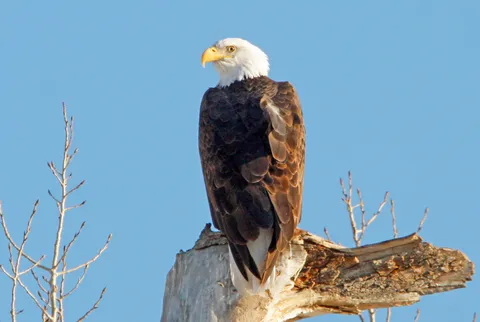
Eagles and hawks are the birds most at risk of electrocution. In 2022, NextEra subsidiary ESI Energy was sentenced after at least 150 eagles died at its wind facilities since 2012, 136 of them killed by turbines; it paid a $1.86 million fine and $6.2 million in restitution. USFWS’s 2024 eagle rule created general permits and recommends that wind projects stay 660 feet from bald eagle nests and 2 miles from golden eagle nests.
Cranes
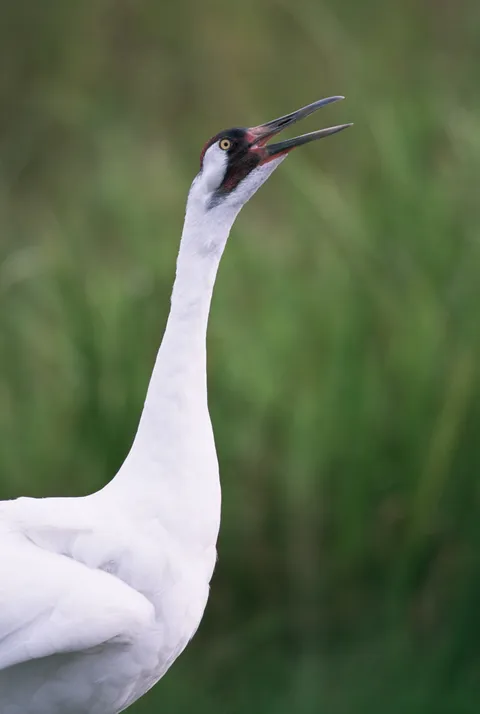
A 2008 issue paper by Stehn and Wassenich described power-line strikes as the greatest known source of death for fledged whooping cranes in the wild Aransas–Wood Buffalo population.
Grouse
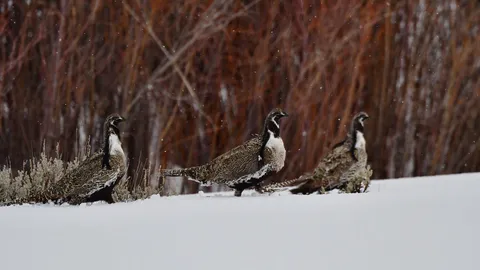
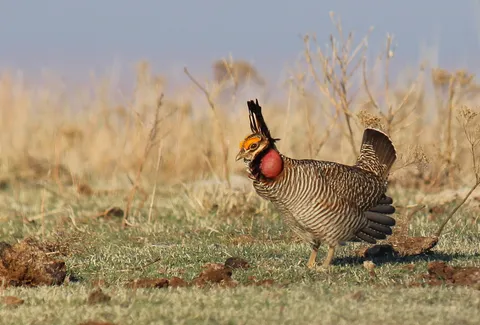
The Gunnison sage-grouse recovery plan calls for “retrofitting utilities with perch deterrents” so raptors can’t use poles to hunt near grouse habitat. The 2022 listing rule for the lesser prairie-chicken said “lesser prairie-chickens tend to avoid using areas with trees, vertical structures, and other disturbances,” and listed wind energy development and transmission lines as threats; that listing was later removed.
Bats
For the tricolored bat, the 2022 proposed rule says “Wind-energy-related mortality of tricolored bat is a consequential stressor at local and regional levels,” and its abundance “is projected to decrease by 19–21 percent by 2030 under current wind development scenarios.”
What’s being done
Slowing turbines
A 2011 study by Arnett and colleagues found that raising turbine cut-in speed to 5.0 m/s cut nightly bat deaths by 44–93% with less than 1% annual power loss. A 2021 synthesis by Whitby and colleagues found fatalities fell about 62% at a 5.0 m/s cut-in speed.
Marking lines
A 2019 meta-analysis found that marking wires “reduced bird collisions with power lines by half (50.4%).”
Retrofitting poles
Poles retrofitted to the Avian Power Line Interaction Committee’s spacing keep eagles from bridging energized parts. Every Colorado electric cooperative now has an avian protection plan, according to Colorado Country Life, and La Plata Electric Association’s 2025 grant will retrofit 100 high-risk poles.
Eagle permits
USFWS’s 2024 eagle rule created general permits and recommends setbacks of 660 feet from bald eagle nests and 2 miles from golden eagle nests for wind projects.
How you can help
- Report dead eagles or hawks found under power lines to your local CPW office.
- Ask your electric utility or co-op about its avian protection plan.
- Support wind projects that use bat-friendly curtailment.