Quick facts
- Colorado counties
- Boulder, Eagle, Garfield, Jefferson, Larimer and Moffat
- Occurrences in Colorado
- 23, over half of poor viability or historical (CNHP)
- Height
- 12 to 60 cm (about 5 to 24 inches)
- Blooms
- July to September
- Range
- 8 states and British Columbia
- Status
- Federally threatened since 1992; proposed for delisting 2025; CNHP G2G3 / S2
Overview
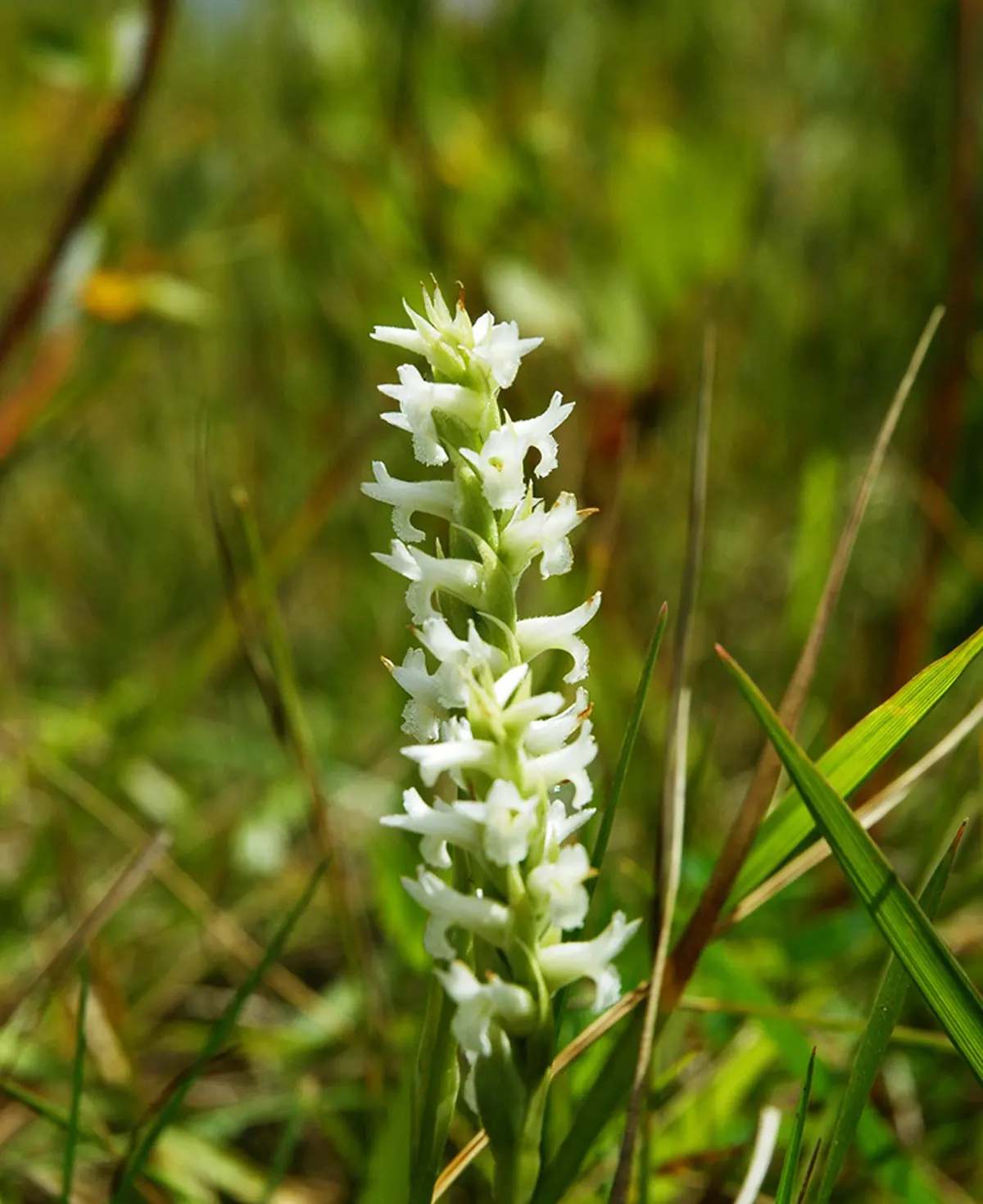
Ute ladies’-tresses (Spiranthes diluvialis) is a perennial orchid that grows from thickened, tuber-like roots. Its single stem carries narrow leaves that last through flowering and a spike of small white or ivory flowers arranged in a gradual spiral. Unlike most plants in this section, it grows well beyond Colorado: in Idaho, Montana, Nebraska, Nevada, Utah, Washington, Wyoming and British Columbia.
USFWS listed it as threatened in 1992. It is still listed, but on January 7, 2025, USFWS proposed removing it from the list. The Colorado Natural Heritage Program ranks it G2G3 globally and S2, imperiled, in Colorado. Colorado has no state list for plants.
Where it grows
In Colorado the orchid is known from riparian areas on both the east and west slopes of the Rockies, in Boulder, Eagle, Garfield, Jefferson, Larimer and Moffat counties; older, poorly documented records come from Weld and El Paso counties. It grows along streams and in open seeps among cottonwoods, and in moist floodplain meadows near abandoned channels and meanders, where the surrounding vegetation stays fairly open. Its soils are subirrigated: kept wet from below by groundwater. New growth starts in October, rests through winter and flowers the following summer.
Threats
CNHP names hydrologic alteration as the primary threat: water development that changes how and when floodplains stay wet (water diversion). Livestock grazing, haying, invasive plants (invasive plants), habitat fragmentation and trampling, including by anglers, add to it. Voles eat the seeds in agricultural areas, though apparently not in more natural riparian sites. Wetland work, mowing and burning can help or hurt depending on timing and frequency. CNHP considers it moderately to extremely vulnerable to climate change.
Protection and recovery
USFWS’s January 2025 proposed rule found the threats to Ute ladies’-tresses eliminated or reduced enough that it no longer meets the definition of a threatened species, and included a draft post-delisting monitoring plan. Until a final rule is published, Endangered Species Act protections stay in place. CPW’s 2025 State Wildlife Action Plan lists it as Tier 1.
What you can do
- Watch your step in wet meadows along Front Range and Western Slope streams in late summer, when the spikes are up.
- Don’t pick or dig orchids. Leave the flowers to set seed.
Frequently asked questions
- What do Ute ladies'-tresses smell like?
- Faintly of vanilla. The small white or ivory flowers, 7.5 to 15 millimeters long, are faintly fragrant, according to USFWS.
- How do you tell Ute ladies'-tresses from hooded ladies'-tresses?
- Hooded ladies'-tresses (Spiranthes romanzoffiana) has a lip deeply pinched in the middle, petals forming a hood over it, and a spike so crowded you usually can't see the stem. It also tends to grow higher in the mountains, the Colorado Natural Heritage Program notes.
- Why did USFWS propose delisting Ute ladies'-tresses?
- In its January 2025 proposed rule, USFWS found that threats to the orchid have been eliminated or reduced to the point that it no longer meets the definition of an endangered or threatened species. The rule is not final, so the orchid is still listed as threatened.