Quick facts
- In Colorado
- South Platte transition-zone streams, at the southwestern edge of its range
- Origin
- Glacial relict population (Fausch & Bestgen 1997, cited by CPW)
- Last record in St. Vrain Creek
- 2013, before the September flood (CPW)
- Colorado rank
- S2, imperiled (NatureServe)
- Range-wide
- G5, secure (NatureServe)
- Status
- State threatened; SWAP Tier 1 (CPW, 2025); never federally listed
Overview
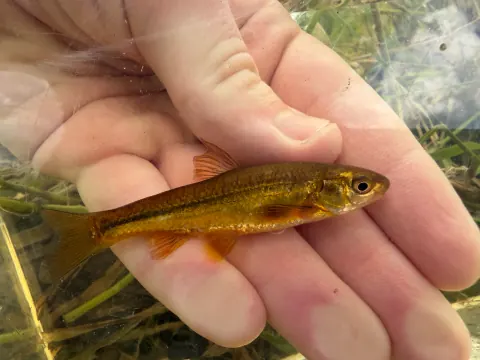
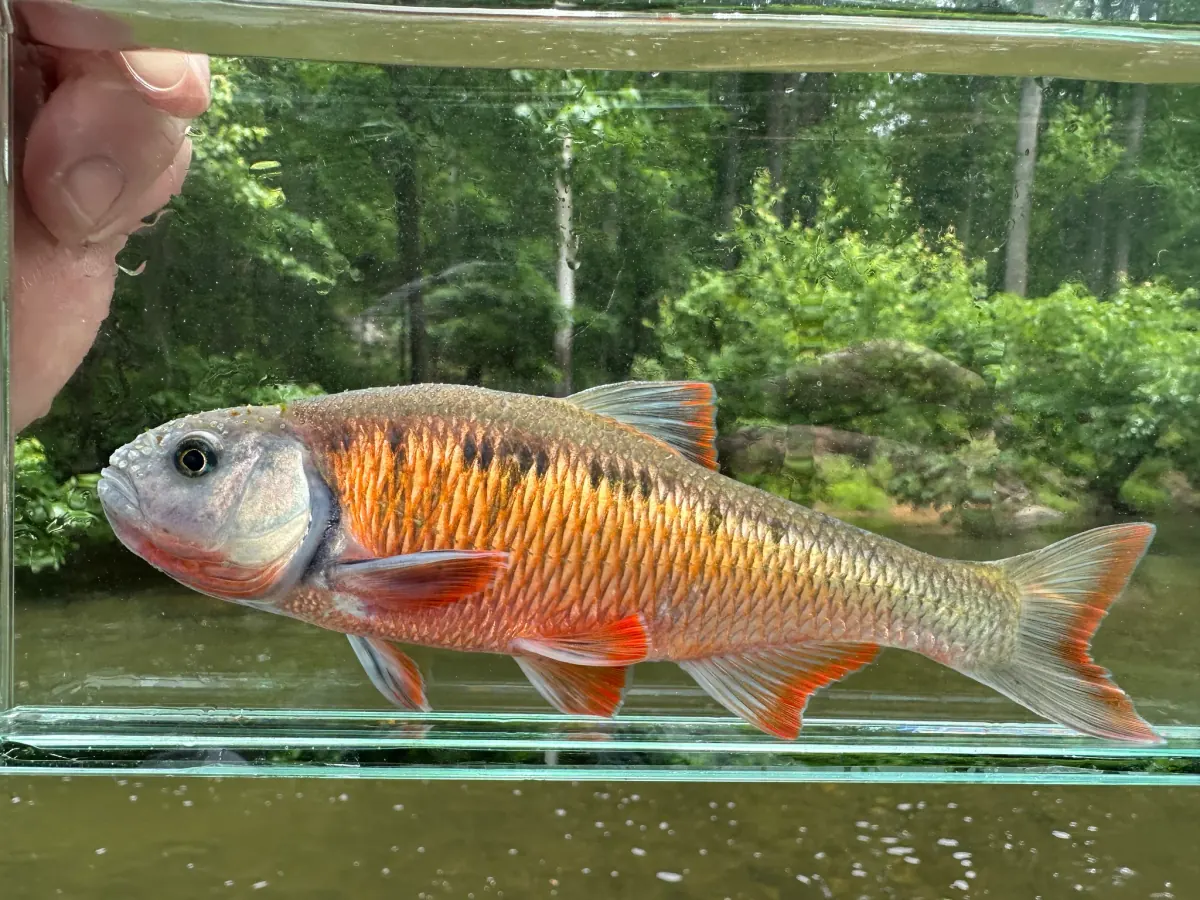
The common shiner (Luxilus cornutus) is a minnow found across the Great Lakes, upper Mississippi and Atlantic slope drainages. Range-wide NatureServe ranks it secure (G5). Colorado sits at the southwestern edge of its range.
Here it is a glacial relict, a population stranded at the range edge, and it is state threatened. Colorado listed it in 1998, NatureServe ranks it S2, imperiled, in the state, and CPW’s 2025 State Wildlife Action Plan names it a Tier 1 Species of Greatest Conservation Need. It has never been federally listed.
Habitat in Colorado
CPW describes the common shiner as a transition-zone obligate, found only in the reaches of South Platte tributaries between mountain and plains. CPW calls these streams a unique aquatic environment: cool water that is neither cold nor warm, intermediate substrates and high species richness (rivers and wetlands). CPW’s 2024 assessment of the native fish of Longmont’s streams lists it alongside the northern redbelly dace and stonecat as glacial relicts in those streams.
In St. Vrain Creek, the same assessment lists the common shiner as last observed in 2013. It disappeared from the creek after the September 2013 flood.
Primary Threats
CPW’s assessment lists the pressures on transition-zone and plains streams:
- Urban and water development along Front Range creeks (water diversion).
- Water quality degradation (habitat loss).
- Channelization for flood control, and the habitat fragmentation that follows.
- Non-native species. The assessment tracks largemouth bass and brown trout among the non-native fish of St. Vrain Creek (nonnative fish).
- Floods. With few populations left, one event can erase a stream’s shiners, as the 2013 flood did on the St. Vrain.
Recovery Efforts
CPW raises common shiners at its Native Aquatic Species Restoration Facility in Alamosa, along with other rare eastern plains fish such as the Arkansas darter and plains minnow. CPW has made the native fish community of St. Vrain Creek a priority for conservation, tracking each native species’ last record in its assessment.
What You Can Do
- Return it. Any common shiner you catch in Colorado must be released unharmed right away.
- Don’t move fish. Never release bait or aquarium fish into Front Range creeks.
- Report it. A common shiner in a Front Range creek would be a notable record. See Report a Sighting.
Frequently asked questions
- What does "glacial relict" mean for a fish?
- Colorado's common shiners are an isolated remnant at the southwestern edge of the species' range. CPW's St. Vrain assessment, citing Fausch and Bestgen (1997), says glacial relict populations should be protected because they may be genetically unique.
- Where else do common shiners live?
- Across much of the Great Lakes, upper Mississippi and Atlantic slope drainages, from southern Canada to Virginia, central Missouri and Wyoming, according to NatureServe, which ranks it secure range-wide.
- Can you use common shiners as bait in Colorado?
- Not wild ones from Colorado. As a state threatened fish, any common shiner caught by any means must be returned to the water unharmed right away, under CPW's nongame rules.