Quick facts
- Native basins
- Arkansas, Republican and South Platte
- Last wild records
- Arkansas River 1960s; South Platte early 1980s and mid-1990s (CPW)
- Restocking
- About 38,000 hatchery fish into the Arkansas River, November 2011
- Colorado rank
- SH, possibly extirpated (NatureServe)
- Range-wide
- G4, apparently secure (NatureServe)
- Status
- State endangered; SWAP Tier 1 (CPW, 2025); never federally listed
Overview
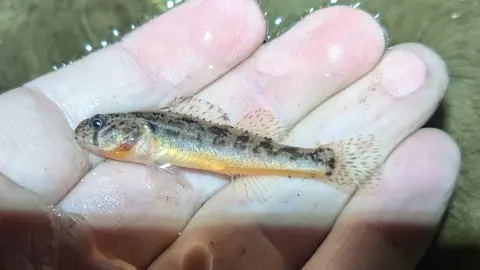
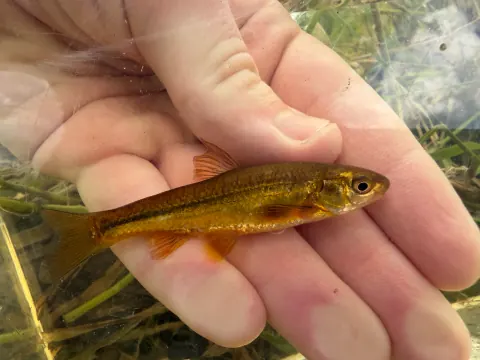
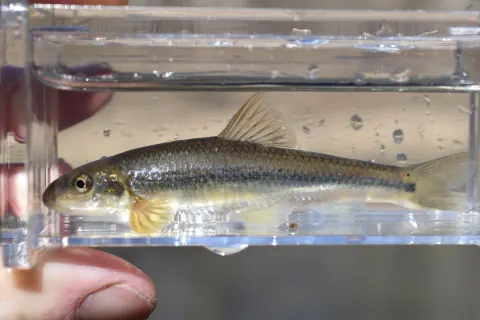
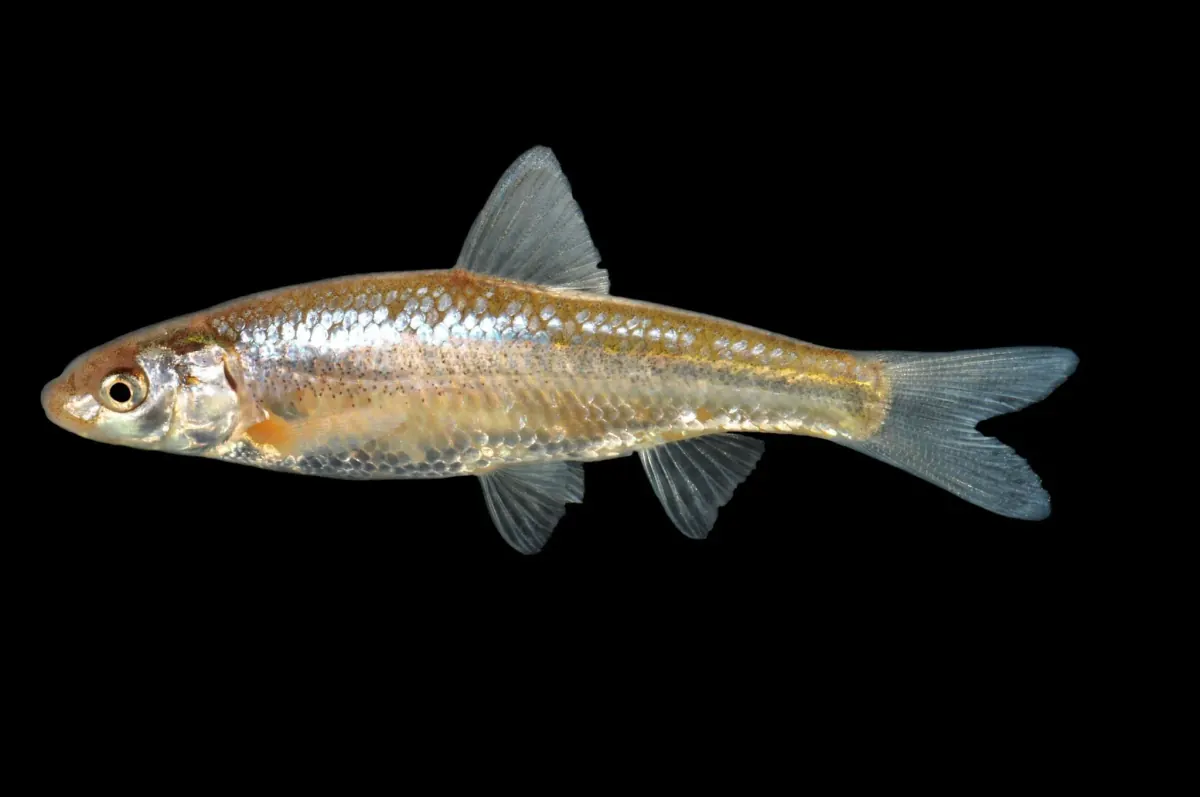
The plains minnow (Hybognathus placitus) is a small silvery minnow of Great Plains rivers, from Montana and North Dakota south through Colorado and Kansas to New Mexico and Texas. NatureServe ranks it G4, apparently secure, though it has lost much of its range over the long term.
In Colorado it has nearly vanished. The state lists it as endangered, CPW’s 2025 State Wildlife Action Plan names it a Tier 1 Species of Greatest Conservation Need, and NatureServe ranks it SH in Colorado: possibly extirpated. It has never been federally listed.
Habitat in Colorado
The plains minnow is native to the Arkansas, Republican and South Platte river basins on Colorado’s eastern plains (shortgrass prairie). A Colorado State University study of museum collections found that it historically shared the lower South Platte and Republican basins with the look-alike brassy minnow, and was the only one of the two in the Arkansas basin.
CPW says the plains minnow has not been seen in the Arkansas River since the 1960s. A few were collected on the South Platte side of the eastern plains in the early 1980s and mid-1990s.
Primary Threats
NatureServe, drawing on a Forest Service conservation assessment, ties the species’ decline across its range to how rivers are managed (water diversion):
- Changed flows. Diversions have changed the flow regime of both mainstem rivers and tributaries, and the loss of highly variable water levels and shifting sandy beds removes the habitat plains minnows evolved in.
- Dams and barriers. Diversion dams and reservoirs degrade and fragment river habitat (habitat loss).
- Non-native fish. Introduced species prey on plains minnows and compete with them (nonnative fish).
Recovery Efforts
CPW tried for a decade to breed plains minnows before a breakthrough in 2010 at its Native Aquatic Species Restoration Facility in Alamosa. In 2011 the hatchery reared about 38,000 plains minnows, along with about 4,000 suckermouth minnows. In November 2011 CPW stocked them into the Arkansas River above John Martin Reservoir, near the Rocky Ford and Oxbow State Wildlife Areas, with annual monitoring planned. The Alamosa facility still lists the plains minnow among the fish it raises.
What You Can Do
- Report it. A plains minnow anywhere in Colorado would be a significant record. Photograph it from the side and see Report a Sighting.
- Return it. As a state endangered fish, it must be released unharmed right away if caught, under CPW rules.
- Don’t move fish. Never release bait or aquarium fish into plains rivers, where introduced species compete with natives.
Frequently asked questions
- How do you tell a plains minnow from a brassy minnow?
- With difficulty: the two look so alike that a Colorado State University study had to re-identify 134 museum collections with measurements to sort out where each one historically lived. In Colorado's Arkansas basin, only the plains minnow was found.
- Why was the plains minnow so hard to raise in a hatchery?
- CPW worked on breeding it from 2000 and only succeeded in 2010, at its Native Aquatic Species Restoration Facility in Alamosa with help from fish culturists at Colorado State University and the Albuquerque aquarium.
- Is the plains minnow endangered everywhere?
- No. NatureServe ranks it G4, apparently secure, and says it is doing relatively well in states such as Oklahoma, Nebraska and the Dakotas, though it has declined over much of its range.