Invasive Species

Nonnative Fish in Colorado

Nonnative fish stocked or illegally dumped into Colorado waters eat, outcompete and interbreed with native fish. The Upper Colorado River recovery program calls predation and competition from nonnative fish a serious threat and 'perhaps the most challenging to manage.'

At a glance

Biggest obstacles
Smallmouth bass, northern pike, walleye
Fine for releasing fish illegally
$500–$5,000
Rio Grande cutthroat populations with nonnative trout
40%
Smallmouth bass below Glen Canyon Dam
2022

By the numbers

The three biggest obstacles

The Upper Colorado River recovery program names three predators as "the biggest obstacle to the recovery of rare native fish." They arrived through escapes, illegal introductions and past stocking. About 67 nonnative species have been introduced in the Colorado River system over the last century, according to a Bureau of Reclamation study.

  • Smallmouth bass

    The largest predatory threat in the upper basin

  • Northern pike

    CPW has offered anglers $20 a fish at some reservoirs, 9News reported

  • Walleye

    Named with bass and pike as a top obstacle

Sources: Upper Colorado River Endangered Fish Recovery Program; USFWS (2021); 9News; Bureau of Reclamation EIS (reported)

Bass take over the Yampa

Smallmouth bass as a share of the lower Yampa River's fish community.

A January 2026 program report says bass "are overwhelming the remnant native fish community," and humpback chub are "functionally extirpated" in Whirlpool Canyon.

Source: Upper Colorado River Recovery Program (reported)

Rio Grande cutthroat share their water

Fifty populations, 40%, now live alongside nonnative trout. Each square is 1% of populations.

With nonnative trout Without

USFWS calls hybridization, competition and predation from nonnative trout "the primary threat" to the species.

Source: Federal Register, Dec 10, 2024

Cold water against bass at Glen Canyon Dam

  1. 2022

    Low Lake Powell sends warm water through the dam, and smallmouth bass reproduce below it for the first time.

  2. July 9, 2024

    Reclamation begins "cool mix" releases to keep the river below 60 °F and disrupt spawning.

  3. Fall 2024

    Zero young-of-year smallmouth bass counted below the dam.

Sources: USGS; Utah CRA; Bureau of Reclamation

Moving fish is illegal

fine for releasing live fish except as CPW rules allow, plus the cost of removing them (C.R.S. 33-6-114.5)
$500–$5,000

Report illegal stocking to Operation Game Thief

877-265-6648

Tips can be anonymous

Sources: Colorado Revised Statutes; 9News

What it is

Colorado’s rivers hold fish that never lived here before. The Upper Colorado River Endangered Fish Recovery Program says smallmouth bass, northern pike and walleye “are the biggest obstacle to the recovery of rare native fish.” In its words, “Predation or competition by nonnative fish species is a serious threat to the endangered fishes and perhaps the most challenging to manage.” Those fish arrived through “escapement, illegal introductions and previous stocking.”

About 67 nonnative species have been introduced in the Colorado River system over the last century, according to a Bureau of Reclamation environmental impact statement.

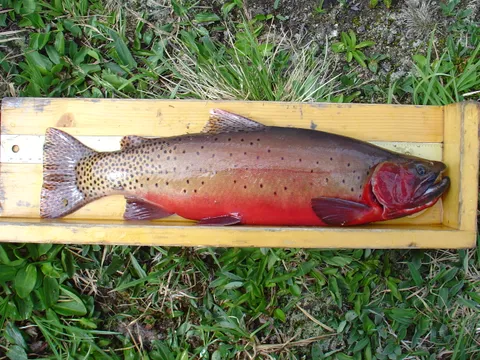
The problem is not limited to bass and pike. For the Rio Grande cutthroat trout, USFWS found in December 2024 that “The primary threat affecting the Rio Grande cutthroat trout’s biological status is hybridization, competition, and predation from nonnative trout,” and that “Fifty populations (40 percent) currently co-occur with nonnative trout.”

In Colorado

  • 2001–2004: In the lower Yampa River, smallmouth bass rose from 1% of the fish community in 2001 to 19% by 2004, according to a recovery program report.
  • August 2021: CPW used rotenone on George Creek and Cornelius Creek in Larimer County to remove brook and brown trout before restocking greenback cutthroat trout, Colorado Public Radio reported.
  • 2022: Low Lake Powell levels sent warm surface water through Glen Canyon Dam, carrying smallmouth bass downstream, where they reproduced for the first time below the dam.
  • July 9, 2024: The Bureau of Reclamation began “cool mix” releases to keep water below 60 °F and disrupt bass spawning, and reported zero young-of-year smallmouth bass counted that fall.
  • January 2026: A recovery program report says bass “are overwhelming the remnant native fish community” in the lower Yampa, and that humpback chub are “functionally extirpated” in Whirlpool Canyon.

A 575-foot net across Elkhead Reservoir’s spillway keeps northern pike and smallmouth bass from escaping into the Yampa, the Craig Daily Press reported.

Effects on wildlife

Big-river fish

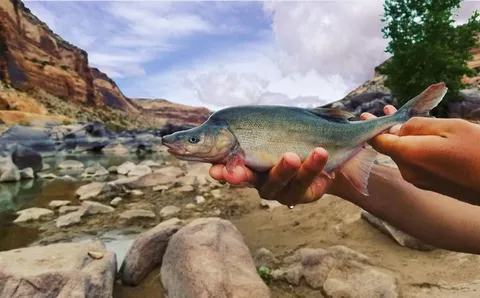
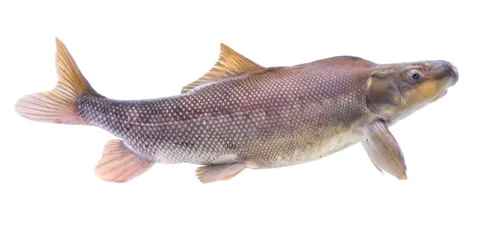
For the Colorado pikeminnow, “Predation and competition from invasive, nonnative fishes reduce survival and recruitment of Colorado pikeminnow in all life stages.” The 2026 rule reclassifying the razorback sucker says “Predation of young razorback sucker by nonnative fish species is a major cause of recruitment failure throughout the basin.” For the humpback chub, “Smallmouth bass present the largest predatory threat to native fish in the upper basin,” and smallmouth bass “have been linked to declines in federally protected humpback chub.” Populations of the bonytail have been affected by “non-native fish that compete with and/or prey upon bonytail.”

Trout

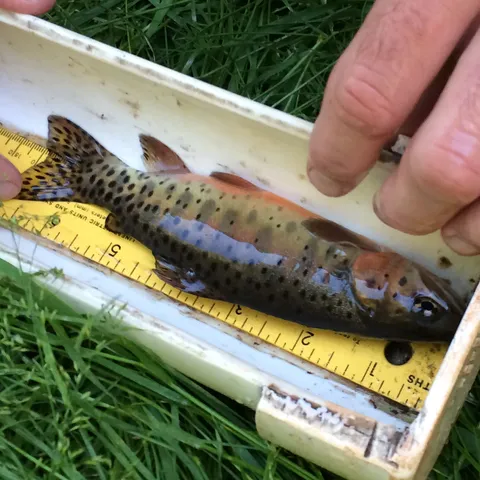
For the greenback cutthroat trout, brook and brown trout are the primary nonnative predators and competitors, as Colorado Public Radio reported. For the Rio Grande cutthroat trout, hybridization, competition and predation from nonnative trout is the primary threat, and 40% of its populations co-occur with nonnative trout.

Suckers

For the Rio Grande sucker, “Invasion by white sucker has resulted in the extirpation of Rio Grande sucker populations.” A 2008 study in PNAS of Wyoming rivers found that introduced white suckers have hybridized with native flannelmouth and bluehead suckers.

What’s being done

Removal

The recovery program removes problem fish from rivers and works to keep them from escaping into rivers. The Elkhead Reservoir net is one example; the rotenone treatment of George Creek and Cornelius Creek in 2021 is another.

Cold water

Below Glen Canyon Dam, the Bureau of Reclamation’s “cool mix” releases, begun July 9, 2024, keep water below 60 °F to disrupt smallmouth bass spawning. Reclamation reported zero young-of-year smallmouth bass counted that fall.

The law

Colorado law (C.R.S. 33-6-114.5) makes it unlawful to release any live native or nonnative fish except under CPW rules. Violators face a fine of $500 to $5,000 and are liable for eradication and removal costs. Report illegal stocking to Operation Game Thief at 877-265-6648; tips can be anonymous.

Bounties

CPW has offered $20 per northern pike at some reservoirs to reduce illegally introduced pike, 9News reported.

How you can help

  • Never move live fish between waters.
  • Keep the bass and pike you catch where regulations encourage harvest.
  • Report illegal stocking to Operation Game Thief at 877-265-6648.
  • Learn to identify native fish and release them.
Species on this site

Frequently asked questions

Why are smallmouth bass a problem in Colorado rivers?
The Upper Colorado River recovery program says smallmouth bass, northern pike and walleye "are the biggest obstacle to the recovery of rare native fish," and that predation or competition by nonnative fish is "perhaps the most challenging to manage." In the lower Yampa River, smallmouth bass rose from 1% of the fish community in 2001 to 19% by 2004, and a January 2026 program report says bass "are overwhelming the remnant native fish community." Smallmouth bass have also been linked to declines in federally protected humpback chub.
Is it illegal to move fish to another lake in Colorado?
Yes. Colorado law (C.R.S. 33-6-114.5) makes it unlawful to release any live native or nonnative fish except under CPW rules. Violators face a fine of $500 to $5,000 and are liable for eradication and removal costs. Report illegal stocking to Operation Game Thief at 877-265-6648; tips can be anonymous.
How do biologists remove nonnative fish?
The recovery program removes problem fish from rivers and works to keep them from escaping reservoirs. A 575-foot net across Elkhead Reservoir's spillway keeps northern pike and smallmouth bass out of the Yampa, as reported by the Craig Daily Press. In August 2021, CPW used rotenone on George Creek and Cornelius Creek in Larimer County to remove brook and brown trout before restocking greenback cutthroat, as Colorado Public Radio reported. Below Glen Canyon Dam, the Bureau of Reclamation began "cool mix" releases on July 9, 2024 to keep water below 60 °F and disrupt bass spawning, and reported zero young-of-year smallmouth bass counted that fall.

Sources

Key research

Photo credits

  • Bonytail Chub: USFWS, Public Domain
  • Greenback Cutthroat Trout: Chris Kennedy/USFWS, Public Domain
  • Humpback Chub: USFWS, Public Domain
  • Razorback Sucker: Sam Stukel/USFWS, Public Domain
  • Rio Grande Cutthroat Trout: Abigail Lynch/USGS, Public Domain
  • Rio Grande Sucker: Pam Sponholtz/USFWS, Public Domain
  • Colorado Pikeminnow: Tristan Francis/USFWS, Public Domain

Last reviewed September 2026

Report an error