Quick facts
- Where in Colorado
- St. Vrain Creek drainage, Boulder County, near the Roosevelt National Forest
- Southern limit
- About 40° N latitude, in Colorado
- Rediscovered
- 1991, one fish in South Fork St. Vrain Creek, after an 85-year gap in records
- Last record in St. Vrain Creek
- 2007 (CPW)
- Colorado rank
- S1, critically imperiled (NatureServe)
- Status
- State endangered; SWAP Tier 2 (CPW, 2025); never federally listed
Overview
The lake chub (Couesius plumbeus) is a small minnow of cold northern waters. Across most of Canada and the northern United States it is common, and NatureServe ranks it secure (G5). It reaches its southern limit at about 40° north latitude, in Colorado.
Here it is one of the state’s rarest fish. Colorado lists it as endangered, NatureServe ranks it S1 (critically imperiled) in the state, and CPW’s 2025 State Wildlife Action Plan names it a Tier 2 Species of Greatest Conservation Need. It has never been listed or proposed under the federal Endangered Species Act.
Habitat in Colorado
The species has always been hard to find in Colorado. Ellis reported lake chubs from two places in the Platte River drainage west of Boulder in 1914. In 1985 Colorado’s guide to its small fish listed the lake chub as extirpated from the state. Then, after an 85-year gap in collections, researchers caught a single fish in South Fork St. Vrain Creek in Boulder County in 1991, near the Roosevelt National Forest.
A Forest Service conservation assessment describes Colorado’s lake chubs as small, isolated groups that have declined since European settlement. In Colorado and Nebraska they favor cool springs or seeps with slow current and heavy cover, and places without fish-eating fish: conditions most likely at the headwaters of small streams (rivers and wetlands).
CPW’s 2024 health assessment of the native fish in Longmont’s streams lists the lake chub as last observed in St. Vrain Creek in 2007.
Primary Threats
The Forest Service assessment names habitat alteration, declining water quality and quantity, and introduced non-native fish as the main threats to lake chubs in the Rocky Mountain Region.
- Water. Great Plains lake chubs depend on permanent spring flow. Groundwater pumping and instream diversions for farms and towns take water from the Platte River drainages where they live (water diversion).
- Non-native fish. Introduced species add predation and competition, and the chubs persist mainly where fish-eating fish are absent (nonnative fish).
- Silt and pollution. Erosion from construction, mining, logging or grazing, and chemicals such as pesticides and fertilizers, degrade the clear, cool water they need (habitat loss).
- Bait collection. Lake chubs are a popular bait fish elsewhere, and in this region they share small waters with minnows that people collect for bait. The assessment suggests that all minnow collecting may need limits in these habitats.
Recovery Efforts
As a state endangered fish, the lake chub is protected under CPW’s nongame regulations: any threatened or endangered fish caught by any means must be returned to the water unharmed right away. CPW’s 2025 State Wildlife Action Plan ranks it Tier 2.
The Forest Service assessment recommends first confirming which sites still hold lake chubs, including surveys in the South Fork St. Vrain and nearby tributaries in the Roosevelt National Forest. CPW’s native fish hatchery in Alamosa, which raises several of the plains minnows and daces on this site, does not list the lake chub among its fish.
What You Can Do
- Let it go. If you catch a small minnow in a Front Range foothills stream and think it might be a lake chub, return it to the water unharmed, as CPW’s rules require.
- Don’t move fish. Never release bait fish or move fish between waters. Introduced fish are one of the main threats to relict minnows like this one.
- Report it. A photo of a possible lake chub in Boulder County is a valuable record. See Report a Sighting for where to send it.
Frequently asked questions
- How do you tell a lake chub from other minnows?
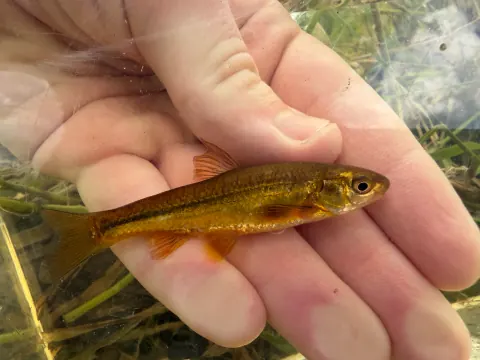
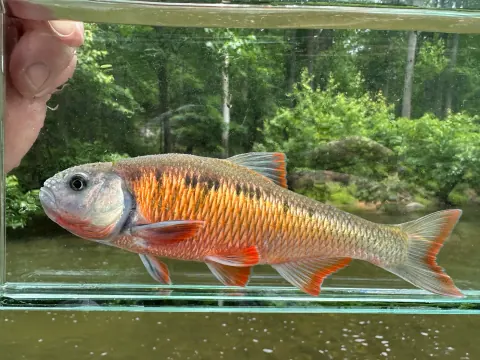
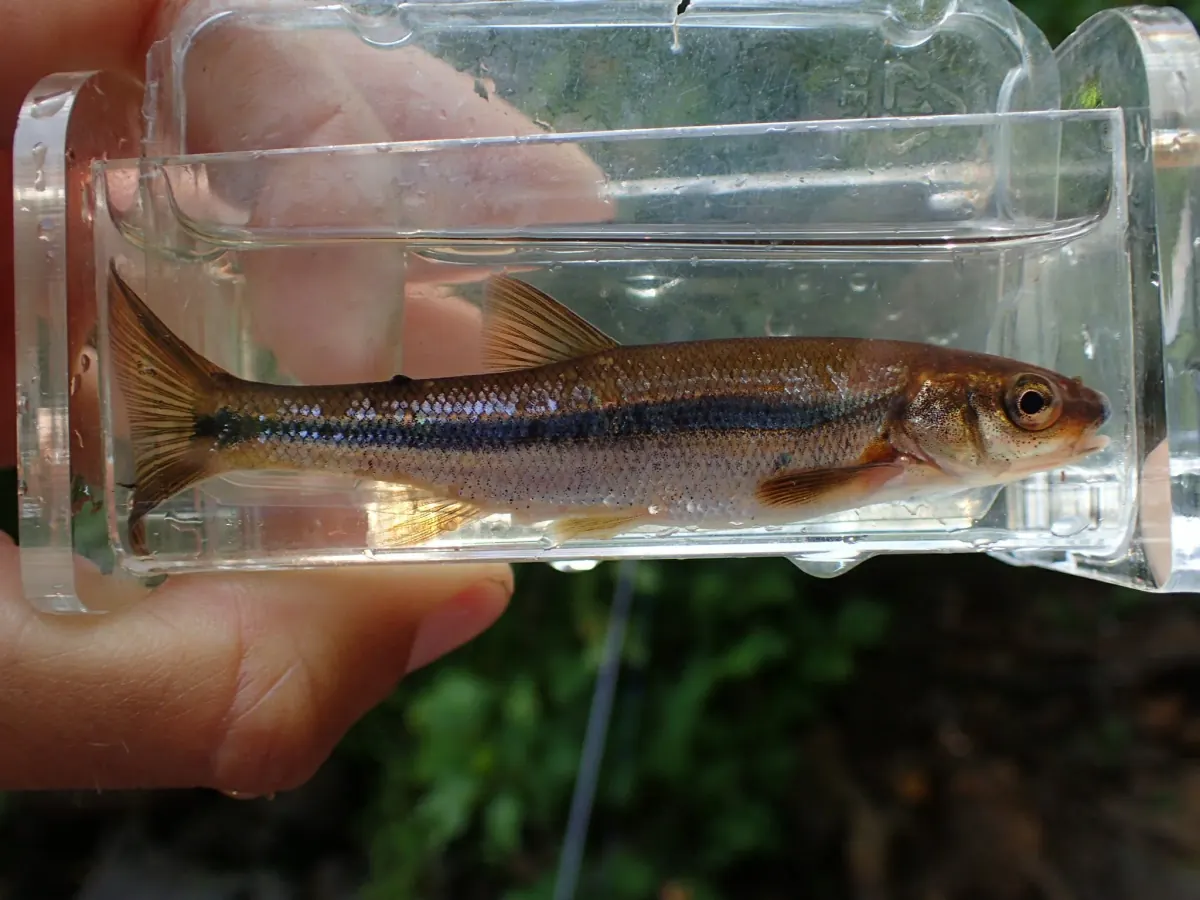
- Look for a dark stripe from the gill cover to the tail. Breeding males of the Great Plains form turn bright red at the base of the pectoral fins and on the flanks and gill cover, and have much larger pectoral fins than females, according to a Forest Service conservation assessment.
- Is the lake chub rare everywhere?
- No. NatureServe calls it the most northern minnow in North America and the only minnow in Alaska, and ranks it G5, secure. It is rare only at the southern edge of its range, in relict populations in places like Colorado, Nebraska and South Dakota.
- Why is a northern fish living in Colorado at all?
- Colorado's lake chubs are a relict population, cut off from the main range far to the north, and they survive in cool spring-fed water. See Habitat in Colorado for where they have been found.