Quick facts
- Native range
- Colorado River basin in Colorado, Utah and Wyoming (CPW)
- Range-wide populations
- 285 conservation populations, 153 genetically pure (USFWS, 2007)
- Genetic lineages
- Three: northwest Colorado, San Juan basin, Gunnison and upper Colorado (CPW)
- State status
- State Special Concern; SWAP Tier 1 (CPW, 2025)
- Federal status
- Not listed; 2007 finding: listing not warranted
- Colorado rank
- S3, vulnerable (NatureServe)
Overview
The Colorado River cutthroat trout is the native trout of Colorado’s West Slope, one of three native cutthroats still living in the state.
It historically lived in parts of the Colorado River drainage in Colorado, Utah and Wyoming. USFWS wrote in 2007 that its original range probably included larger rivers such as the Green, Yampa, White, Colorado and San Juan. A century of stocking nonnative trout has pushed it back, CPW says, mostly to isolated headwater streams and lakes.
CPW lists it as a State Special Concern species and, in its 2025 State Wildlife Action Plan, a Tier 1 Species of Greatest Conservation Need. NatureServe ranks it S3, vulnerable, in Colorado.
Lineages and genetic purity
Genetics has reshaped the story of Colorado’s cutthroats. A University of Colorado–led study published in 2012 compared DNA from wild trout with museum specimens collected as far back as 1856. It found six divergent cutthroat lineages in the Southern Rockies, roughly one per major river basin, and showed that the trout’s present distribution “largely reflects intensive stocking” in the late 1800s and early 1900s from two main sources.
That stocking blurred the line between the West Slope fish and the greenback. For decades, biologists believed many East Slope populations were greenbacks; the genetic work showed most were Colorado River lineage fish or hybrids, and the greenback survived pure in only one stream. Trappers Lake, in the White River headwaters, was part of that history: by the 1920s a hatchery there was taking 2 million Colorado River cutthroat eggs a year for stocking across Colorado, USFWS wrote.
Within the Colorado River cutthroat’s own range, CPW says the researchers found three distinct lineages: one in northwest Colorado, one in the San Juan River basin, and one in the Gunnison and upper Colorado River basins. Whether those West Slope lineages amount to separate subspecies is still under study.
Habitat in Colorado
Today the trout lives mainly in cold, isolated headwater streams and high lakes across the Colorado River basin on the West Slope. USFWS found in 2007 that it occupied about 14% of its probable historical stream miles; NatureServe’s 2024 assessment puts the share of historically occupied streams still holding it at less than 11%.
Some populations live above natural waterfalls in streams that probably held no trout before people stocked them, USFWS noted.
Primary Threats
Nonnative trout
NatureServe names hybridization with introduced trout, including rainbow, brook and brown trout, among the main threats, and CPW says nonnative trout otherwise replace cutthroat or interbreed with them. At Trappers Lake the cutthroats became a hybrid swarm with Yellowstone cutthroat, and a growing brook trout population cut their numbers until CPW began thinning brook trout with fall trapping. See nonnative fish.
Whirling disease
Whirling disease reached the Trappers Lake population in the late 1990s and has since suppressed the survival of young cutthroat there, CPW says. CPW asks anglers to clean their gear before moving to higher lakes, such as Little Trappers Lake, that are still free of the parasite. See whirling disease.
Less water and a warmer climate
NatureServe names reduced or eliminated stream flows from water diversions, which are pervasive across the range, and climate change. Headwater streams are vulnerable to drying and to debris from wildfire. See water diversion and climate change and drought.
Recovery & Conservation
The Center for Biological Diversity and others petitioned USFWS to list the Colorado River cutthroat in December 1999. USFWS found in April 2004 that the petition lacked substantial information; a federal court ruled for the petitioners in 2006 and ordered a full review. In June 2007 USFWS found listing not warranted, noting that the conservation agreement among the states and federal agencies is voluntary, so it based the decision on the trout’s status rather than on promised work.
Colorado, Utah and Wyoming work together under a range-wide conservation agreement and strategy. CPW’s approach is to take fertilized eggs from wild, pure populations, raise the fish, and stock them into waters that have been cleared of nonnative trout, and to copy pure populations that nonnative trout have invaded before they disappear.
What You Can Do
- Clean, drain and dry waders, boots and boats between waters so you don’t spread whirling disease.
- Never move fish from one stream or lake to another.
- Learn the native cutthroats. Read the greenback and Rio Grande profiles.
- Follow local fishing rules on cutthroat waters, which may limit harvest or methods.
Frequently asked questions
- How do you identify a Colorado River cutthroat trout?
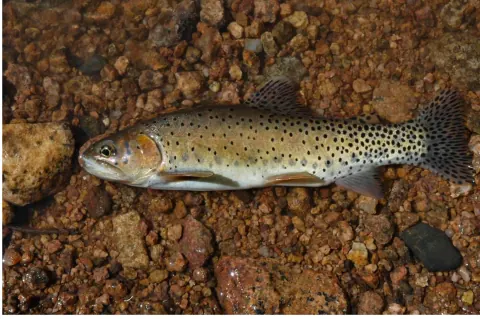
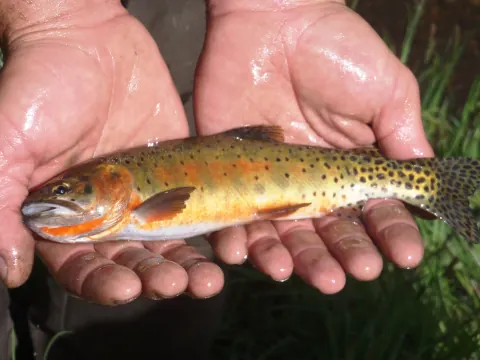
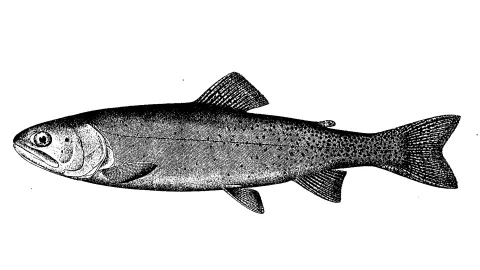
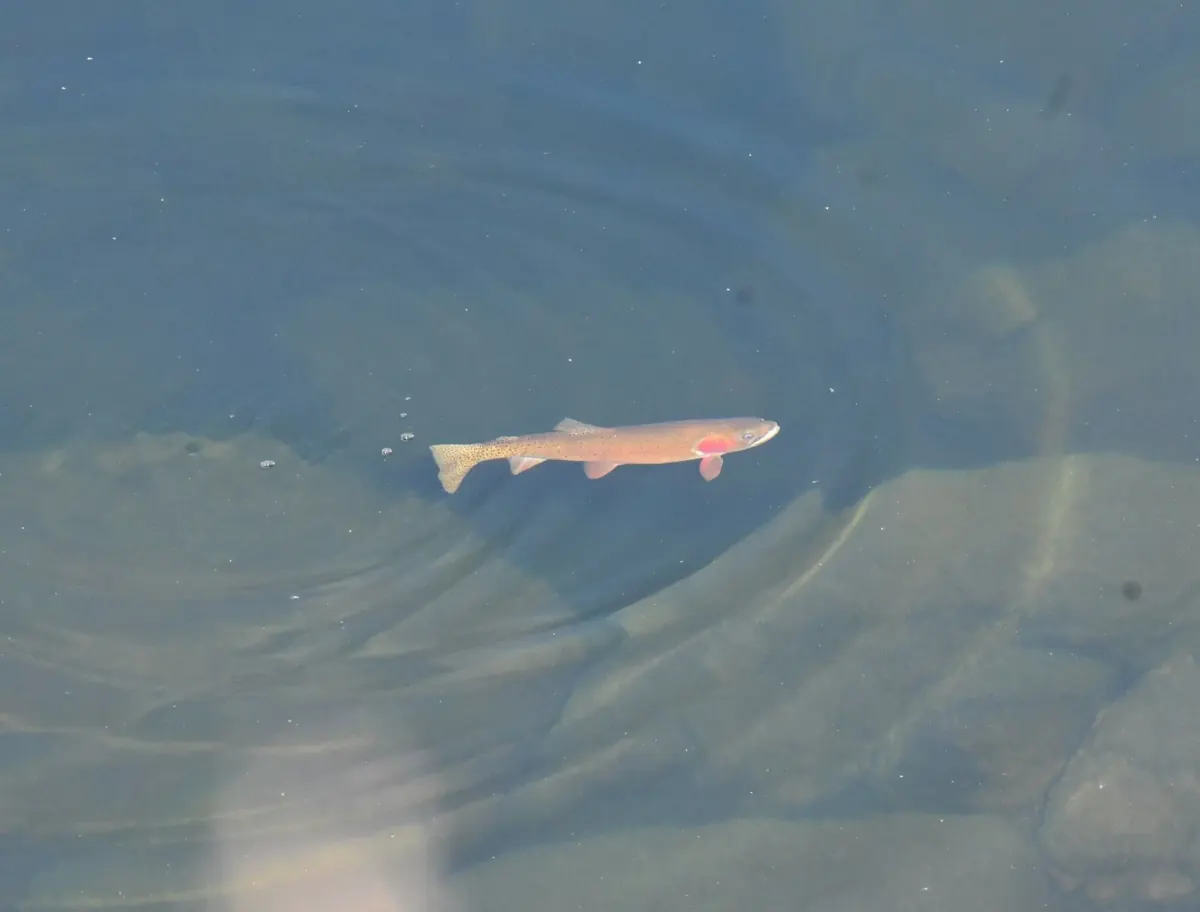
- CPW describes a bright yellow-gold body with a brassy-green back and orange belly, and medium to large spots concentrated toward the tail and back but missing from the lower fins. Like all cutthroats it has a red slash under the jaw. Telling it from other cutthroats with certainty takes a genetic test.
- How many kinds of native cutthroat trout does Colorado have?
- CPW recognizes three living subspecies: the Colorado River, Rio Grande and greenback cutthroats. A fourth, the yellowfin cutthroat of Twin Lakes, is thought to be extinct.
- What is a conservation population of cutthroat trout?
- A population that is genetically pure or less than 10 percent mixed with other trout. USFWS said in 2007 that fish with that little mixing still carry the behavior and adaptations of the native trout, so the states manage them for conservation; the range-wide count is in Quick facts.