Two of the 14 statewide measures on Colorado’s Nov. 3 ballot deal with wildlife. Amendment 83 would add a right to hunt and fish to the state constitution. Proposition 137 would send part of the sales tax already collected on sporting goods to conservation, wildfire and outdoor recreation programs.
Counties had to mail ballots to active registered voters by Oct. 9. Threatened Colorado takes no position on either measure.
At a glance
- Amendment 83
- Adds a right to hunt and fish to the Colorado Constitution. Needs 55% of the vote to pass.
- Proposition 137
- Directs part of the existing state sales tax on sporting goods to conservation, wildfire and outdoor recreation programs. Needs a simple majority.
- Election Day
- Nov. 3, 2026
- Ballots due
- Received by 7 p.m. Nov. 3
Amendment 83 · Constitutional right to hunt and fish
What your vote means
- YES
- Establishes a constitutional right to hunt and fish.
- NO
- Hunting and fishing continue as allowed under existing state and federal law.
Vote needed: 55% of the vote, because it changes the state constitution. Twenty-four states have similar protections; Colorado would be the 25th.
What it would do
Amendment 83 was placed on the ballot by citizen initiative. According to the state’s official voter guide, the Blue Book, it would create a constitutional right to fish and hunt certain wildlife using “traditional hunting and fishing methods.” It would also make hunting and fishing “the preferred means of managing fish and wildlife populations.”
The state could still regulate hunting, fishing and wildlife management when needed for sound scientific reasons, public safety, or to keep hunting and fishing available in the future. Today, Colorado Parks and Wildlife (CPW) manages wildlife, and the CPW Commission, a citizen board appointed by the governor, sets hunting and fishing rules.
What it would not do
The right would not apply to nongame species (animals not usually hunted or fished), endangered species, or species that are illegal to hunt under federal law. It would not change trespass laws.
Part of this idea is already in state law. As quoted by CBS Colorado, current law says, “The state shall utilize hunting, trapping and fishing as the primary methods of effecting necessary wildlife harvests.”
The Blue Book says it would make no immediate change to existing laws or rules. It could shape future decisions by lawmakers and the CPW Commission, and courts would decide its effect on current and future rules.
Supporters say
The Blue Book’s arguments for the measure:
- Lasting protection: it would guard against future attempts to restrict or end hunting and fishing.
- Heritage and economy: hunting and fishing are part of Colorado’s identity and support tourism and the recreation economy.
- Wildlife funding: license sales pay for habitat and wildlife management. About one-third of CPW’s yearly revenue, roughly $115 million, comes from licenses.
Reported by CBS Colorado: supporters say the amendment repeals no current law, does not put hunting above hiking or biking, and that none of the other 24 states has seen existing limits repealed.
Listed supporters (Durango Herald): La Plata County Republicans, Coloradans for Responsible Wildlife Management, Colorado Bowhunters Association, Colorado Outfitters Association, Colorado Sportsmen’s Foundation, Independence Institute, International Order of T. Roosevelt, National Rifle Association, Society for the Conservation of Bighorn Sheep.
Opponents say
The Blue Book’s arguments against the measure:
- Purpose of the constitution: it is meant to protect fundamental rights, not recreational activities.
- Not needed: Colorado already leads in wildlife conservation and management.
- One method favored: it puts one way of managing wildlife ahead of others, and may limit guardrails on hunting, fishing and trapping.
Reported by CBS Colorado: opponents say “necessary” is open to debate and “traditional methods” is not defined, and that it could be used to challenge bans on leghold traps, bear baiting and wildlife killing contests.
Listed opponents (Durango Herald): San Juan Citizens Alliance, Indivisible Durango, Colorado Attorney General Phil Weiser, Sierra Club Colorado, Western Watersheds Project, Wildlife for All, Colorado Hunters & Anglers for Sensible Wildlife Conservation, Colorado Education Association, Center for Biological Diversity Action Fund.
Hunters and anglers are on both sides: the Colorado Bowhunters Association is listed among supporters and Colorado Hunters & Anglers for Sensible Wildlife Conservation among opponents.
Proposition 137 · Sporting goods sales tax for conservation
What your vote means
- YES
- Directs existing sporting goods sales tax revenue to conservation, wildfire mitigation and outdoor recreation, and exempts it from the state revenue limit.
- NO
- The revenue stays in the general budget, subject to the revenue limit, spent as lawmakers decide or refunded to taxpayers when required.
Vote needed: a simple majority, because it changes state law, not the constitution.
What it would do
Proposition 137, also a citizen initiative, changes state law. According to the Blue Book, it would direct part of the existing state sales tax on sporting goods purchases and rentals to conservation, and exempt that money from the TABOR limit on state revenue. That is about $175 million a year to start, growing with sporting goods sales.
Covered goods include bicycles, golf equipment, hunting and fishing gear, camping gear, boats, RVs and campers, and rentals of recreation, sports and fitness equipment. The money would be split this way:
- Great Outdoors Colorado (GOCO): 47.5%. GOCO gives lottery-funded grants for parks, trails and wildlife projects.
- Colorado State Forest Service and Department of Natural Resources: 47.5% combined.
- Colorado Parks and Wildlife: 2.5%.
- Office of Economic Development and International Trade: 2.5%.
Taxes and refunds
It would not raise tax rates or change sporting goods prices. It would, however, lower TABOR refunds by about $175 million for tax year 2027.
The Blue Book says sales tax refunds would likely be eliminated in at least 2027-28, about $26 to $83 per single filer and $52 to $166 per joint filer. In years when revenue is under the TABOR limit, the money would come from other state priorities such as health care and education.
Supporters say
The Blue Book’s arguments for the measure:
- No new tax rate: it pays for recreation access, land protection, wildfire mitigation and watershed protection without raising tax rates or prices.
- User-based funding: more visitors, drought and wildfires strain Colorado’s outdoors, and people who buy or rent sporting goods have a stake in them.
Reported by the Colorado Sun: GOCO executive director Jackie Miller said demand for conservation dollars “significantly exceeds” grant dollars.
Listed supporters (Colorado Sun): the campaign committee Protect Colorado’s Land and Water and Prevent Wildfires, and Denver Water.
Opponents say
The Blue Book’s arguments against the measure:
- Lost refunds: it reduces future TABOR refunds, and every dollar the state keeps is equal to a tax increase.
- Less flexibility: it sends money to groups with narrow interests and limited accountability to lawmakers or voters, many of which already have reliable funding.
Reported by the Colorado Sun: the League of Women Voters calls it a “permanent transfer” that “does not allow for legislative judgment.”
Listed opponents (Colorado Sun): the League of Women Voters.
Hunted, fished and trapped species on this site
These are species on Threatened Colorado that Colorado currently hunts, traps or fishes under CPW rules. Amendment 83 would make no immediate change to those rules, according to the Blue Book.
The Blue Book summary describes a right to hunt and fish; it does not mention trapping. Trapping appears in the Blue Book’s arguments against the measure and in the existing state law quoted above.
Big game
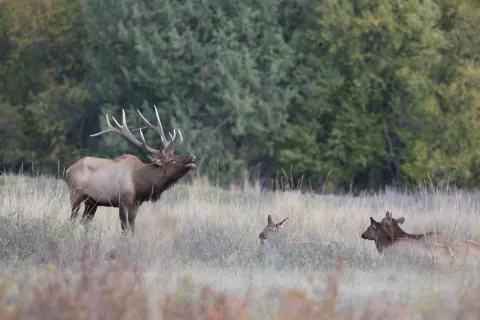
- Elk: managed as big game, herd by herd, with CPW setting hunting licenses to meet each herd’s objectives.
- Rocky Mountain bighorn sheep: managed as big game herd by herd, with licenses set each year against the post-hunt population estimate.
Small game
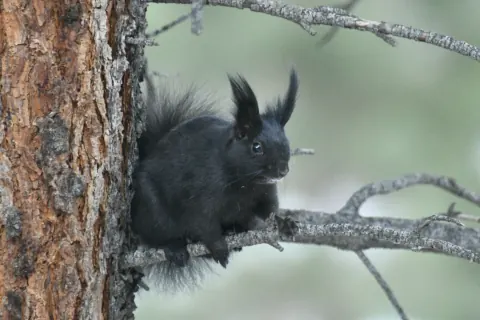
- Abert’s squirrel: huntable small game, with a season that opens November 15.
- Black-tailed prairie dog: a State Special Concern species; recreational hunting needs a small game license, with a June 15 to end of February season on public land.
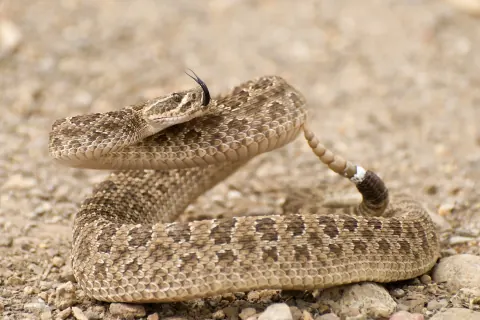
- Prairie rattlesnake: small game with a statewide season from June 15 to August 15 and a daily bag limit of three.
Furbearers (trapped)
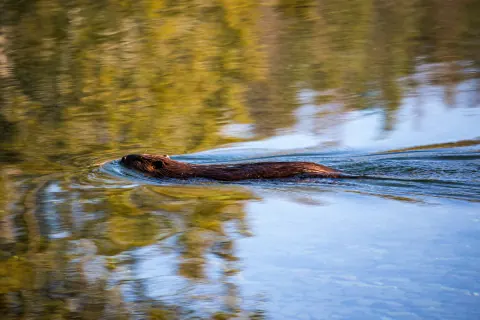
- American beaver: managed as a furbearer, with a season from October 1 to March 31 starting in 2026-27.
- Swift fox: a State Special Concern species and a legal furbearer that hunters with a furbearer license may take.
Fished
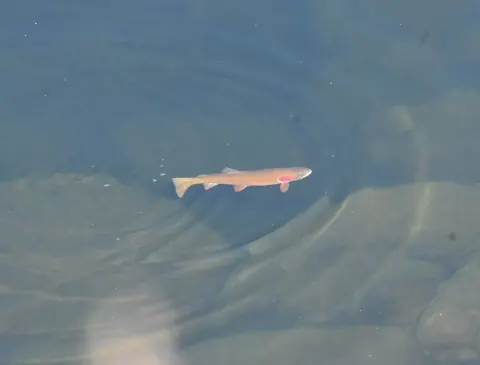
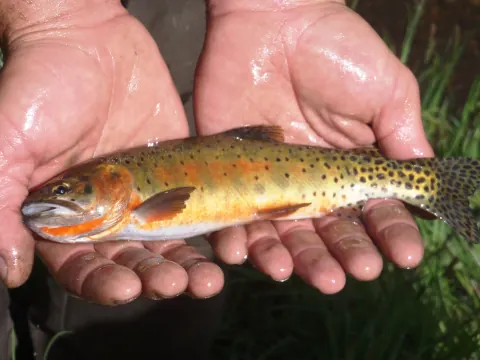
- Colorado River cutthroat trout: a State Special Concern species; local rules on its waters may limit harvest or methods.
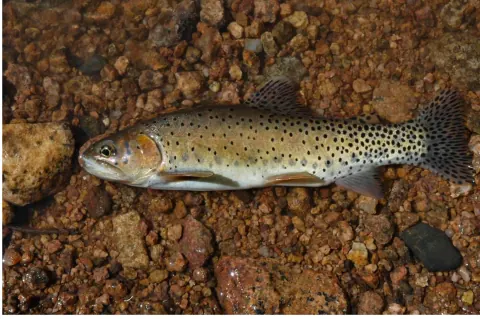
- Rio Grande cutthroat trout: a State Special Concern species; some of its streams are catch-and-release only.
- Greenback cutthroat trout: federally and state threatened; fished under special rules where they apply.
Because greenbacks are federally threatened, they are the kind of case the Blue Book does not address: it does not say how threatened species would be treated.
What it means for Colorado’s threatened species
The Amendment 83 right would not apply to endangered species, nongame species or species that are illegal to hunt under federal law, which covers many of the animals on this site. The Blue Book does not say whether “endangered” means listed by the federal government, the state, or both, or how species listed as threatened would be treated. Our endangered vs. threatened guide explains the difference.
Proposition 137 names no species. Its money would go mainly to GOCO grants, which fund wildlife habitat among other projects, and to forest and watershed work tied to wildfire. CPW’s share would be about $4.4 million in 2027-28.
How past wildlife votes went
In 2020, Proposition 114, on reintroducing gray wolves, passed 50.91% to 49.09%. In 2024, Proposition 127, which would have banned hunting mountain lions, bobcats and lynx, failed 45.26% to 54.74%.
Both were changes to state law, decided by simple majority. Amendment 83 is a constitutional amendment and needs 55%.
How to vote
- Oct. 12: drop boxes open and stay open through Election Day.
- Oct. 26: last day to register or update and still get a ballot by mail, and the recommended last day to mail a ballot back.
- Nov. 3: Election Day. Voting centers are open 7 a.m. to 7 p.m., and ballots must be received by 7 p.m.
For the official text and full arguments, read the Blue Book pages for Amendment 83 and Proposition 137.
We’ll update this page with the results after Nov. 3.