What it is
Fire is part of how Colorado’s landscapes work. In the Colorado State Forest Service’s words, “Wildfire plays a critical role in maintaining the health of many ecosystems in Colorado.” Frequent, low-intensity fires thin the understory of lower montane forests, “while high-intensity fire helps with regeneration in some high-elevation forest types, such as lodgepole pine.”
For most of the 20th century, the goal was to put every fire out. In 1910, “a series of forest fires burned 3 million acres in Montana, Idaho, and Washington in only two days,” and the Forest History Society says those fires “had a profound effect on national fire policy.” In 1935 it set the 10 a.m. policy: “every fire should be suppressed by 10 a.m. the day following its initial report.” In 1944 it introduced Smokey Bear.
CSFS says “A long legacy of fire suppression has altered historic fire cycles and led to the dangerous buildup of fuels in some areas.” The important words are “in some areas.” How much suppression changed a forest depends on how often that forest used to burn.
Fire by ecosystem
Ponderosa pine and lower montane forest
This is where suppression changed the most. A USDA Forest Service synthesis of 78 Colorado ponderosa pine sites found an average fire interval of 21 years, with low- and mixed-severity fires making up 83% of all observations. Then the fires stopped: “Evidence of low-severity fire ended abruptly prior to or by the early 20th century (1920) in the fire-scar record from 73 of the 78 sites.”
CSFS explains what followed. “Ponderosa pine generally evolved with a natural cycle of frequent, low-intensity fire, which eliminated competing conifer seedlings but allowed mature pines to survive.” With aggressive suppression, shade-tolerant Douglas-fir moved into the understory, and now “the understory Douglas-fir tend to carry fire in ladder fashion into the pine crowns, making the fire much more likely to reach unnatural, stand-replacement proportions.”
High-elevation lodgepole and spruce-fir
High-elevation forests were always different. The National Park Service says “Stand replacement fires in lodgepole pines usually happen every 150 to 400 years,” and lodgepole’s sealed cones are “closed tight with resin that melts during a fire and releases seeds that have been stored for years.” In Rocky Mountain National Park, fires in spruce-fir forest come “every 300 years or so,” and are usually “driven by drought.”
CSU fire ecologist Jason Sibold told Congress in 2013 that “Fires in subalpine forest are naturally large, catastrophic, and relatively infrequent.” Long gaps between fires “create naturally dense stands with abundant live and dead fuels.” Suppression has changed these forests little; drought and wind drive their big fires.
Sagebrush
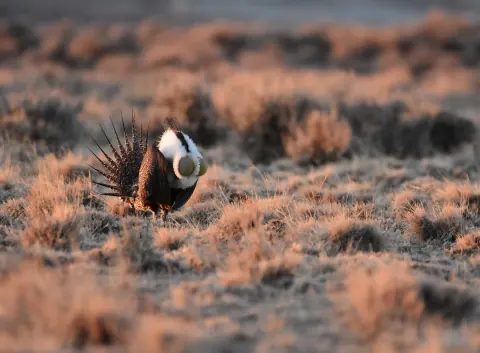
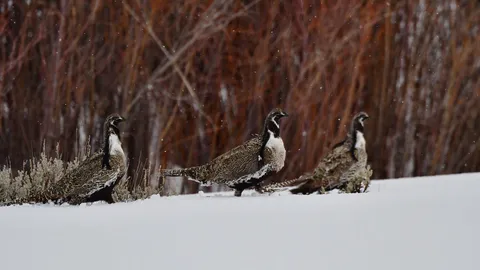
Sagebrush is the exception to “fire is natural.” Where cheatgrass takes over, NRCS says, “fires occur every 3 to 5 years as opposed to every 50 to 100+ years as historically occurred.” USGS calls out “the decades required for most sagebrush to recover after wildfire.” For the Gunnison sage-grouse, the 2014 listing rule says “A clear positive response of Gunnison or greater sage-grouse to fire has not been demonstrated,” and that “prescribed fire may be inappropriate if the goal is to improve sagebrush and overall habitat conditions for the species.” See Invasive Plants for more on cheatgrass.
Plains grassland
On the plains, the problem is too little fire. The Forest Service’s fire effects database says “in plains grasslands, mean fire interval estimates are 35 years or less,” and “Fire exclusion during the 20th century has led to an increase in woody plant cover in many grasslands.” The National Park Service says “Fire is essential to maintaining the health of short-grass and mixed-grass prairie.” Once woodland takes hold, though, “Reintroducing frequent fires after woodlands have established does not restore grasslands in management-relevant time scales (decades).”
In Colorado
- 2002: The Hayman Fire burned about 138,000 acres during a severe drought. Denver and Aurora spent more than $25 million over the next two years removing fire debris and sediment from Cheesman Reservoir and other municipal water sources, according to the Colorado Encyclopedia.
- August–December 2020: The Cameron Peak Fire began August 13 and burned 208,913 acres of the Arapaho and Roosevelt National Forests, the largest wildfire in Colorado history, along with 469 structures, including 224 houses. It reached 100% containment on December 3.
- July 31, 2020: The Pine Gulch Fire was started by a lightning strike. It burned 139,007 acres.
- October 14, 2020: The East Troublesome Fire began. It burned 193,812 acres, the second-largest fire in state history, and killed two people. CFRI said it “moved at 6,000 acres per hour.” Together with Cameron Peak it affected about 30,000 acres, or 9 percent, of Rocky Mountain National Park.
- December 30, 2021: The Marshall Fire spread “rapidly in cured grass fuels (dry grass materials) with relative humidity around 20% and winds up to 100 mph.” It burned more than 6,000 acres, destroyed 1,084 homes and killed two people.
- 2025: The Lee Fire in northwestern Colorado passed the Hayman Fire’s 137,760 acres, ranking behind only the three 2020 fires as of late August.
In the space of 90 days in 2020, the Colorado Forest Restoration Institute said, “Colorado has experienced the three largest fires in its recorded history,” and they “burned in grasslands, sagebrush, lodgepole, ponderosa, and subalpine forest.”
Fires are also more common. In federal (NIFC) records analyzed by CSU, Colorado averaged 13 fires a year in the 1990s, nearly 50 in the 2000s, and more than 70 in the 2020s. CSFS says “About 10% of Colorado’s 24 million acres of forest need urgent attention to address forest health, wildfire risk and threats to water supplies,” at an estimated cost of $4.2 billion.
Effects on wildlife
Owls
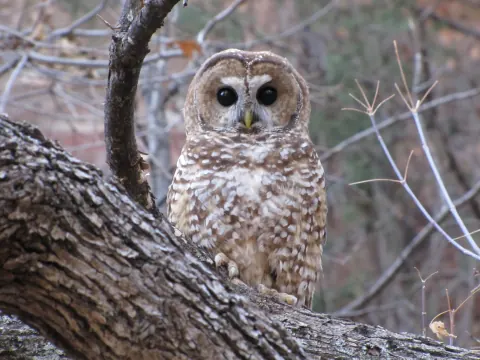
The Mexican spotted owl is the clearest example of right fire versus wrong fire. Its 2012 recovery plan says its main threats in the U.S. “have transitioned from timber harvest to an increased risk of stand-replacing wildland fire,” and calls stand-replacing wildfires “the greatest current threat to the species.” But not all fire is bad for it. Forest Service research found “higher rates of owl pair occupancy at sites that experienced more frequent fires in the three decades prior,” and “lower rates of local persistence of owl pairs at sites that experienced more extensive high-severity fire.” Its conclusion: “frequent, low-severity fire supported owl habitat, whereas high-severity fire was detrimental to owl habitat.”
Butterflies
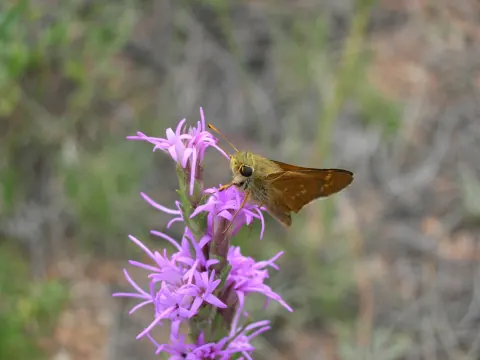
The Pawnee montane skipper, found only in the South Platte drainage, shows both sides of the problem. Its 2020 five-year review says “Fire suppression, along with timber harvest and grazing, over the past 100 years has altered the ponderosa pine forest stand conditions and has reduced the quality of the skipper habitat by creating more uniform and denser forests with fewer forest openings.” Crown closure that once averaged around 30 percent is now 40 percent or more on much of the Forest Service land in its range. Then came severe fire: the 2002 Hayman and Schoonover fires “burned more than 36 percent of the skipper’s habitat.” Thinning helps: “Areas where forest thinning has occurred have experienced an improvement in skipper habitat and an increase in skipper numbers.”
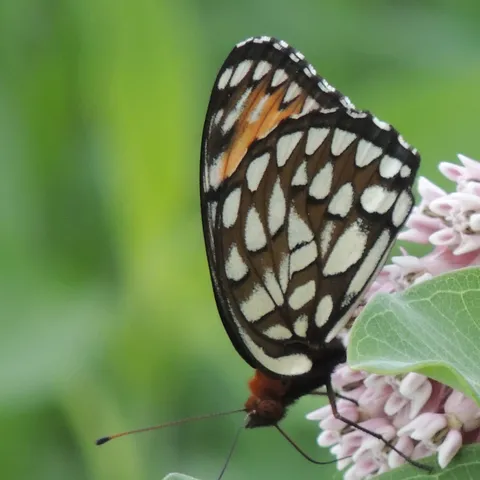
The regal fritillary needs some disturbance, carefully timed. The 2024 proposed rule says fire and other “periodic disturbances can trample, crush, burn, or poison individuals,” but “When these periodic disturbances occur in large, contiguous native grassland landscapes, mortality typically does not result in population losses, as individuals may disperse to adjacent areas.”
Mammals
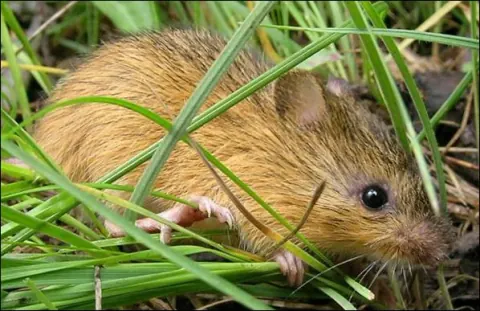
USFWS listed the New Mexico meadow jumping mouse in 2014, naming “wildfires (also exacerbated by climate change)” among the primary sources of habitat loss. Its population at Sugarite Canyon State Park “has been significantly impacted since the 2011 Track Wildfire.” The 2023 recovery plan warns of “high severity wildfires and ensuing scouring floods,” and calls for forest thinning and fuels reduction “to minimize the risk of high intensity wildfire.”
For the Canada lynx, the 2024 recovery plan says “Disturbances such as fire, timber harvest, and insect outbreaks typically result in temporary reductions in habitat quality but do not result in permanent habitat loss.” It anticipates “increased wildfire size, intensity, and frequency,” to be met with “proactive forest management aimed at increasing forest resiliency.”
Fish
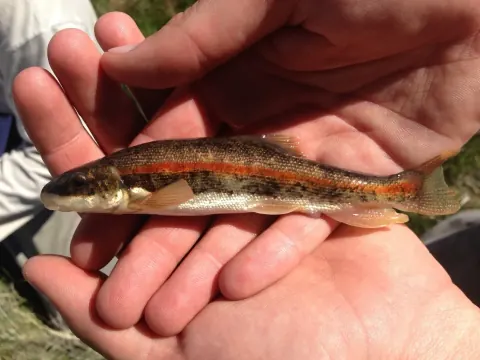
For fish, the worst damage often comes after the fire. A USFWS assessment of the Rio Grande cutthroat trout says “ash and debris flows that occur after a fire can eliminate populations.” In New Mexico, Polvadera Creek “burned during the South Fork Fire in 2010, and ash flows following that fire nearly eliminated the subspecies from the stream.” Post-fire floods can be just as hard on native fish like the Rio Grande sucker. A USFWS assessment of the Rio Grande chub reports that after monsoon flooding followed the 2013 Silver Fire in New Mexico, native fish populations in Black Canyon “declined to zero, likely due to ash and sediment flows.”
The 2009 five-year review for the greenback cutthroat trout says “The direct effects of fire can be severe to fish both from the increases in stream temperature, and from smoke and ash,” and that “Chemical fire-fighting retardants are known to be toxic to aquatic wildlife.” It judged that a severe fire could wipe out individual populations, but that “it is extremely unlikely that fire would impact the subspecies significantly enough on a range-wide basis.”
Birds
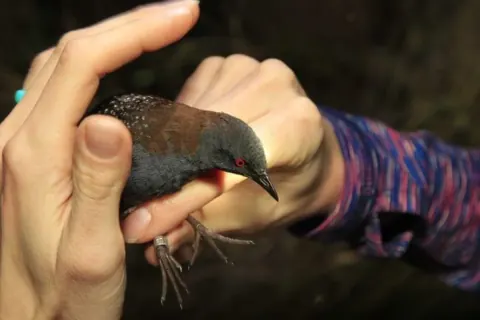
For the eastern black rail, fire is a management tool with risks. The 2018 proposed rule says “When shrub densities become too high, the habitat becomes less suitable for eastern black rails.” The 2020 listing rule calls prescribed fire “one tool to maintain and restore habitat,” but warns that it “at any time of the year may result in mortality to adult and juvenile birds, as well as eggs and chicks during the breeding season,” and notes that patches of unburned habitat left as refuges “provide escape cover for wildlife.”
On the southern plains, the 2022 lesser prairie-chicken listing rule says its grasslands and shrublands “were maintained by the occurrence of wildfires (keeping woody vegetation restricted to drainages and rocky outcroppings).” That federal listing has since been removed, but the history still holds.
In sagebrush, fire works against the Gunnison sage-grouse (see Sagebrush, above).
Climate is changing fire
NASA says “As the planet warms, hotter weather, earlier melting of winter snow, warmer nighttime temperatures, and decreasing summer rainfall are all contributing to increased fire activity,” and that combined with fuel build-up, “warmer, drier conditions increases the potential for extreme fires.” A USFWS assessment notes that “since the mid-1980s, wildfire frequency in western forests has nearly quadrupled compared to the average frequency during the period 1970–1986.” In lodgepole, NPS says, “fires in lodgepole are becoming more frequent and larger.” More on Climate Change & Drought.
What’s being done
Prescribed fire
From 2000 to 2023, the Colorado Forest Tracker recorded “538,428 total acres of prescribed fire activities in Colorado.” The state’s fire agency, DFPC, calls prescribed fire “one of the most effective tools we have in preventing the outbreak and spread of wildfires.”
Certified burners
Under Senate Bill 13-083, the Colorado Prescribed Burning Act, a private landowner or designee certified by DFPC as a Certified Burner is not liable for civil damages from a prescribed burn, within the limits the law sets.
Forest restoration
- Colorado State Forest Service: Acres managed rose “from nearly 70,000 acres in 2020 to roughly 95,000 acres in 2024.” Eighty-nine percent of projects were in very high or high priority areas, and from 2020 through 2025 CSFS awarded $40.3 million in forest restoration and wildfire risk mitigation grants.
- COSWAP: “Since its launch in 2021, COSWAP has invested more than $47.58 million,” with 141 grants and treatment on 16,473 acres of high-priority landscapes.
- Front Range CFLRP: The 1.5 million-acre project covers parts of the Arapaho and Roosevelt and Pike and San Isabel national forests; the Front Range Roundtable has identified 800,000 acres as high-priority for restoration.
- Rocky Mountain Restoration Initiative: Co-convened by the National Wild Turkey Federation and the U.S. Forest Service, it aims to restore 150,000 acres of public and private land in the Upper South Platte.
Fish rescues
In July 2026, CPW biologists and firefighters rescued 103 Uncompahgre cutthroat trout from Nate Creek, in the middle of the Gold Mountain Fire, and took them to a state hatchery. The same month, as the Willow Fire approached, “federal and state crews moved more than 148,000 fish, including rare native broodstocks,” among them greenback and Hayden Creek cutthroat trout.
How you can help
- Create defensible space around your home.
- Support prescribed burns and forest thinning in your area.
- Check fire restrictions before you camp or light anything.
- Report illegal fires and abandoned campfires.