Why Are Animals Endangered in Colorado?
Short answer
Mostly because their habitat has been lost, broken up or changed. Among the species profiled here, climate change and drought affect the most, followed by habitat loss and water diversion, and many species face more than one threat.
By Threatened Colorado , Two Colorado natives , About us
Last reviewed , Checked against CPW, NPS sources , Sources (10)
Of the 60 species profiled on this site, 53 face two or more threats. Here are the main ones, from most species affected to fewest.
Climate change and drought
Affects 30. Drought has always been part of Colorado’s climate, but warming is making droughts hotter, more frequent and more severe. Less snow and earlier runoff mean lower, warmer streams and drier wet meadows. The wolverine was listed as threatened in 2023 mainly because of climate change, and the Canada lynx recovery plan calls it the greatest long-term challenge to the species. More on climate change and drought.
Habitat loss and fragmentation
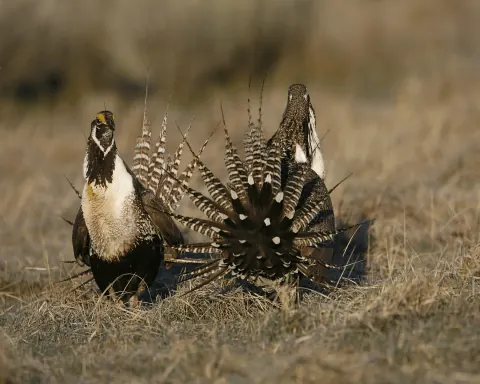
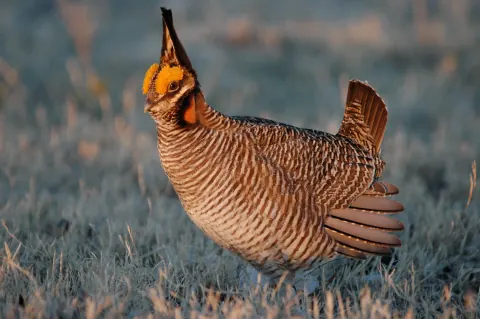
Affects 39 profiled species. Plowed prairie, subdivisions and roads carve habitat into smaller and smaller pieces. It’s the slow threat behind most listed species. They include the Gunnison sage-grouse, the lesser prairie-chicken, the swift fox and the plains sharp-tailed grouse, which once nested over much of the northern two-thirds of Colorado’s eastern prairie and now lives mainly in Weld County. More on habitat loss.
Water diversion and dewatering
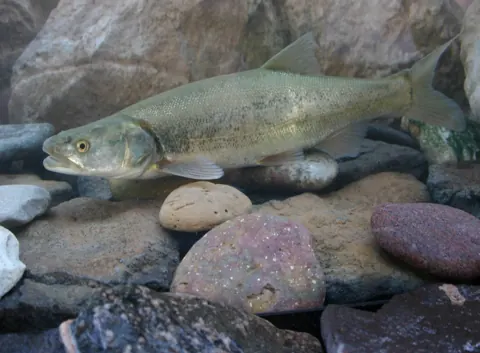
Affects 24. Dams, diversions and pumping change how much water flows, and when. Colorado’s big-river fish evolved with spring floods and warm, muddy water, and most of that is gone. They include the Colorado River’s bonytail, Colorado pikeminnow, humpback chub and razorback sucker. More on water diversion.
Invasive plants
Affects 13. Cheatgrass turns sagebrush country into a fire trap, and tamarisk and Russian olive crowd out the cottonwoods and willows that riparian birds need. They include the Gunnison sage-grouse, the southwestern willow flycatcher and the yellow-billed cuckoo. More on invasive plants.
Nonnative fish
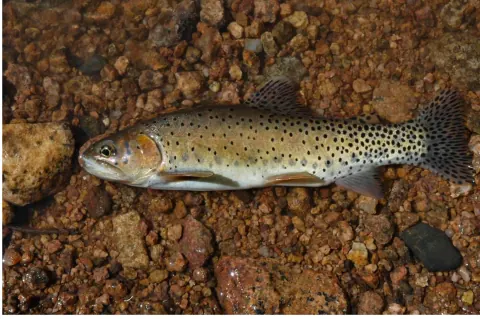
Affects 16. Stocked and illegally dumped fish eat, outcompete and interbreed with Colorado’s native fish. They include the greenback cutthroat trout, Rio Grande cutthroat trout and Rio Grande sucker. More on nonnative fish.
Wildfire and fire suppression
Affects 8. Fire is natural in most of Colorado’s forests and grasslands. The problem is the wrong kind of fire: a century of putting fires out left some lower-elevation forests dense enough to burn hotter than they ever did. High-severity fire is now the main threat to the Mexican spotted owl, and ash flows after a fire can wipe out a whole stream of trout. More on wildfire.
Pesticides
Affects 9. Neonicotinoid insecticides reach pollen and nectar, and herbicides have wiped out much of the milkweed monarchs depend on. They include the monarch, Suckley’s cuckoo bumble bee and the western bumble bee. More on pesticides.
Power lines, wind turbines and roads
Eagles are electrocuted on power poles, cranes collide with lines, and wind turbines kill bats (6 species). On the ground, about 3,300 wildlife collisions are reported in Colorado each year (9 species). More on power lines and wind · More on roads.
Disease
Some threats work faster. Chytrid fungus is behind the collapse of Colorado’s high-country boreal toads. Sylvatic plague can wipe out whole prairie dog towns, and with them the ferrets that depend on them and the burrowing owls that nest in their burrows. Whirling disease deforms young trout. White-nose syndrome reached Colorado’s bats in 2022, the year USFWS proposed listing the tricolored bat as endangered because of the disease, and avian influenza arrived the same year.
Browse every threat
See all 15 threats and the species each one affects on the threats page.